THE INTERVIEW:
(vogue.it)
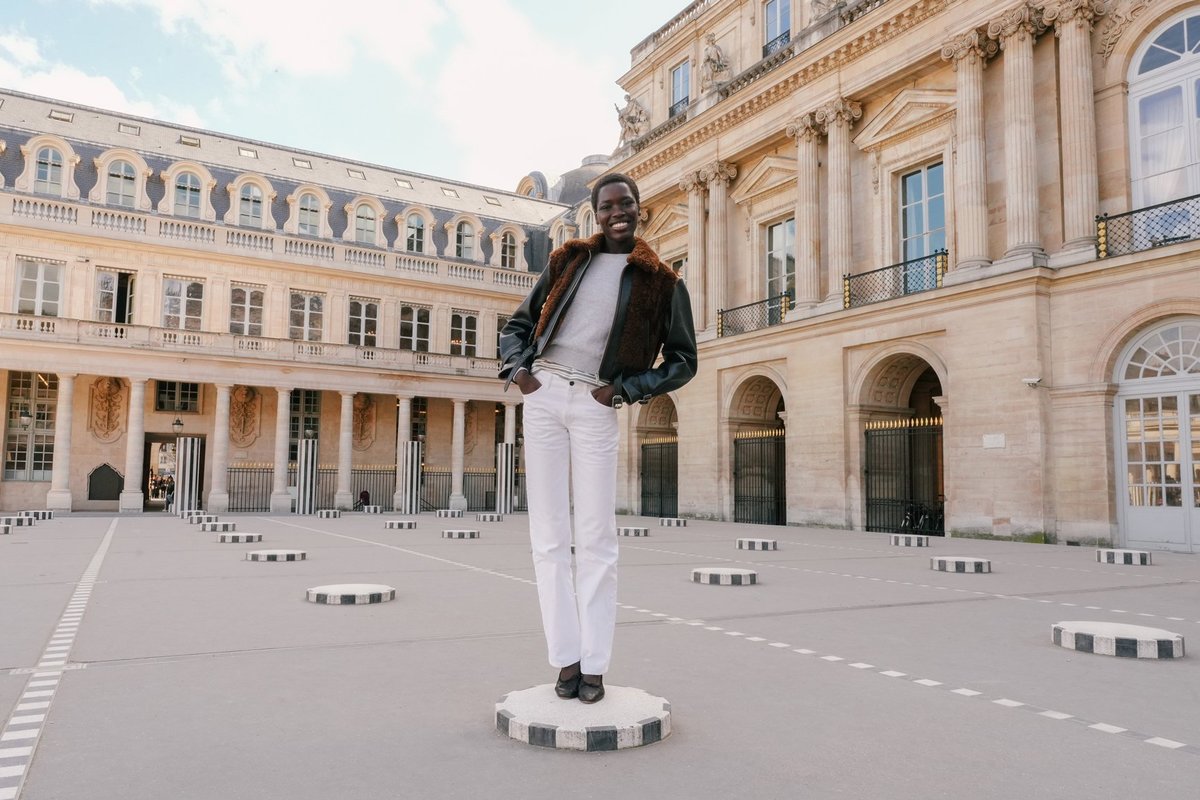
A small prairie town in Saskatchewan, Canada, it teaches you to get comfortable with your thoughts. Flanked by horizons that dissolve into the flatlands’ vast nothingness, temperatures drop to -37°C. The deep cold sharpens the inner brightness that Awar Odhiang carries with her today.
She’s calm and exact in the way she enunciates. Every word lands with self-possessed
precision, accompanied by her wide, and now-infamous, smile. There’s something so lived-in and assured about it that you catch yourself wondering how often you smile — and what a smile even signifies anymore. Now based in Paris, memories of Moose Jaw still linger. “Not much going on there, but we made it work,” she laughs. A church sponsored her family’s move to Canada, bringing her parents and five siblings with them. “We had a really, really, really great childhood.” Her eyes come alive as she recalls a steep hill they used to race down. “It was a bit spooky because there was a forest under the hill, and there were bears! Okay maybe not bears, but there were cougars and all kinds of animals. We’d toboggan down the hill and snowboard in winter, and in the summer we’d fish and catch frogs. These cute little memories will live with me forever.”
She lights up when speaking about Moose Jaw and home, but it’s juxtaposed by a lingering inwardness. “I’m the biggest introvert and biggest homebody, ever. I don’t go to afterparties, I love my peace, and I love my own company. I don’t really like a lot of attention on me, because with attention comes dismissal of one’s privacy, and my privacy is so, so important to me.” Born in 2000 in the Pinyudo Refugee Camp in the Gambela region of Ethiopia, to Sudanese parents fleeing the war in what is now South Sudan, she spent her first years of life without a birth certificate. She jokes about the “international immigrant birthday” she was given, January 1st. A true millennium baby, people often assume. Her real birthday is February 16th.
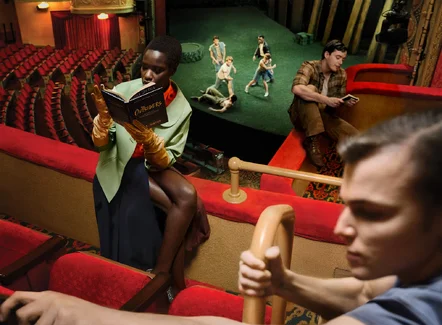
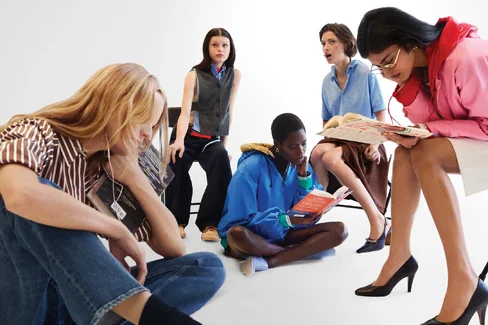
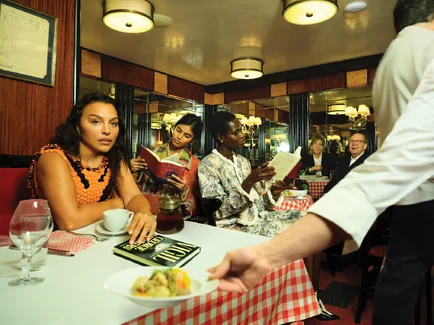
Something in Awar loosens whenever she mentions her family. The middle child of six, she says, “They’re so, so beautiful. Thank God. Everything I do is for them. When I win, I know my family wins. My siblings are the most important people in my life. We've always stuck together and we've never forgotten the fact that we're all that we have. Blood is truly thicker than water. We've gone through so much. They’re always cheering me on, watching campaigns or shows I’ve done before I even get a chance to.”
Growing up alongside her brother as he navigated sickle cell anaemia left an early imprint on her ambitions. She dreamed of becoming a doctor, later studying health sciences at university. “Knowledge is something nobody can ever take from you, and that's something my parents always taught me,” she says. “Your money can be taken, your home can be taken, your security can be taken from you, but your knowledge, what's in your head, no one can ever touch that.”
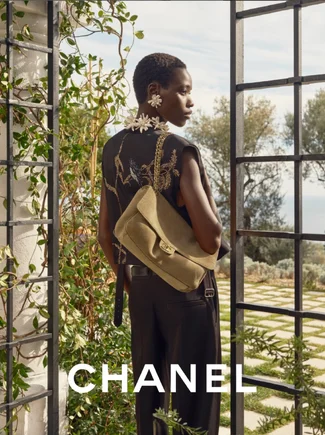
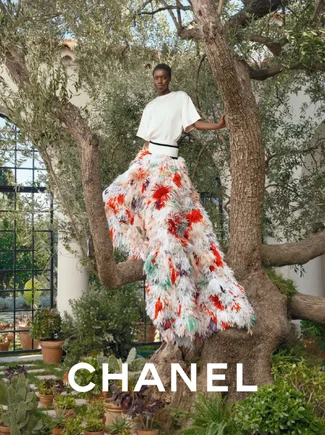
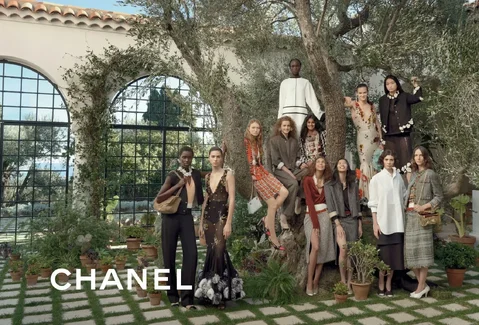
At seventeen, she was folding sweaters at Old Navy after school when model agent Kelly Streit approached her. It was the first time she was seen with intention. “I had people believing in me before I believed in myself.” When we speak, it is the morning after Matthieu Blazy’s second Chanel show, and his first Métiers d’Art collection. She has been central to Chanel's current chapter since closing Blazy’s 2025 debut in full feathers and languid silk. Her smile cut through the room, unguarded joy surfacing amid collective fatigue and unrest — a moment that would quickly be replayed, remembered, and absorbed into fashion history. “I felt so free. It was exuding from me! I knew it was a moment that was going to change a lot of people's lives, and a lot of people's perspectives.” Becoming the third Black model to ever close a Chanel show was “a huge surprise and a great honour. Being that representation of joy and freedom and strength is the new Chanel woman transformed. She is so confident, and just so cool.”
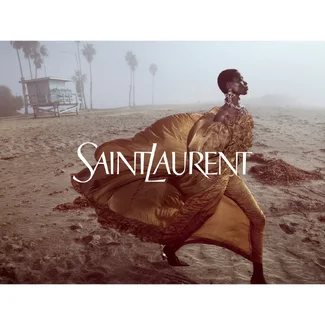
Last year, she became a Victoria’s Secret angel and closed for both Louis Vuitton and Saint Laurent. “It’s incredible. Saint Laurent is one of those shows that’s so beautiful and makes you feel like a woman. You feel so assured in who you are, in your body, in your grace, and what you're going to be giving on the runway.” But progress hasn’t erased what persists. “It’s been a work in progress from the beginning. Every Black model that I have looked up to has spoken on this. Not feeling included, being the token Black girl.” She pauses. “I didn’t always feel welcomed into rooms. It often felt like a façade. Once I would enter these spaces I’d be met with hostility or disrespect. Not being offered the same opportunities as the girls who started at the same time as me, just because they’re of a different race, had a huge impact on me and really lowered my self-esteem.”
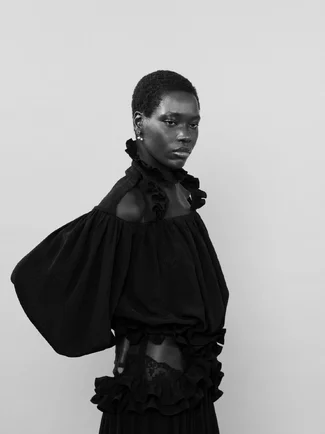
That history followed her onto the shoot. The cover was shot in Cervinia, high in the Italian Alps. Awar moved through the terrain with ease. For photographer Rafael Pavarotti, it was unfamiliar ground. He grew up in the north of Brazil, in constant heat and humidity. Snow, until a few years ago, existed only on screen. “The first time I ever saw snow was in Italy,” he says. Working at altitude, in freezing temperatures, the conditions stripped the shoot back to something raw. Pavarotti had long been haunted by a story he encountered while researching Donyale Luna,
the first Black woman to appear on a Vogue cover. In the 1960s, Richard Avedon had planned a winter editorial with Luna, only for her to be removed at the last moment and replaced by Veruschka. “That decision could have changed a lot,” Pavarotti says. “Not just for Donyale, but for all the women who didn’t get to see themselves in places where they belonged.” Photographing Awar in snow placed her inside a story she had once been written out of. “She was focused, strong, completely present,” he says. “In a place that should have always been open to her.”
The responsibility she feels now extends far beyond herself. “So many girls are working incredibly hard, harder than me, and they're still not at the level they deserve to be at. There’s just such a lack of respect for minority models.” Cultivating renewed self-confidence has meant gaining clarity about what she deserves. “I've learned that I do have space in this industry, and now I’m becoming more comfortable taking that space. Instead of feeling uncomfortable and like I don't belong, I came to realise that I'm here for a reason. It wasn't somebody else, it was me. I was chosen because I know what I can offer to people.”
Reading Mind Over Body, a book exploring how self-belief can heal or hinder the body,
coincided with a subtle shift in how she articulates and understands her presence in the industry. “I always knew that I had a voice and that I wanted to use it, and for the right things. After the Chanel show so many girls have come up to me and told me how inspiring I had been, and that really touched me. I never knew what my purpose was when it came to modelling apart from being a canvas to art. I didn't know I was doing anything that could change people’s lives.”
Humility, for her, is not romanticised. She’s under no illusion about how fragile this life is. “There have been a lot of dark, hard, and difficult times, but seeing my life now compared to what it was before, I'm filled with gratitude. I know that the life I have now is a blessing, and it could be taken from me at any point.” She doesn’t speak lightly. “I want to bring more joy into the industry. I'm representing every Black model, so I need to act in a way that lets people know they should respect people like me. We are meant to be here, we deserve to be here, and we're not going to dim our light or change who we are just to fit in. I'm going to come as I am and you're going to accept that whether you like it or not.”
“I always remember where I come from: my heritage, my culture, my people. It’s easy to get carried away with all the glitz and glamour. I want my legacy to remind people to continue being themselves. People will love you for you. You don't ever have to pretend. And being Black is a blessing.”