
You are using an out of date browser. It may not display this or other websites correctly.
You should upgrade or use an alternative browser.
You should upgrade or use an alternative browser.
Mikael Jansson - Photographer
- Thread starter robot
- Start date


Melancholybaby
Well-Known Member
- Joined
- Aug 25, 2011
- Messages
- 14,151
- Reaction score
- 2,296
W April 2012
Cover

The Biel Appeal
Photographer: Mikael Jansson
Stylist: Edward Enninful
Star: Jessica Biel
Make-Up: Mark Carrasquillo
Hair: Jimmy Paul


wmagazine
Cover
The Biel Appeal
Photographer: Mikael Jansson
Stylist: Edward Enninful
Star: Jessica Biel
Make-Up: Mark Carrasquillo
Hair: Jimmy Paul
wmagazine
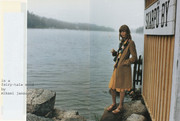
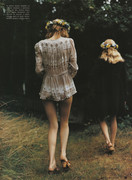
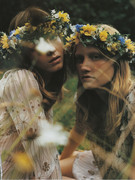
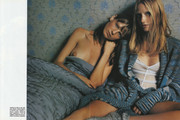
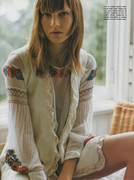
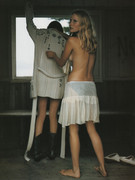

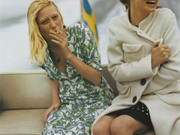
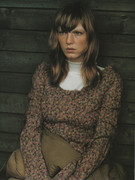
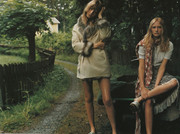
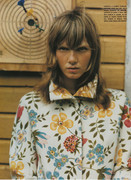
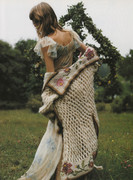
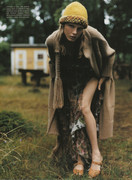

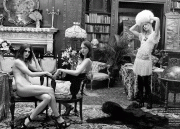
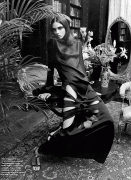

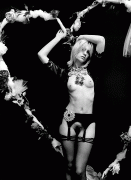
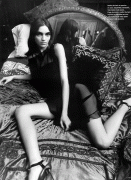
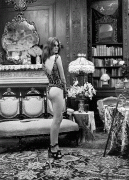

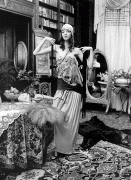
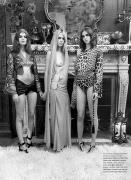
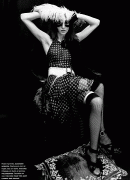
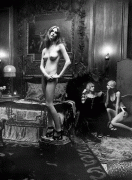

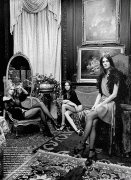
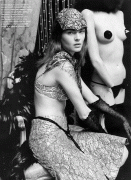
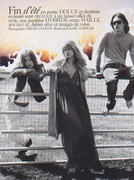
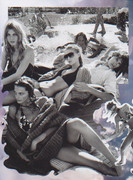
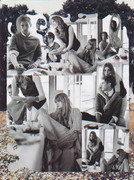
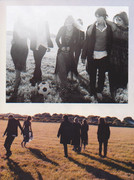
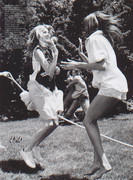
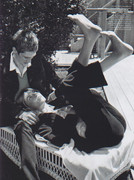
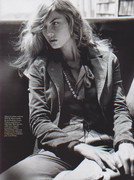
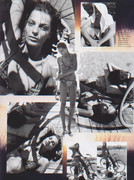
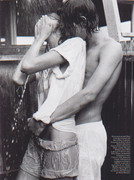
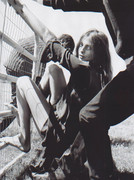
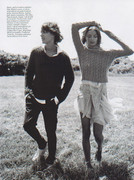
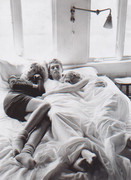
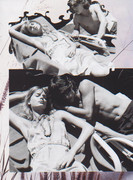
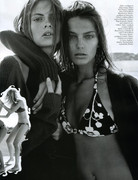
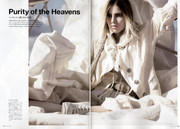


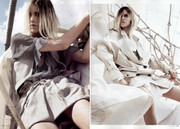


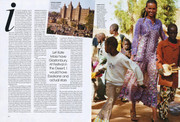
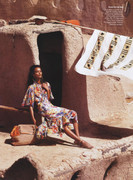
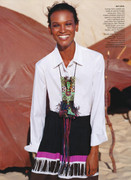
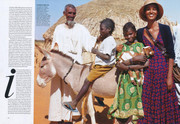
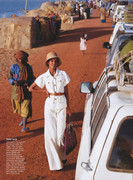
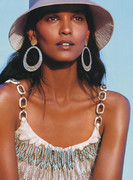
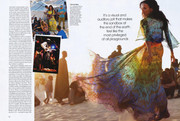
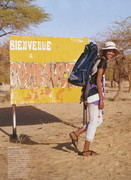
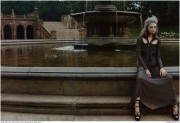
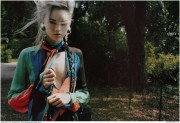
Vogue UK, September 2008
"The Edge of Elegance"
fashion editor: Karl Templer
hair: Eugene Souleiman
make-up: Mark Carrasquillo
models: Natalia Chabanenko, Anna Jagodzinska, Iris Strubegger, Ali Stephens, Magdalena Frackowiak


istyleamy, scanned by skywire
"The Edge of Elegance"
fashion editor: Karl Templer
hair: Eugene Souleiman
make-up: Mark Carrasquillo
models: Natalia Chabanenko, Anna Jagodzinska, Iris Strubegger, Ali Stephens, Magdalena Frackowiak
istyleamy, scanned by skywire







VogueGirl8910
Well-Known Member
- Joined
- Apr 14, 2008
- Messages
- 48,027
- Reaction score
- 8,807
DSquared2 Fall/Winter 06.07 (Ad Campaign)
Model: Julia Stegner
Photographer: Mikael Jansson


styleregistry.livejournal
Model: Julia Stegner
Photographer: Mikael Jansson
styleregistry.livejournal
VogueGirl8910
Well-Known Member
- Joined
- Apr 14, 2008
- Messages
- 48,027
- Reaction score
- 8,807
DSquared2 Spring/Summer 2006 (Ad Campaign)
Model: Carmen Kass
Photographer: Mikael Jansson


styleregistry.livejournal
Model: Carmen Kass
Photographer: Mikael Jansson
styleregistry.livejournal
VogueGirl8910
Well-Known Member
- Joined
- Apr 14, 2008
- Messages
- 48,027
- Reaction score
- 8,807
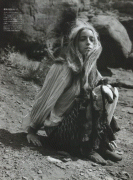
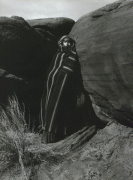
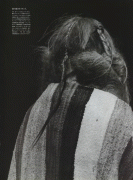
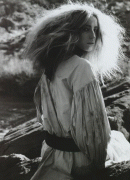
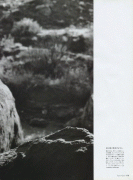
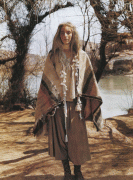
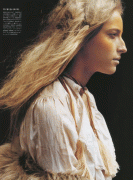
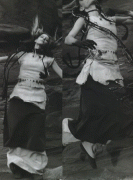
Chloé Spring/Summer 2009 (Ad Campaign)
Models: Anna Jagodzinska & Toni Garrn
Photographer: Mikael Jansson


Fall/Winter 09.10 (Ad Campaign)
Models: Kasia Struss, Sigrid Agren & Karlie Kloss
Photographer: Mikael Jansson


styleregistry.livejournal
Models: Anna Jagodzinska & Toni Garrn
Photographer: Mikael Jansson
Fall/Winter 09.10 (Ad Campaign)
Models: Kasia Struss, Sigrid Agren & Karlie Kloss
Photographer: Mikael Jansson
styleregistry.livejournal








Melancholybaby
Well-Known Member
- Joined
- Aug 25, 2011
- Messages
- 14,151
- Reaction score
- 2,296
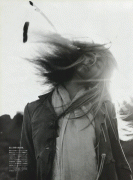
Interview May 2012
James Franco
Photographer: Mikael Jansson
Stylist: Karl Templer


interviewmagazine.com
James Franco
Photographer: Mikael Jansson
Stylist: Karl Templer
interviewmagazine.com
Melancholybaby
Well-Known Member
- Joined
- Aug 25, 2011
- Messages
- 14,151
- Reaction score
- 2,296
Interview May 2012
Olympiad
Photographer: Mikael Jansson
Stylist: Karl Templer
Models: Constance Jablonski, Suvi Kuponen, Matt Terry, Miles Crosby & Nicklas Kingo
Make-Up: Mark Carrasquillo
Hair: Eugene Souleiman


fashionscansremastered
Olympiad
Photographer: Mikael Jansson
Stylist: Karl Templer
Models: Constance Jablonski, Suvi Kuponen, Matt Terry, Miles Crosby & Nicklas Kingo
Make-Up: Mark Carrasquillo
Hair: Eugene Souleiman
fashionscansremastered
iclawhands
Member
- Joined
- Oct 27, 2010
- Messages
- 622
- Reaction score
- 2
when he's on, and it's stark and graphic, he's really incredible.
Interview with Intermission Magazine
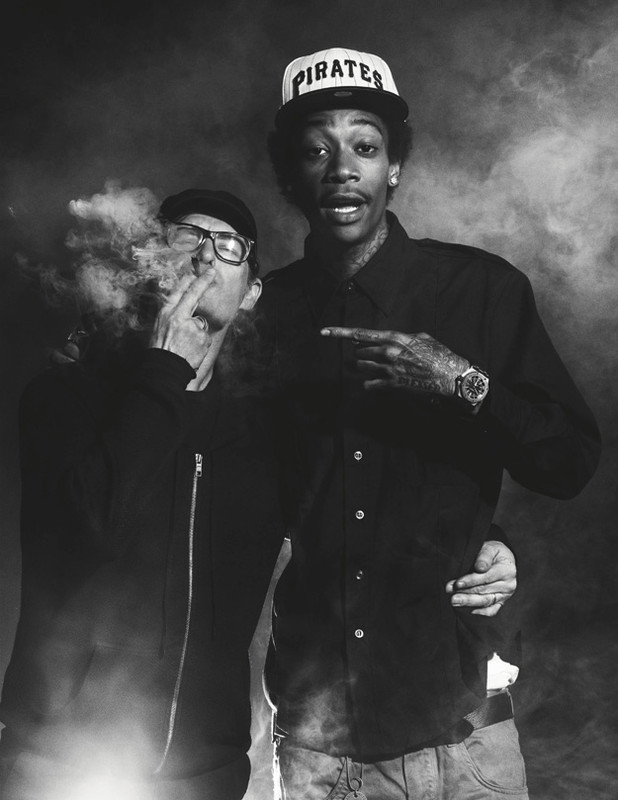
...
*source: intermissionmagazine.com
Darkroom Stories
Within weeks of arriving in the United States, Mikael Jansson found himself assisting Richard Avedon - a dream job that turned out to be the beginning of his own phenomenal career. Now living in New York again, Mikael discusses everything that happened in between.
Portrait Mikael Jansson / Text Daniel Magnussen
Daniel Magnussen: Going back to the beginning, I know you assisted Avedon. We talked briefly in Paris about your time together. Prior to that, how did your interest in photography begin?
Mikael Jansson: Since I always loved music and was very into Bowie, I began photographing bands that came to Stockholm. I was very into it, but this was actually before knowing I wanted to work in photography; it was just an interest. Then I met a girl at a Bowie concert who was a model and we talked a little. She told me that she worked with a great Swedish photographer, Carl Johan Ronn, who needed an assistant. So I went to see him, he hired me and I worked with him for 5 years in Stockholm.
DM: How was that experience, to go from not really knowing if you wanted to work with photography…
MJ: It was really exciting at the time, because he was a great person and he was into music, jazz, so he took me on a trip in life. He taught me about food and travelling. We travelled a lot. He was very important for me while I was growing up and learning. I discovered Avedon’s work through him along with Henri Cartier-Bresson, Brassaï, André Kertész and others, so it was a very important time.
DM: Around what time was this?
MJ: That was from ‘79 to ‘84.
DM: Then in ’84, what did you decide to do?
MJ: I really wanted to go to New York and work with Avedon. Carl Johan helped me. I freelanced as an assistant, making money on the side for a ticket to New York. I came here with enough money to stay for about 3 months, and if nothing happened I would have to go back. I stayed with a friend and the first person I called when I got here was Avedon. But he didn’t need anyone at the time and just told me to send a resume. Since I didn’t even know what a resume was, I had to find out from my friends (laughing). So I worked on my resume and sent it to Avedon, then started to do a little freelance work with other photographers. This continued for almost 3 months. One day, I got a call from Avedon’s studio telling me that they wanted me to come in for an interview. That was pretty exciting.
DM: So how was it meeting him the first time?
MJ: The first time I went, I met with two assistants. Then I went back for another meeting with the studio manager, and finally he called me back for a third meeting and said, “Richard Avedon is working on a commercial now, so he’s leaving the studio at 7. Can you be here at 6?” He had a studio on 75th street, and since I had a friend living up there I stayed with her that night, woke up early and arrived at the studio at 5.30 or something (laughing). When I got there, there were 2 other guys waiting in line.
DM: Like a model casting (laughing).
MJ: Exactly. Yeah, so we were waiting and then he came out. The studio was quite small, so we were sitting in a small make-up room at the back. It was great. I was nervous and he was asking me all sorts of things. He asked, “How long are you planning to stay?” I was thinking three months at first, but I said, “At least a year.” He looked at me and answered, “A year? That’s not possible; when you start here you have to stay at least four.” My reaction was that four years may as well be forever, and as I left I was thinking I’d ****ed up everything. I felt that everything I’d said sounded really stupid, and back at my friend’s apartment I went to bed at eight o’clock. But then I got a call from the studio at half past eight. They said something like, “Mikael, we think you’re the right person for the job,” and I answered by saying, “Really? When do you want me to begin?” They said nine, so I just put my clothes back on and began right away…
DM: And how many years did you end up working for him?
MJ: Two.
DM: What was the most memorable shoot of that time?
MJ: The shoot with Chet Baker, because it was very personal to me. I don’t know if we talked about that in Paris… Anyway, Chet Baker had played in Stockholm in ’83 and I’d shot a portrait of him backstage. I brought my negative in and I printed the picture in the studio and gave it to Dick. I brought in some jazz music and we played Chet Baker in the studio. One day Dick said to me, “Mikael, do you know this trumpet player that is dead? He sang beautifully.” I replied that it was Chet Baker and he was still alive. Dick said, “Great, because someone told me that he has an amazing face and voice…that he almost sings like a woman. Next time he comes to New York, let me know.” Six months after that I found out that Chet was playing at Fat Tuesday, a jazz club downtown. I told Dick he’d be in town to play for three nights. Dick told me that part of the job of being an assistant and eventually becoming a photographer myself was to go down to Fat Tuesday, hear the concert and ask Chet Baker to let Dick take his picture. And that’s what I did; I went down to the concert and asked him. He answered, “Yeah, I know Dick. Call me in the morning. ”Next day at 12 o’clock, I called him, but got no answer. So I had to go down to Fat Tuesday again and listen to the concert once more… So after the concert I asked him what had happened and he was like, ”Ah man…I’m sorry, I couldn’t, it got really late last night. But call me tomorrow at 12…”
DM: (Laughing)
MJ: So I called him and when he actually picked up, he said, ”Come and get me at three.” So the studio arranged a car and I went over to a place on the West Side, and when I knocked on the door of the apartment there was smoke everywhere, like they had been smoking weed already and he said, ”Come in, come in, come in.” He got himself dressed and ready, and as we were leaving he said, ”Hey Mikael, can you carry this trumpet for me?” We went down to the car and he said, ”I have a little problem, we need to go downtown to pick up a suit from the laundry.” He was going to borrow a suit from the drummer, so we went to his drummer’s house first and got the laundry ticket and then we went to the cleaners to pick up the suit, Chet went in and then came back out saying,”Do you have 20 bucks?” (Laughing) He was amazing to talk to during the drive to the studio and Dick got the picture. That was a very memorable shoot, for Egoiste – you remember that magazine?
DM: Yes. You also worked on American West?
MJ: Yeah. But they’d finished all the portraits before I started. I was working on the printing and then we were touring with the show, to Texas and other states.
DM: Speaking of printing, I imagine that was a big eye-opener for you, working with Dick and learning the process at that level?
MJ: Yes, absolutely. It brought things to a new level for me, of course. The entire experience was amazing; to sort of run a studio. And in a way that was probably the most important thing for me.
DM: After the two years with Dick, why did you decide to move on?
MJ: I think I was scared of staying an assistant for too long. I’d been assisting for seven years, and knew assistants who never moved on. It seemed like a good time; I felt ready. Actually, you never feel entirely ready, but it felt like the right time to move on, so I came back to Stockholm and started my own studio, this was ’87.
DM: When did you think you began to develop a strong idea of your own personal style – was it while working with Dick?
MJ: When you’ve been an assistant for seven years, in a sense starting out, of course you don’t know exactly what you want. I mean, you hold on to what you learned in terms of lighting, but the images you want to create take time to develop.
...
*source: intermissionmagazine.com
....
source: intermissionmagazine.com
DM: What jobs did you begin with? Was it only Swedish magazines and advertising, or did you have contacts in NY?
MJ: No, I didn’t have any sort of direct advertising or editorial contacts in New York. In Stockholm, people were curious, as they knew I’d worked with Avedon. I started working for a Swedish magazine called Clic, which was one of the few good fashion magazines, and that gave me the opportunity to work for each issue and try things out, which was very good. In the beginning I worked on smaller advertising jobs, but quite quickly I started to get bigger clients, such as H&M.
DM: When was the first time you shot editorials and advertising jobs for someone outside Sweden?
MJ: I started travelling in the early 90s, when I first came to Paris. I had tear sheets in my book of Helena Christiansen, with whom I had worked with early on. We’d done a few things for Clic magazine. So when I went to French Glamour they said, ”Wow, this is amazing,” and they wanted me to do something for them. I began working for French Glamour almost the same way I began working for Clic. I worked for them regularly, almost every month and it worked out very well for me. And in ’91, I moved to Paris with my family. Even though I was based in Paris I was constantly travelling around the world, almost every shoot I did for French Glamour was a trip. Things were different then. It was all about European clients for me in those days, it really became an international arena when my agent, Annette Wenzel, approached me, I felt ”Ok, let’s try this but I’m not going to move to New York” I had a lot going on then, I was shooting for French Vogue and British Vogue and I wasn’t ready to move. But she insisted and we have worked together ever since. My first shoot for US Vogue was a story with Grace Coddington that wasn’t published. It was a big story with Tatjana Patitz that we shot out in LA. I think it was too European; it was quite moody and sort of Bergman-ish, and I don’t think Anna (Wintour) was that into it. However they did call me back and we started collaborating. My first big campaign was Tiffany’s, and soon after I met Trey Laird who introduced me to Donna Karan. It was like a different world, we travelled extensively shooting in Morocco and Vietnam. We shot all their different lines with Cate Blanchett, Jeremy Irons, Karen Elson, Angela Lindvall, Amber Valetta and many others, later on we worked on The Gap campaigns.
DM: You mention you had a big obsession with David Bowie as a teenager; have you shot him yet?
MJ: No I haven’t, and I always wanted to. I actually came quite close to shooting him for the portraits I just did for New York Times. Last year I shot Iggy and Lou Reed. It would have been amazing to shoot Bowie as well, but unfortunately it didn’t work out.
DM: I interviewed Fabien (Baron) the other night for this issue. When was the first time you got in contact with Fabien?
MJ: I think it was through Joel Berg. He assisted Fabien at (Harper’s) Bazaar, and I think he wanted us to meet and shoot a story for Bazaar, which we did. Around the mid 90’s we started working together for Arena and Arena Homme+.
DM: When do you think your relationship with Fabien became closer – at French Vogue, or was it earlier?
MJ: It was earlier than French Vogue. It was during the time we worked together at Arena Homme+. We became really good friends and have worked together ever since on campaigns like Calvin Klein, Calvin Klein Jeans, Hugo Boss and fragrances like Eternity and Envy, we recently shot Dior.
DM: So how would you describe your collaborations with Fabien? Do you have some sort of routine when you begin discussing ideas?
MJ: No, I wouldn’t say we have a routine. It’s never a routine. It’s always different angles on the jobs. He brings out the best in a team and never settles for less. He’s taught me a lot.
DM: What is the most difficult phase in your creative process?
MJ: I feel that time is an aspect, it seems that we all have less and less of it. Which means that the creative process sometimes suffers.
DM: You did the book Speed of Life and I know you had an obsession with Formula 1. Was that the main reason for doing that book?
MJ: Yes and no. I follow it, and I especially enjoyed watching Formula 1 on TV when I was younger, but I wasn’t really a nerd, someone who knew everything about it. Then through Hugo Boss, which sponsors McLaren, I got the chance to see a race in 2000. We went to Monza, which was amazing. I discovered all the things surrounding the actual race, which I never really understood when I saw it on TV, and it was so mind-blowing, the whole thing. The audience was so much bigger, with families and kids. It’s not just 50 people with a glass of champagne; it’s a very big sport. So I thought I wanted to make a project around it.
DM: And what was the process going from that idea to having it published by Steidl?
MJ: I followed the F1 circuit over several years without having a specific plan from the outset, and then along the way I thought that the material was strong enough to become a book and an exhibition…
DM: Was that also your first solo show?
MJ: Yes, It was my first exhibition. I had works in group shows before, at MoMa in NYC, Saatchi Gallery in London, CNP in Paris, Moderna Museet in Stockholm amongst others.
DM: Why did you decide on Steidl?
MJ: That came through my friend and art director Greger Ulf Nilson. He had a relationship with Gerhard (Steidl) already, so we asked Gerhard if perhaps he would be interested in doing a Formula 1 book. And then he actually became very excited about it.
DM: In terms of the process, did Gerhard suggest papers, or was it all down to you and Greger?
MJ: It was Greger and I who worked on the design process; Gerhard was not really involved.
DM: Is that your only book so far?
MJ: I had previously published a selection of my earlier b/w works, with a small publisher in Stockholm.
DM: Since Speed of Life, have you had thoughts of making another big book?
MJ: I think the whole Speed of Life project was really important for me. I enjoyed doing that in between work, having the chance to go and focus on something else. I’ve actually done two book projects since. I had an exhibition in Stockholm called Dum Dum Boys with images of Iggy (Pop), and we made a publication to accompany that.
DM: I guess in the near future there won’t be a big book with all of your most important work?
MJ: Well, I’m thinking about it. It would be fun to do. Fabien has been asking me, ”When are you doing a book, when are you doing a book?” Since Fabien started at Interview, we have photographed so many interesting personalities; artists, designers, actors such as Michelle Williams, Marion Cotillard, James Franco, Ryan Gosling, Rihanna, Christopher Kane, Miuccia Prada and Marc Jacobs. It is really fantastic to meet these creatives and it would definitely be well worth bringing them all together in a book.
DM: Do you feel part of a generation?
MJ: I am definitely part of the analog generation. Although digital has its benefits, I am thankful for having been around at the time when photography was about film, darkroom work etc. I still get chills from looking at a beautiful b/w print.
DM: Which stylists do you have the closest relationship with?
MJ: Definitely Karl, of course…and Anastasia Barbieri, George Cortina and Edward Enninful.
DM: How do you view your collaborations with Karl – what makes him work for you as a photographer?
MJ: We’ve been working together for so long and we sort of grew together. But I think what’s so amazing about him is that he’s very much into photography, and making the image about more than…
DM: …just the clothes.
MJ: Exactly. I think that’s probably the most important thing to me, that he has such a strong point of view making the image.
DM: So looking back, which story holds the strongest memories and why?
MJ: I still think the Dutch story is one of my strongest. It was so unusual at the time to go with 80 pages of nude people, for a fashion magazine…
DM: When you look back at your career…what are you the most proud of?
MJ: That I have managed to combine my career and still have a family, as much as I love photography it is important to have something else outside the industry. I get a lot of inspiration from being in the world ”outside,” spending time in nature, the archipelago in Stockholm is a very inspiring place whenever I find time to go fishing, and just to hang out with friends.
DM: What excites you about the future, personally or in terms of fashion in general?
MJ: I have just recently moved to New York, which has been exciting. I’m now working on finding a space here, somewhere I can set up a small studio. I want to be able to work on projects that are more personal, and commissions, portraits and so on, in a smaller, more intimate setting – where it’s possible to focus on the subject, to scale away the superfluous…
source: intermissionmagazine.com
Similar Threads


- Replies
- 6
- Views
- 4K


- Replies
- 37
- Views
- 10K

Users who are viewing this thread
Total: 1 (members: 0, guests: 1)


