Ava Gardner #1 | Page 118 | the Fashion Spot

Ava Gardner #1

Status
Not open for further replies.
2fbf_1-1.jpg

ebay
 
Ask Bronny.com

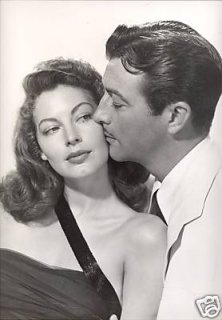
Vivienne Leigh, Ava Gardner, Ingrid Bergmann and Rita Hayworth all conjour images of wonderful 1940s glamour. AskBronny investigates the star style of the 40s.
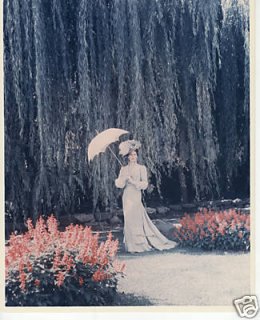
Much of what we remember about 1940s fashion surrounds Hollywood glitz and glamour. It was an era where elegance and beauty dominated the catwalks and movie screens with the finness and star quality from women of that era. Naturally, it was the Europeans who kicked off a fashion frenzy in the 40s and designers in the US went abroad to get inspiration from French couture.

Ava Gardner
One of the most beautiful actresses of her time, Ava Gardner is remembered for her elegance and sleek style. She often wore strapless dresses and gowns. Her trademark was long sexy gloves and lots of jewelry. She wore clothes that hugged her figure including fitted skirts and wide belts which seem to be a la` mode at the moment!
 
ehow.com

Ava Gardner was the epitome of a classic femme fetale. Born into poverty in small town within North Carolina, Garner was the youngest of seven children. After becoming a superstar she stated, "I was a country girl. I still have a country girl's rather simple and ordinary values." She was discovered at the age of 17 and later sent to MGM where she developed into one of the most famous screen sirens of all time. She would lead a life filled of intrigue and scandal, marrying three husbands: Mickey Rooney, Artie Shaw and Frank Sinatra. She was also romantically connected to the likes of eccentric billionaire director and business man, Howard Hughes. Gardner was a talented actress that lead an extraordinary life and happened to have bombshell style.
Get her signature, iconic look. Gardner was starred as Kitty Collins in the film noir "The Killers" in 1946. The silver screen hit also established her reputation as a femme fetale. Draped in a seductive black dress, long sexy gloves and black strappy heels, this dangerous beauty was dressed to kill.

Dress as a Spanish sex symbol. Gardner played a tumultuous Spanish actress, Maria Vargas, in "The Barefoot Contessa" during 1954. Some critics claim that this is the quintessential role of Gardner's career. Mimic her style by wearing fitted shirts, wide belts around the waist and figure-hugging A-line skirts.

Wear fur. Not comfortable with genuine fur? Get faux fur. Gardner enjoyed wearing luxurious fur around husband number three, Frank Sinatra.

Get a floppy hat. Gardner oozed Old Hollywood glamor in floppy hats.

Step5
http://cdn-write.demandstudios.com/upload//5000/300/70/3/45373.png Awaken your inner animal. Gardner looked exotic and fierce modeling a leopard print bathing suit.
 
Last edited by a moderator:
Film Monthly

Ava Gardner possessed such luminescent beauty that both sexes experienced a sharp intake of breath and weak knees when seeing her for the first time.
As the ultimate movie love goddess, no film, movie, photograph or publicist’s adjectives could ever do Ava justice. Her life of volcanic excess proved to be similarly elusive until Lee Server’s Ava Gardner: Love Is Nothing.
Server, who perfectly captured Robert Mitchum’s laconic laissez-faire in Robert Mitchum: Baby, I Don’t Care, follows with another captivating chronicle of one of Hollywood’s most enduring stars.
“Love is nothing but a pain…” said Ava, concluding the sentence with an exact anatomical locale. For Gardner, love and pain became a swirling, kamikaze-like froth of high-speed existence before decades of overload finally broke her down.
A literal “Tobacco Road” refugee from Grabtown, North Carolina, Ava’s beauty was instantly recognized in a quickie MGM screen test, and she was signed to a long term contract. Stardom was not instantaneous. The legendary studio’s overstocked production line moved at a glacial pace, and Ava’s southern brogue and total lack of acting experience required considerable polish.
After six years of small parts and loan-outs in dreck such as Ghosts on the Loose (1943) with Bela Lugosi, it finally took Mark Hellinger casting her in Universal’s The Killers (1946) to make her a star.
“It was sex-two-and extra,” wisecracked the fast-talking Hellinger when asked why he chose Ava for the starring role. Gardner’s striking performance as a lethal femme fatale who double-crosses Burt Lancaster remains a seminal screen performance. After The Killers, Gardner never had to glance backwards for stardom, but many of her subsequent films didn’t do her justice.
She shined in several pictures, including Show Boat (1951), Mogambo (1953) and The Barefoot Contessa (1954), when her beauty wasn’t used to hype poorly designed material. Gardner lacked confidence, and acting was always a chore. Only craftsmen directors like John Ford and Joe Mankiewicz were able to bring out her considerable talent.
It is Ava Gardner’s publicly private life that is presented in mesmerizing fashion by Server.
She was a virginal teenager at MGM, until bending to the incessant blandishments of that diminutive superstar and Hollywood sharpie, Mickey Rooney. After a whirlwind honeymoon on Rooney’s terms at Pebble Beach, “…sex and golf and sex and golf,” Gardner’s high octane jealousy was piqued Mickey’s incessant philandering. She moved on to charismatic bandleader Artie Shaw, who quickly became as coldly demeaning as he was with his other seven wives. Ava became more case-hardened, yet increasingly vulnerable, looking for love in all the right and wrong places.
Ava’s craving for sex, booze and wild times quickly rose to tsunami heights, and the wave failed to crest for many years. Although she held off an ardent Howard Hughes, Gardner was forever restless, fearing loneliness over all else. No matter how bored or free of spirit, though, no other relationship in the star’s life rivaled her thermonuclear marriage to Frank Sinatra.
The seismic pairing of both rags-to-riches superstars that pegged the Richter scale of destructive passion became the centerpiece of Gardner’s life. Ava and Frank’s unbridled desire for one another was as unchecked as their inability to coexist without screaming invective and hurled bric-a-brac. Yet it was a love that endured like a flame of pure fire.
If all of this sounds like a prurient show business gossip biography, it isn’t.
Gardner’s life is depicted in an upbeat, attuned style. Polemics and titillation are refreshingly absent from a mesmerizing story supported by superb research. Server fondly brings Gardner to life as a warm, refreshingly unpretentious star whose appetites eventually overwhelmed her spirit.
Whether defining amnesia as “noir’s version of the common cold” or recalling Mark Hellinger placing a censor’s letter about The Killers script in a file labeled”**** You,” the author’s ability to imbue cinematic history within the narrative is peerless.
In the end, a desiccated Gardner iteratively listens to Sinatra’s records in her London flat as her health fails. The poignancy of Ava Gardner’s destructive quest for love will bring a lump to your throat.
Ava Gardner: Love Is Nothing is a compelling triumph of a biography.
 
britannica.com

Miranda Wilding - December 24th, 2008

Ava Gardner (b. Christmas Eve 1922 in Smithfield, North Carolina - died January 25, 1990 in London, England) was one of the most extraordinary film stars of the 20th century.
Ava wasn’t just incredibly beautiful. She was the kind of complicated, utterly fascinating woman that comes along once in a very great while.
She was provocative in the most dangerous sense of the word. Ava wore her smoldering sensuality on her sleeve. She was a rebellious, green eyed Irish girl who was sophisticated and free spirited. If she had been born several decades later, she may never have married at all. No man ever owned her. She was too strong and much too independent.
Beneath all of that fire and music, there was a savage intelligence, a wicked wit and an unbreakable will. She knocked Howard Hughes out cold one night when he started slapping her around. She beat her second husband (musician Artie Shaw) at chess. He never forgave her.
Ava started out as a contract player at MGM. Despite her distracting loveliness, inwardly she was very much a small town southern girl and felt out of her depth with Hollywood’s fast crowd. She was a quick study. Ava was a notorious night owl. She discovered that she enjoyed parties and socializing.
She found her soulmate with her third husband, Frank Sinatra. That romance was legendary. But their passionate, stormy, hotblooded relationship was too intense to last. Though he remarried twice after that, she always remained the one true love of his life.
In 1946, Ava played the femme fatale Kitty Collins opposite Burt Lancaster in The Killers. That was the beginning of a landmark career. She went on to do the 50s version of Show Boat and then Mogambo, for which she received her only Academy Award nomination. Her most famous role was the tragic Spanish movie goddess that she portrayed in The Barefoot Contessa (1954).
She worked steadily throughout her life and eventually left the U.S. entirely. Ava fled to Spain and then to London, where she lived out her final years.
She was a fashion icon in the sense that she was widely admired by other women, who emulated the glamorous styles of her characters.
Ava loved the best of everything: Creed’s perfume, Dior gowns and Ferragamo shoes.
 
Fashion Encyclopedia

Fontana created fantasy dresses, wedding gowns, ball gowns, and possessed an aura of glamor. In the 1950s, in particular, the Fontana style was a rich excess and ideal of the sumptuous dress. For the client, these were the most flattering kinds of party dresses cognizant of the New Look, buoyant in full skirts, and attentive to the bust. To the observer, theatrical high-style 1950s style was crystallized in the internationally known clientéle including Linda Christian (her wedding dress to marry Tyrone Power), Audrey Hepburn, and preeminently Ava Gardner.
Gardner was the perfect Fontana client and model—unabashedly and voluptuously sexy and known for alluring and elegant dressing. Gardner wore Fontana for film roles in The Barefoot Contessa (1954), The Sun Also Rises (1957), and On the Beach (1959). While American film had its own specialty costume designers such as Edith Head and Travis Banton, postwar Rome reignited its status as a glamor capital by the conflation of life and film. Sisters Zoë, Micol, and Giovanna Fontana had begun their business in 1936, but seized the public imagination when American films were made on location in Italy using their designs and, to a lesser degree, with the Italian film industry. The popular international appeal of the Power/Christian wedding and Ava Gardner's paparazzi-trailing fame brought vast worldwide visibility and recognition.
 
Ebay, Magnum.:heart::heart::heart:
 

Attachments

  • 1.jpg
    1.jpg
    14.8 KB · Views: 3
  • 244738013_o.jpg
    244738013_o.jpg
    73.2 KB · Views: 1
  • e5a9_1.jpg
    e5a9_1.jpg
    32.9 KB · Views: 1
Status
Not open for further replies.

Users who are viewing this thread

New Posts

Forum Statistics

Threads
215,569
Messages
15,307,782
Members
89,592
Latest member
elektraaa
Back
Top