
You are using an out of date browser. It may not display this or other websites correctly.
You should upgrade or use an alternative browser.
You should upgrade or use an alternative browser.
Glenda Bailey
- Thread starter kasper!
- Start date


- Joined
- Jun 5, 2005
- Messages
- 2,646
- Reaction score
- 3
I like Bazaar (although I despise their cover choices) but I find Glenda rather uninteresting.. Nothing about her style or personality stands out. She edits a fairly interesting magazine and that's it.
BerlinRocks
Active Member
- Joined
- Dec 19, 2005
- Messages
- 11,216
- Reaction score
- 15
i don't know that much about her...
i could even say : i know NOTHING about her...
more... since when did she take h&b???
oh wait i've seen her... or maybe i'm wrong... but i think i know who she is...
she loved paris and all the flowers for ss08...
i could even say : i know NOTHING about her...
more... since when did she take h&b???
oh wait i've seen her... or maybe i'm wrong... but i think i know who she is...
she loved paris and all the flowers for ss08...
jackieonassis
Active Member
- Joined
- Oct 11, 2005
- Messages
- 1,164
- Reaction score
- 2
I don't know much about her, but I like the magazine.

kasper!
Well-Known Member
- Joined
- Jun 23, 2007
- Messages
- 6,030
- Reaction score
- 2,066
more... since when did she take h&b???
A.D.C. answered this question in the magazine forum....her first full-edited issue was 2002 feb with gisele on the cover.....well...i saw the 2002 jan issue yesterday...it was katherine betts's last issue..well..i should buy it


kasper!
Well-Known Member
- Joined
- Jun 23, 2007
- Messages
- 6,030
- Reaction score
- 2,066
an old article,from jyanet.com
,from jyanet.com[FONT=Sabon,Charter BT,Garamond,Monotype Garamond][SIZE=-1][/SIZE][/FONT][FONT=Sabon,Charter BT,Garamond,Monotype Garamond]Welcome back, Harper’s Bazaar
[/FONT]Harper's Bazaar's redesign, predicted by the author, comes early with a new editor-in-chief whose mission is to raise circulation while redefining its brand
Jack Yan
TWO of my predictions came true this year. One was that Harper’s Bazaar, with its February 2000-launched masthead, would not do too well. That led to the news that editor-in-chief Kate Betts would not have her contract renewed. The second, which I committed to print in Visual Arts Trends early last year, has come early: that Harper’s Bazaar would require a redesign because the 2000 effort wouldn’t last.
I predicted the latter for 2003, but with the changes made by new editor-in-chief Glenda Bailey, there is a new Bazaar. As with February 2000, Gwyneth Paltrow is on the cover (an actress I declined to put on Lucire’s recently; let the American media champion their Gwyn). But we see the welcome return of the original masthead, in the HTF Didot typeface, gracing (is there a better present participle here?) the cover.
I must have given about 12 or more lectures since February 2000 on the faults of the "other" masthead, which must now rank as a black-sheep version or a bad experiment. But in each lecture I gave the designer the benefit of the doubt. ‘Maybe he’s trying to redefine the market-place.’ ‘It’ll give the magazine greater differentiation.’ But I always qualified it with, ‘It doesn’t say what the magazine truly is: establishment.’
Every student of typography will know two facts: one is that the selection of a typeface is partly subconscious, partly logical and partly competitive; the second is that typefaces convey the social position of the piece, determined by the reader’s upbringing and earlier influences. It is as much common typographic and design knowledge as the fact that Bill Cosby looks less menacing in his trademark woolen sweaters.
Still, if there weren’t failures then Harper’s Bazaar would never know it had once tried to push the envelope, to lead instead of following (even if the use of a modern typeface, such as HTF Didot, was established by the magazine’s legendary Ukrainian art director Alexey Brodovitch). That in itself is refreshing, even if the magazine paid for it with circulation and money, those determinants of an editor-in-chief, and, as it turned out, an art director’s careers.
But why was it such a bad idea? I’ve dealt with the design elsewhere but Harper’s Bazaar forgot that the visual expression of any product must match the product. Yes, Ms Betts did change the magazine after Liz Tilberis died; she had moved Bazaar on after Karin Upton Baker, then-editor of Harper’s Bazaar Australia, came in as a caretaker with the mission of keeping the Liz formula going. But she hadn’t revolutionized it. Harper’s Bazaar had a core readership that needed to grow. To get them, it packaged its product differently, but it was fundamentally the same—at least when it came to casual readers like me.
And it wasn’t that adventurous design-wise. The magazine didn’t suddenly go grunge. It wasn’t Ray Gun on steroids. No: it was well-ordered—which didn’t explain the godawful masthead and the choices of typeface.
In a recession, Harper’s Bazaar’s adventurous experiment would probably not go down that well, either. It’s like dressing sexy at a time when the mood is somber. It’s all right if you’re the Hilton sisters and terrorizing the social scene, but it’s not all right if you’re trying to be the grande dame as well. And that was where Bazaar was at: a brand undefined, through no fault of any one editor-in-chief or one art director, but the way things just didn’t gel.
Art direction of a magazine, like any other discipline, is one where identity and branding are paramount, along with the theories behind them: organizational vision, marketing strategy, typography, graphic design, image, marketing performance, tracking. Bazaar expressed this more than any other.
And of the new Bazaar? The story is not unlike that of Colombe Pringle’s last Vogue Paris. The French edition went avant-garde for 1994, using Akzidenz-Grotesk and Garamond—which, incidentally, are typefaces that the new Harper’s Bazaar has adopted along with Linotype Didot (right)—using asymmetric layouts, white space and other DTP-layout-inspired features. It didn’t work, even if the magazine looked cooler than it ever did with the staid and same-again-in-fashion Berthold Bodoni Antiqua. Pringle found herself out of a job and Joan Juliet Buck and Donald Schneider came in. The magazine promptly went back to the pre-1994 look. In fact, it probably went further back in time, looking duller than it ever did artistically. I didn’t buy any more after that, but maybe the experiment in design mediocrity worked: (a) we are about fashion so look at the photos because the Newhouses paid a lot for them; (b) we are the establishment and now we look it.
So Bailey’s Bazaar is of that ilk: a safely, safely trek to more evocative times, using the Brodovitch-inspired, Hoefler-digitalized masthead, more conservative type choices and instant familiarity. Nothing exciting, artistically, but Lucire’s fount of fashion features, Phillip Johnson, gave it the thumbs-up when I spoke with him today. It works, because it’s Bazaar: a return to what it knows and hopefully, the Avis rule will apply: ‘We try harder.’
The cover works. Ms Paltrow looks about as characterful as a Chinese rice pudding but she’s helped by the split-line Linotype Didot Italic text—not to everyone’s tastes but the message to me is: the type style you’re so familiar with is back. It’s the second rule and there are enough readers who understand it.
It looks establishment. Its features hold the institution together, with a bit of celeb-kissing thrown in. (Who doesn’t kiss celebs now in that market?) There are beautiful photos by Terry Richardson. And a layout that obeys the rules because Harper’s Bazaar is about defining the rules. (I know, I know: ‘We don’t dictate!’ But we on the fringes in the independent press think you do.)
Content-wise, there’s less dumbing-down. The articulate Georgina Howell looks at Frida Kahlo: for great research, it’s hard to go past Georgina. The type is Adobe Garamond; ITC New Baskerville, used in the Betts days, takes up more room. (New Baskerville was the smart-*** student’s typeface of choice when I was at law school: it made your papers look bulkier because you’d get fewer characters per line. Oh, I was the smart-*** law student.) If you have a lot of pages and it’s in Garamond, it’s bound to be meaty. Let’s face it: people don’t really want dumbing-down. Not at $3·50 per issue. And right now, we want to be a little safer and not sense that we’re under siege, which is how the east coast still feels.
In a recession, and in a post-September 11 world, when we look to the past with even rosier glasses, when Hovis Bread and Dvorak’s New World Symphony go together with sepia tones, familiarity mightn’t breed contempt—it might breed sales. Hearst, Bazaar’s publisher, is betting on it.
Cicciolina
Active Member
- Joined
- Jul 17, 2003
- Messages
- 2,970
- Reaction score
- 15
Thanks for the article kasper, it was really interesting.
I remember that Glenda Bailey came over from US Marie Claire I think, and even before that she was an editor in the UK... I believe also at Marie Claire but I may be wrong. I recall reading that she did a lot of good for that magazine won a lot of praise and awards there... I'm a bit sketchy on the details, I'll try to come back with more
Personality wise she's a bit of a non-entity for me though, but I don't think she intends to really exert her identity as much as other others.
I remember that Glenda Bailey came over from US Marie Claire I think, and even before that she was an editor in the UK... I believe also at Marie Claire but I may be wrong. I recall reading that she did a lot of good for that magazine won a lot of praise and awards there... I'm a bit sketchy on the details, I'll try to come back with more
Personality wise she's a bit of a non-entity for me though, but I don't think she intends to really exert her identity as much as other others.

BetteT
Well-Known Member
- Joined
- Jan 22, 2003
- Messages
- 22,818
- Reaction score
- 111
There's not much out there about her and she doesn't seem to pose for pictures much. But the following is good information about her and her career.
I found this from Hearst Publications ... obviously a press release:


[FONT=Arial, Helvetica, sans-serif]Glenda Bailey[/FONT]
[FONT=Arial, Helvetica, sans-serif]Editor-In-Chief[/FONT]
[FONT=Arial, Helvetica, sans-serif]Harper's Bazaar[/FONT]
[FONT=Arial, Helvetica, sans-serif][FONT=Arial, Helvetica, sans-serif]Glenda Bailey became editor-in-chief of Harper’s Bazaar in May 2001. Prior to joining Bazaar, she served in the same capacity at the U.S. edition of Marie Claire beginning in June 1996. In the nearly five years under her editorship, Bailey built Marie Claire into the best-selling fashion magazine on the newsstand and one of the fastest growing magazines in the industry. [/FONT][/FONT]
[FONT=Arial, Helvetica, sans-serif][FONT=Arial, Helvetica, sans-serif]Bailey brings her in-depth knowledge of fashion and trends, along with a sense of originality and personality, to the magazine she edits. She is not afraid to be controversial and knows that success relies on unique ideas –and making them happen. [/FONT]
[FONT=Arial, Helvetica, sans-serif]While at Marie Claire, Bailey created many unique features and initiatives, including the cover celebrity “challenge”, where celebrities agree to do such amazing tasks as live in an igloo, travel to Africa, and survive in the desert in lieu of giving a typical boring interview. In addition, Bailey was instrumental in producing Marie Claire's What Women Want event in November 1999. This groundbreaking event brought together the likes of Oprah Winfrey, Meryl Streep, Sarah Jessica Parker and Trudie Styler to share their experience and raise awareness on issues affecting women today. [/FONT]
[FONT=Arial, Helvetica, sans-serif]Bailey has received many industry accolades during her career. In March 2001, she was named “Editor of the Year” by Adweek for her “innovative, expansive and democratic approach” to editing a fashion and beauty magazine. In addition, during Bailey’s tenure as editor, Marie Claire was named one of Adweek's Top 10 Hottest Magazines in 1997, 1998, 1999 and 2000 and as Best Publication by industry newsletter The Delaney Report in 2000. The title was one of Capell's Circulation Report's Best Circulation Performers in 1998. During her time at Marie Claire, the title was the recipient of the Community Action Network Award in 1998 and 1999 for its feature stories on women and AIDS and genital mutilation and was the first magazine in the United States to be given the Amnesty International Award for Journalism in September 1997. [/FONT]
[FONT=Arial, Helvetica, sans-serif]Prior to her move to New York, Bailey served as the Editor of British Marie Claire, which she launched in 1988. Under her editorship, Marie Claire became the biggest-selling fashion magazine in the United Kingdom and earned virtually every publishing honor. In the eight years she was Editor-in-Chief of British Marie Claire, she won three Magazine Editor of the Year Awards, five Magazine of the Year Awards and two Amnesty International Awards. In August 1995, she was made International Editorial Consultant of all 26 editions of Marie Claire. Born in Derbyshire, England, Bailey earned a degree in fashion design from Kingston University. [/FONT]
[FONT=Arial, Helvetica, sans-serif]Before embarking on her career in magazine publishing, in 1983 Bailey produced a collection for Guisi Slaverio in Italy. She then became editor of Honey in 1986 and went on to successfully launch Folio, a quarterly fashion magazine before being appointed as launch editor of the British Marie Claire. [/FONT]
[/FONT]
I found this from Hearst Publications ... obviously a press release:
[FONT=Arial, Helvetica, sans-serif]Glenda Bailey[/FONT]
[FONT=Arial, Helvetica, sans-serif]Editor-In-Chief[/FONT]
[FONT=Arial, Helvetica, sans-serif]Harper's Bazaar[/FONT]
[FONT=Arial, Helvetica, sans-serif][FONT=Arial, Helvetica, sans-serif]Glenda Bailey became editor-in-chief of Harper’s Bazaar in May 2001. Prior to joining Bazaar, she served in the same capacity at the U.S. edition of Marie Claire beginning in June 1996. In the nearly five years under her editorship, Bailey built Marie Claire into the best-selling fashion magazine on the newsstand and one of the fastest growing magazines in the industry. [/FONT][/FONT]
[FONT=Arial, Helvetica, sans-serif][FONT=Arial, Helvetica, sans-serif]Bailey brings her in-depth knowledge of fashion and trends, along with a sense of originality and personality, to the magazine she edits. She is not afraid to be controversial and knows that success relies on unique ideas –and making them happen. [/FONT]
[FONT=Arial, Helvetica, sans-serif]While at Marie Claire, Bailey created many unique features and initiatives, including the cover celebrity “challenge”, where celebrities agree to do such amazing tasks as live in an igloo, travel to Africa, and survive in the desert in lieu of giving a typical boring interview. In addition, Bailey was instrumental in producing Marie Claire's What Women Want event in November 1999. This groundbreaking event brought together the likes of Oprah Winfrey, Meryl Streep, Sarah Jessica Parker and Trudie Styler to share their experience and raise awareness on issues affecting women today. [/FONT]
[FONT=Arial, Helvetica, sans-serif]Bailey has received many industry accolades during her career. In March 2001, she was named “Editor of the Year” by Adweek for her “innovative, expansive and democratic approach” to editing a fashion and beauty magazine. In addition, during Bailey’s tenure as editor, Marie Claire was named one of Adweek's Top 10 Hottest Magazines in 1997, 1998, 1999 and 2000 and as Best Publication by industry newsletter The Delaney Report in 2000. The title was one of Capell's Circulation Report's Best Circulation Performers in 1998. During her time at Marie Claire, the title was the recipient of the Community Action Network Award in 1998 and 1999 for its feature stories on women and AIDS and genital mutilation and was the first magazine in the United States to be given the Amnesty International Award for Journalism in September 1997. [/FONT]
[FONT=Arial, Helvetica, sans-serif]Prior to her move to New York, Bailey served as the Editor of British Marie Claire, which she launched in 1988. Under her editorship, Marie Claire became the biggest-selling fashion magazine in the United Kingdom and earned virtually every publishing honor. In the eight years she was Editor-in-Chief of British Marie Claire, she won three Magazine Editor of the Year Awards, five Magazine of the Year Awards and two Amnesty International Awards. In August 1995, she was made International Editorial Consultant of all 26 editions of Marie Claire. Born in Derbyshire, England, Bailey earned a degree in fashion design from Kingston University. [/FONT]
[FONT=Arial, Helvetica, sans-serif]Before embarking on her career in magazine publishing, in 1983 Bailey produced a collection for Guisi Slaverio in Italy. She then became editor of Honey in 1986 and went on to successfully launch Folio, a quarterly fashion magazine before being appointed as launch editor of the British Marie Claire. [/FONT]
[/FONT]
Last edited by a moderator:
BetteT
Well-Known Member
- Joined
- Jan 22, 2003
- Messages
- 22,818
- Reaction score
- 111
And I got this from Forbes:
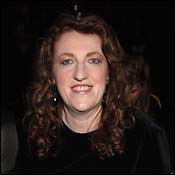 Glenda Bailey
Editor-in-Chief, Harper's Bazaar
Circulation: 722,359
Bailey became top editor of Bazaar in May 2001, fresh off her highly successful reign at Marie Claire. She had a lot to prove, taking over from beloved editor Liz Tilberis, who died of cancer in 1999. (Kate Betts had a short tenure in between.) But since Bailey began, there has been a 30% increase in newsstand sales. She created the two-cover concept for Bazaar: one on front, another on back. While she doesn't have quite Wintour's cachet, her Harper's Bazaar is more approachable and more accessible than its rival--as Bailey is said to be.
© AP
[FONT=verdana,sans-serif]Most Powerful Fashion Editors[/FONT]
Editor-in-Chief, Harper's Bazaar
Circulation: 722,359
Bailey became top editor of Bazaar in May 2001, fresh off her highly successful reign at Marie Claire. She had a lot to prove, taking over from beloved editor Liz Tilberis, who died of cancer in 1999. (Kate Betts had a short tenure in between.) But since Bailey began, there has been a 30% increase in newsstand sales. She created the two-cover concept for Bazaar: one on front, another on back. While she doesn't have quite Wintour's cachet, her Harper's Bazaar is more approachable and more accessible than its rival--as Bailey is said to be.
© AP
BetteT
Well-Known Member
- Joined
- Jan 22, 2003
- Messages
- 22,818
- Reaction score
- 111
And here's an interview last Sept. that she did with Media Bistro:
What's the best part of Fashion Week?
The clothes. It's all about what's new.
And the worst part?
Waiting for the shows to begin. Sometimes shows don't start for an hour. In Europe, they can be two hours late.
To the outsider looking in the fashion industry is like some exotic tribe that has its own idiosyncratic customs and mores. What's the protocol when it comes to wearing something from the designer to their show. Is that just the province of celebrities and socialites?
I don't know how anyone would find the time to change. (Laughs). The mind boggles. It's like being Superman and changing in a telephone kiosk in Bryant Park. I certainly don't have the chance to change for a show. I have such a passion for fashion. I love shopping -- it's my hobby as well as my job. I relish getting the clothes and putting my looks together in what I think is my personal style for the season.
Do you have a Fashion Week uniform? How do you style yourself for the shows?
I really don't like to wear one designer head-to-toe. That says everything about the designer and very little about me. I try to buy clothes that complement my existing wardrobe. I try to practice what I preach which is personal style and updating your look every season. The days are over, thank goodness, where you rushed out and bought everything new. It's all about expressing yourself and putting together looks that you love with [clothes] that you have worn forever.
Ever leave a show because you didn't like your seat?
[Laughs] I've only ever sat in the front row, so no... [Laughs] This is a very serious business. I'm there because I represent Harper's Bazaar and I'm looking for the very, very best fashion that my readers are going to want to know about. I take that job very seriously; I don't take myself very seriously.
Did you always want to be a fashion editor?
I always loved fashion and I always loved magazines. I studied fashion design and I realized I wasn't going to be the next Karl Lagerfeld and I wanted to be really good in an area. I was really fortunate enough to do a placement [internship] at IPC Magazines back in England and then I did my dissertation on their magazines. I was very strategic about my career in magazines.
What magazines do you read?
I've always read so many magazines. I collect magazines. I've got some really great issues of Jil. It was a French magazine edited by Babeth Dijan. The first three issues of Italian Elle are so well done... I love looking at all sorts of magazines, from Popular Mechanics to Pop magazine, if they're really well-edited.
You actually read Popular Mechanics?
Yes -- which is particularly interesting because I don't drive. I love the art of editing. You don't have to know about the subject to know whether something is well done.
What's a typical day like for you?
During the shows, it's quite an early start with shows starting at 9 o' clock and 8 o'clock for previews. Then there are presentations and dinners after all that. It's even more intense in Europe because you sometimes find yourself out until 1 or 2 in the morning. If you haven't got an early show in the morning, you're inevitably trying to see the designers or presidents [of companies] to catch up on the business. Back in the office my day could be described as "Yes, no, yes, yes, no" -- because that's what you do when you're an editor. That's your job.
There's been so much about fashion in recent years in pop culture from The Devil Wears Prada and Project Runway to Ugly Betty. How do you think they stack up against the real thing?
Anything that gets the general public more aware of the fashion industry and creates more excitement about it I'm all for. In the same way, one of the reasons for our success at Harper's Bazaar is that we really embrace popular culture. We put fashion in context of popular culture. It's really quite unique positioning in our market. In the September issue Chloe Sevigny in the rehab story totally reflects what people are talking about. [EDITOR'S NOTE: the actress is depicted in a fashion spread as a starlet in rehab].
How did the idea for that photo shoot come about?
The idea was mine. It came about a very long time ago at the shows as more and more celebrities were going to rehab. That's what people were talking about so I thought how great it would be to put it into context of a fashion story. It was about six months ago and we were waiting for Chloe to be free. I'm very proud of the results because I thought she really got the spirit of the piece.
You've shown yourself to have an uncanny knack with your timing for celebrity covers. You put Paris and Nicole on your cover and featured them in a fashion story as fugitives just as Hilton was sentenced to jail, and this month you've got Kate Hudson when the tabloids are speculating on what role her breakup with Owen Wilson might have played in his recent troubles. Do you have ESP? How do you pick your stars for your covers?
[Laughs]. We're interested in the stars everyone is talking about. As you mentioned about Paris and Nicole, we shot that in early February and it was our June cover. Paris went to prison on our on sale day. I trust my instincts. I always wanted to be innovative and inventive -- not just to report on what's going on, but to create ideas that people talked about.
Like having the Simpsons go to Paris?
Laura Brown, our celebrity and special projects editor, and Stephen Gan, who is our creative director, were talking about the Simpsons movie and they had the idea of sending the Simpsons to Paris. So we concocted a storyline that was executed really well by Elizabeth Hummer, our design director.
You can't deny the influence that Paris, Britney -- and Lindsay -- have had on fashion.
Which celebrities have sold the best for Bazaar?
They've all done very, very well. It's really hard to pick one or two out. Jennifer Aniston sells really, really well. Indeed so did Madonna, Katie Holmes, Demi...
Which was the best selling one?
It's probably Jennifer Aniston. That sold incredibly well. So did Ashley Olsen -- her first fashion magazine cover. That's something else I'm very proud of -- I'm not afraid to give somebody her first cover. I gave Sarah Jessica Parker her first cover and Teri Hatcher. It's timing. It's all about the right idea at the right time.
Have you had a disappointing celebrity cover?
No. We were fortunate enough to win the ASME award for best [celebrity] cover [in 2006 for the January issue] and that was Julianne Moore and she's not known for being a newsstand success. What I loved about that cover is we even covered her face -- which is something you're not supposed to do and it was all green, which is also not successful with a cover. Obviously that sold very well. Often you see a list of people who don't sell very well. I would just say to every editor it's whether the person is right for that particular magazine and the timing is right.
Your pregnant Britney Spears cover [in August 2006] was named one of AdAge's Ten Best. Would you put her on the cover given what's become of her now?
Again, it has to do with the right timing and the right idea.
Britney, Paris, and girls like them occupy a curious position in fashion. What role do they play in fashion? They're certainly not icons -- or are they?
You can't deny the influence that Paris, Britney -- and Lindsay -- have had on fashion. One of our best sellers of all time was Ashley Olsen. What's exciting about that is that I love that fashion can come from the street, it can come from celebrities. Generally, it's coming from the culture.
So it's all good -- reality stars as models or designers, bad girls as fashion leaders, and lower priced lines from stores like Target and Kohl's that have made fashion much more accessible and less elitist. Ever think fashion has become too egalitarian?
Our job as editors is to find the very best fashion at the best price. The more variety there is, the better it is for the reader.
Have you ever been approached to do a reality show? Would you ever open up the Bazaar offices for television?
People have asked but the answer has been "no."
Has the diva factor played up on shows like Project Runway given fashionistas a bad rap as super bitchy, overly competitive strivers?
Fashion is the entertainment industry and attracts lots of characters. Long may that continue.
Anna Wintour, the editor of your rival publication, is very much a "celebrity editor." You seem to keep a much lower profile. How do you see yourself in that context?
[Laughs] I just get on with my job.
Okay, let's have the real story between the rivalry between Vogue and Bazaar. How would you describe the rivalry between the two magazines?
I don't think there is [a rivalry]. I'm very fortunate that my competitors are really good at their jobs and that's good because competition is the thing that gets us all really excited. Everyone in this area of the industry has their particular market, which they serve very well.
You really don't think there's a rivalry between Vogue and Bazaar?
No. They're good at what they do and I'd like to think the reason why we've become so successful is because we hopefully provide a magazine for women who love fashion and beauty, that have a sense of humor, that love entertainment, and that want to see popular culture reflected on our pages. I think the biggest reason Bazaar is a success is because of all the franchises we have. You mentioned you liked 'Fabulous at Any Age' -- that's just one of many franchises I either brought back or created. Whether it's 'Smart Shopping' or 'Personal Style' or 'What's In, What's Out,' these are all areas of the magazine the reader enjoys or comes back to every single month. That's something that's happened over the last five years. That's really set us apart from our competitors. So often with fashion magazines they take themselves very seriously and it's often about head to toe a particular designer. I think it's very important to have the very best fashion in Bazaar and I take that job seriously. We work with the very best photographers and stylists in the world. We have these beautiful aspirational images so people can dream, but at the same time we also know that even the most fashionable, knowledgeable woman wants ideas.
What has been your greatest contribution to Bazaar?
It's what I've just been saying. The first thing I did with Stephen Gan when we took over was to put the logo back, and from then on it was a question of building up franchises which people could enjoy every month at the same time creating "talk about" features that were unique in a fashion magazine.
What are the qualities you look for when you're hiring someone regardless of position?
They have to have a sense of humor. They have to have original ideas. I think there is way too much magazine fodder out there which is very boring. I get bored very easily.
How would you say you've gotten to where you are?
Hard work and good shoes.
What do you see yourself doing five years from now?
I've learned that life happens when you're making other plans.
Do you have a motto?
Good is the greatest enemy of great.
What's the best part of Fashion Week?
The clothes. It's all about what's new.
And the worst part?
Waiting for the shows to begin. Sometimes shows don't start for an hour. In Europe, they can be two hours late.
To the outsider looking in the fashion industry is like some exotic tribe that has its own idiosyncratic customs and mores. What's the protocol when it comes to wearing something from the designer to their show. Is that just the province of celebrities and socialites?
I don't know how anyone would find the time to change. (Laughs). The mind boggles. It's like being Superman and changing in a telephone kiosk in Bryant Park. I certainly don't have the chance to change for a show. I have such a passion for fashion. I love shopping -- it's my hobby as well as my job. I relish getting the clothes and putting my looks together in what I think is my personal style for the season.
Do you have a Fashion Week uniform? How do you style yourself for the shows?
I really don't like to wear one designer head-to-toe. That says everything about the designer and very little about me. I try to buy clothes that complement my existing wardrobe. I try to practice what I preach which is personal style and updating your look every season. The days are over, thank goodness, where you rushed out and bought everything new. It's all about expressing yourself and putting together looks that you love with [clothes] that you have worn forever.
Ever leave a show because you didn't like your seat?
[Laughs] I've only ever sat in the front row, so no... [Laughs] This is a very serious business. I'm there because I represent Harper's Bazaar and I'm looking for the very, very best fashion that my readers are going to want to know about. I take that job very seriously; I don't take myself very seriously.
Did you always want to be a fashion editor?
I always loved fashion and I always loved magazines. I studied fashion design and I realized I wasn't going to be the next Karl Lagerfeld and I wanted to be really good in an area. I was really fortunate enough to do a placement [internship] at IPC Magazines back in England and then I did my dissertation on their magazines. I was very strategic about my career in magazines.
What magazines do you read?
I've always read so many magazines. I collect magazines. I've got some really great issues of Jil. It was a French magazine edited by Babeth Dijan. The first three issues of Italian Elle are so well done... I love looking at all sorts of magazines, from Popular Mechanics to Pop magazine, if they're really well-edited.
You actually read Popular Mechanics?
Yes -- which is particularly interesting because I don't drive. I love the art of editing. You don't have to know about the subject to know whether something is well done.
What's a typical day like for you?
During the shows, it's quite an early start with shows starting at 9 o' clock and 8 o'clock for previews. Then there are presentations and dinners after all that. It's even more intense in Europe because you sometimes find yourself out until 1 or 2 in the morning. If you haven't got an early show in the morning, you're inevitably trying to see the designers or presidents [of companies] to catch up on the business. Back in the office my day could be described as "Yes, no, yes, yes, no" -- because that's what you do when you're an editor. That's your job.
There's been so much about fashion in recent years in pop culture from The Devil Wears Prada and Project Runway to Ugly Betty. How do you think they stack up against the real thing?
Anything that gets the general public more aware of the fashion industry and creates more excitement about it I'm all for. In the same way, one of the reasons for our success at Harper's Bazaar is that we really embrace popular culture. We put fashion in context of popular culture. It's really quite unique positioning in our market. In the September issue Chloe Sevigny in the rehab story totally reflects what people are talking about. [EDITOR'S NOTE: the actress is depicted in a fashion spread as a starlet in rehab].
How did the idea for that photo shoot come about?
The idea was mine. It came about a very long time ago at the shows as more and more celebrities were going to rehab. That's what people were talking about so I thought how great it would be to put it into context of a fashion story. It was about six months ago and we were waiting for Chloe to be free. I'm very proud of the results because I thought she really got the spirit of the piece.
You've shown yourself to have an uncanny knack with your timing for celebrity covers. You put Paris and Nicole on your cover and featured them in a fashion story as fugitives just as Hilton was sentenced to jail, and this month you've got Kate Hudson when the tabloids are speculating on what role her breakup with Owen Wilson might have played in his recent troubles. Do you have ESP? How do you pick your stars for your covers?
[Laughs]. We're interested in the stars everyone is talking about. As you mentioned about Paris and Nicole, we shot that in early February and it was our June cover. Paris went to prison on our on sale day. I trust my instincts. I always wanted to be innovative and inventive -- not just to report on what's going on, but to create ideas that people talked about.
Like having the Simpsons go to Paris?
Laura Brown, our celebrity and special projects editor, and Stephen Gan, who is our creative director, were talking about the Simpsons movie and they had the idea of sending the Simpsons to Paris. So we concocted a storyline that was executed really well by Elizabeth Hummer, our design director.
You can't deny the influence that Paris, Britney -- and Lindsay -- have had on fashion.
Which celebrities have sold the best for Bazaar?
They've all done very, very well. It's really hard to pick one or two out. Jennifer Aniston sells really, really well. Indeed so did Madonna, Katie Holmes, Demi...
Which was the best selling one?
It's probably Jennifer Aniston. That sold incredibly well. So did Ashley Olsen -- her first fashion magazine cover. That's something else I'm very proud of -- I'm not afraid to give somebody her first cover. I gave Sarah Jessica Parker her first cover and Teri Hatcher. It's timing. It's all about the right idea at the right time.
Have you had a disappointing celebrity cover?
No. We were fortunate enough to win the ASME award for best [celebrity] cover [in 2006 for the January issue] and that was Julianne Moore and she's not known for being a newsstand success. What I loved about that cover is we even covered her face -- which is something you're not supposed to do and it was all green, which is also not successful with a cover. Obviously that sold very well. Often you see a list of people who don't sell very well. I would just say to every editor it's whether the person is right for that particular magazine and the timing is right.
Your pregnant Britney Spears cover [in August 2006] was named one of AdAge's Ten Best. Would you put her on the cover given what's become of her now?
Again, it has to do with the right timing and the right idea.
Britney, Paris, and girls like them occupy a curious position in fashion. What role do they play in fashion? They're certainly not icons -- or are they?
You can't deny the influence that Paris, Britney -- and Lindsay -- have had on fashion. One of our best sellers of all time was Ashley Olsen. What's exciting about that is that I love that fashion can come from the street, it can come from celebrities. Generally, it's coming from the culture.
So it's all good -- reality stars as models or designers, bad girls as fashion leaders, and lower priced lines from stores like Target and Kohl's that have made fashion much more accessible and less elitist. Ever think fashion has become too egalitarian?
Our job as editors is to find the very best fashion at the best price. The more variety there is, the better it is for the reader.
Have you ever been approached to do a reality show? Would you ever open up the Bazaar offices for television?
People have asked but the answer has been "no."
Has the diva factor played up on shows like Project Runway given fashionistas a bad rap as super bitchy, overly competitive strivers?
Fashion is the entertainment industry and attracts lots of characters. Long may that continue.
Anna Wintour, the editor of your rival publication, is very much a "celebrity editor." You seem to keep a much lower profile. How do you see yourself in that context?
[Laughs] I just get on with my job.
Okay, let's have the real story between the rivalry between Vogue and Bazaar. How would you describe the rivalry between the two magazines?
I don't think there is [a rivalry]. I'm very fortunate that my competitors are really good at their jobs and that's good because competition is the thing that gets us all really excited. Everyone in this area of the industry has their particular market, which they serve very well.
You really don't think there's a rivalry between Vogue and Bazaar?
No. They're good at what they do and I'd like to think the reason why we've become so successful is because we hopefully provide a magazine for women who love fashion and beauty, that have a sense of humor, that love entertainment, and that want to see popular culture reflected on our pages. I think the biggest reason Bazaar is a success is because of all the franchises we have. You mentioned you liked 'Fabulous at Any Age' -- that's just one of many franchises I either brought back or created. Whether it's 'Smart Shopping' or 'Personal Style' or 'What's In, What's Out,' these are all areas of the magazine the reader enjoys or comes back to every single month. That's something that's happened over the last five years. That's really set us apart from our competitors. So often with fashion magazines they take themselves very seriously and it's often about head to toe a particular designer. I think it's very important to have the very best fashion in Bazaar and I take that job seriously. We work with the very best photographers and stylists in the world. We have these beautiful aspirational images so people can dream, but at the same time we also know that even the most fashionable, knowledgeable woman wants ideas.
What has been your greatest contribution to Bazaar?
It's what I've just been saying. The first thing I did with Stephen Gan when we took over was to put the logo back, and from then on it was a question of building up franchises which people could enjoy every month at the same time creating "talk about" features that were unique in a fashion magazine.
What are the qualities you look for when you're hiring someone regardless of position?
They have to have a sense of humor. They have to have original ideas. I think there is way too much magazine fodder out there which is very boring. I get bored very easily.
How would you say you've gotten to where you are?
Hard work and good shoes.
What do you see yourself doing five years from now?
I've learned that life happens when you're making other plans.
Do you have a motto?
Good is the greatest enemy of great.
Last edited by a moderator:

MissMagAddict
Well-Known Member
- Joined
- Feb 2, 2005
- Messages
- 26,613
- Reaction score
- 1,353
Source | WWD | June 9th
Glenda Bailey turned up at Buckingham Palace Wednesday to receive her Officer of the Order of the British Empire honor from Queen Elizabeth II for services to British journalism and British fashion in the U.S. And the British editor in chief of Harper's Bazaar made sure she pledged her allegiance to England in sartorial terms on the day. While Bailey wore a navy blue Chanel suit to her investiture, she accessorized it with a Philip Treacy hat and a quilted Chanel bag printed with red and white stripes, so that it resembled a miniature Union Jack flag. "It all went so smoothly," said Bailey. "My family was in the front row. Her Majesty the Queen of course asked me about Harper's Bazaar." And naturally, being the editor of a fashion magazine, Bailey took note of what the rarely fashionable queen had on: "She was wearing a peppermint green shift dress, three strands of pearls and a brooch. I thanked her for being so elegant, and such an inspiration."
Bailey joins several British fashion figures who have been recognized by the British honors system in recent weeks — Stuart Rose received his knighthood last week and Nicole Farhi was made an honorary Commander of The Most Excellent Order of the British Empire last month.

nyc_art_style
Active Member
- Joined
- Jan 5, 2008
- Messages
- 3,005
- Reaction score
- 63
at a party for armani

vmagazine.com
vmagazine.com
Is Glenda Bailey Leaving Harper’s Bazaar?
There was a gossipy little item in this morning’s WWD suggesting Glenda Bailey is about to resign from Harper’s Bazaar. “Perhaps Harper’s Bazaar’s Glenda Bailey is on the way out?” writes reporter Zeke Turner. “She has a new counterpart on the business side, hard-charging Carol Smith, who can’t be happy with the magazine’s current numbers and will want to turn the magazine around right off the bat.”
We’ve heard similar rumors, but dismissed them as pure gossip. Turner does go on to cite an unnamed Bazaar source who reiterates that notion: “Glenda rumors come all the time, it’s just like the boy who cries wolf,” the source told WWD. “For the past two years, there have been Glenda rumors.”
We reached out to a Bazaar spokesperson for comment, and she said, “We don’t speculate on rumor, especially when it’s from unnamed sources.”
But as the Hearst-Hachette deal comes to fruition, there’s bound to be some major shakeups at the tower. So stay tuned.
fashionista
Glenda Bailey Marks 10 Years at Harper’s Bazaar
Glenda Bailey sipped an iced coffee at the Mandarin Oriental hotel bar during a recent afternoon and talked about how famous she used to be. Indeed, years before becoming the editor in chief of Harper’s Bazaar, Bailey — known these days for avoiding the limelight — was glaringly lit by it and couldn’t leave the house without being recognized.
That was back in London in the Nineties, when Bailey made Marie Claire UK one of the hottest magazines in town, so much so that she was featured in an American Express commercial. Her spot was shown repeatedly on TV and her face was plastered all over the city. She was Queen of the Newsstand.
“I had to leave the country,” Bailey said with typically British droll humor. “I became an editor because I love the editing process. I didn’t want to be a celebrity.”
Her wish was granted when Hearst asked Bailey to come to New York to take over the U.S. edition of Marie Claire, where she once again drove the numbers up. Besides, American magazine publishing already had a star: Anna Wintour. It didn’t need another one.
Marie Claire became a fixture on Adweek’s hot list four years in a row and the trade publication named Bailey editor of the year in March 2001. But insiders thought she would eventually want more. Around this time, it became clear to Hearst brass that a change was needed at Harper’s Bazaar. The upscale fashion title was struggling at the newsstand and the buzz was gone.
In May 2001, Bailey succeeded Kate Betts as editor in chief of Bazaar. “It had lost its identity,” Bailey said, looking back on her 10 years at the helm. “It was time to help save an institution and that’s what happened.”
Whether Bailey has “saved” Bazaar is open for debate. Its circulation has been relatively stable during her tenure at around 700,000, but Bazaar remains ranked at best number three in the fashion magazine stakes and most often number four. Then there are the continual rumors that Bailey would be replaced, which have been going on for at least five of the 10 years she’s been at the magazine’s helm.
She’s still around, though. And she clearly engenders respect from the fashion world, if not downright affection. People were only too willing — indeed, eager — to sing her praises — from Demi Moore to François-Henri Pinault of PPR, Alber Elbaz to Diego Della Valle. Most of the comments focused on Bailey’s no-nonsense honesty and almost everyone talked about her via telephone, not e-mail. No assistants, no go-betweens — all the calls came straight to this reporter’s cell or office phone.
“Glenda’s quite a force,” said Kristina O’Neill, executive editor who has been with Bailey since the beginning. “She has very, very big ideas and wants us to make them happen. I will say that professionally there is never any ambiguity with Glenda. You always know where you stand.”
Stephen Gan, creative director, added, “She’s very deliberate and always knows what she wants.”
Another former Bazaar editor put it more bluntly: “You’re either doing it right or wrong when it comes to Glenda. There is no in between. She’s black and white. She’s an extreme perfectionist and if something didn’t work out, she would read every e-mail off my computer to see what went wrong. She would follow up herself.”
Some allude to behavior that can border on the obsessive, a controlling personality and sometimes a very hot temper. However, the top of Bazaar’s masthead has been extremely stable during her tenure. One thing they all know: she’s very hands-on. Bailey will call photographers, writers and actors on behalf of the title. She phoned Moore to discuss a cover idea. She wanted the actress to pose on a floating staircase next to a giraffe. It’s a stunt that probably wouldn’t be featured in any other fashion magazine. Bailey maintains that it shows her sense of whimsy when it comes to clothes. “When she called me and told me, I wasn’t sure at first,” Moore recalled. “But she was really into it and convinced me.”
She’s talked Domenico Dolce and Stefano Gabbana into dressing as Batman and Robin for a photo shoot and also persuaded her good friend and Lanvin designer Elbaz to wade into the water in Central Park wearing a suit for a portrait. “I didn’t have time after the shoot to go home and change so afterward, I headed to the CFDA Awards [where he was honored as best international designer] and I’m soaking wet — my pants and my shoes,” Elbaz said. His shoes were so wet they went squish, squish, squish each time he took a step.
Pinault said Bailey prides and distinguishes the magazine by taking bold risks. He called her a maverick and iconoclast. “The landscape of fashion today is driven by Glenda’s determined spirit and her insistence on challenging and inspiring her reader,” he said.
For instance, she coaxed William Klein back into fashion photography. “I went to see him for three years, to try and talk him into working with Bazaar,” Bailey recalled. “He hadn’t done fashion work for 40 years. One day he finally agreed.” What made him change his mind? “He’d been serving me the same cookies for three years and they were stale. He knew I wasn’t going to leave him alone.”
When she talks about Bazaar it’s like she’s talking about her baby, a magazine she’s nursed for 10 years. “I came in with creative solutions,” she said, ticking them off in a seemingly well-rehearsed litany: “I was the first person to begin doing a subscriber cover. We were the only magazine to go backstage after Yves Saint Laurent’s last collection. Tom Ford gave us the magazine exclusive on leaving Gucci. Stefano Pilati gave us his first interview. Susan Orlean interviewed Martha Stewart for her first interview after the ‘incident.’”
In addition to Orlean, Cathy Horyn, Suzy Menkes and Candace Bushnell have contributed. She also called upon famous friends including Rita Wilson, the actress and wife of Tom Hanks. “She asked me to write about the collections in Paris,” Wilson recalled. “I was spending the summer in Paris. I said I’d never written before and had no idea how to even begin.” Wilson is now a regular contributor.
Bailey has no interest in publishing a high-minded, pretentious fashion magazine, calling the idea of it “old fashioned.” She wants to bring fashion to the masses and make it fun and accessible. Cases in point: she’s shot Karl Lagerfeld as a rap star, Giorgio Armani as Fred Astaire, and put the Simpsons in a fashion spread.
“She’s a very serious woman but she’s not boring,” said Della Valle, Tod’s chief executive officer.
“Glenda loves fashion and Bazaar is traditionally a real fashion book but she’s also glued into pop culture at large,” added Michael Kors, who’s known Bailey for more than 20 years. “She’s got her ear to the ground and she always seems to know what’s next.”
But her own future at the title is one that has been bandied about in the press for years. It seems that whenever an editor leaves a competing publication, in the U.S. or abroad, that name is floated as a successor to Bailey at Bazaar, from Carine Roitfeld to Bailey’s colleague Lucy Yeomans at Harper’s Bazaar UK. The speculation has been particularly rampant over the last few months.
“Any editor at the top of their game has to deal with that,” Bailey said, dismissing the rumors. “It would be naïve to believe everything you read about yourself in print. I just laugh it off.”
On Monday, Hearst president David Carey once again denied the reports. “That was a bad piece of journalism,” Carey said, referring to a WWD report that questioned Bailey’s future. So there is no truth to these rumors? “Like I said, it was a bad piece of journalism. When you work on the 44th floor of a big building like this, it comes with the territory.”
The rumors may have picked up again for a few reasons, not the least of which is the newly crowded fashion magazine field at Hearst after the acquisition of Elle and the arrival of its editor in chief, Robbie Myers. Then there is the naming of Carol Smith as Bazaar’s publisher, succeeding Valerie Salembier. Luxury fashion titles have been on an advertising roller coaster the past few years and Bazaar is no different. It was down 26.3 percent from 2009 versus 2008 and up 17.8 percent last year, compared to 2009. During the first quarter of 2011, Bazaar was down 11.3 percent, according to Publishers Information Bureau and for the first half of this year, it’s down 5.4 percent, according to Media Industry Newsletter. Smith has been at Bazaar for less than a month and said March will be her first issue. “We didn’t know each other before and if she did know me, it was from stealing pages from her,” Smith said of Bailey. “Or trying to. But I’m here now to help her take this into her next decade.”
The first decade will soon be recapped in the form of a coffee table book, “Harper’s Bazaar Greatest Hits,” that Bailey laboriously edited herself last summer while staying at a rented house in the Hamptons. It’s broken down year by year, from her first cover (Gwyneth Paltrow) to the many zany fashion shoots, along with plenty of models. In September, several images from the book will on display at the International Center for Photography, followed by an international and U.S. road show that will see events in London, Milan and Paris, as well as five U.S. cities. The book’s publisher, Abrams, is printing 20,000 copies, quite an aggressive plan for a coffee table book.
After poring over the book, Bailey declines to pick a favorite image. Instead, she’s focused on the future, not the past. “I’m looking forward to new opportunities,” said Bailey, and then makes a surprising admission for an editor in chief of a major fashion magazine: “I’m still learning. You know, the American sensibility is different. In Europe, sex sells. In America, it’s hair.”
wwd.com

tigerrouge
Well-Known Member
- Joined
- Feb 25, 2005
- Messages
- 19,012
- Reaction score
- 10,103
An interview in The Observer on Sunday, 11 September 2011 (observer.co.uk
Glenda Bailey: the Bazaar vision of a fashion queen
Since being made editor-in-chief of Harper's Bazaar in 2001, Glenda Bailey has transformed the magazine by persuading A-list celebrities to take part in outrageous fashion shoots. As a book featuring the best images is published, the grande dame from Derbyshire talks about her 'fairytale' existence
Glenda Bailey was two years old when she had her first fashion epiphany. She had been in hospital suffering from meningitis and, for a while, her parents were worried she might not pull through. "I remember coming out of hospital and they bought me a navy blue dress, short sleeves, empire line, with a white lace collar," says Bailey, her voice still breathless at the thought of it. "That dress represented, for me, the joy of being well. And I've had good memories about fashion ever since."
Now, as editor-in-chief of Harper's Bazaar, the 52-year-old Bailey's taste in clothes might have become more sophisticated, but her untrammelled enthusiasm for fashion is still very much in evidence.
Next week, she is coming to London Fashion Week and giving a talk at the V&A: "The best thing about fashion is that it translates into every culture. There's no difference between the English and American attitude."
Born and raised in Derbyshire, she studied fashion design at Kingston University, then went on to become editor of both the British and American versions of Marie Claire before moving to Harper's Bazaar in 2001.
Over the 10 years she has been at the helm of the magazine, Bailey's vision has combined haute couture with innovative art direction, garnering critical plaudits and a clutch of awards, as well as an OBE for her services to journalism and fashion. A new exhibition and book, Harper's Bazaar: Greatest Hits, showcases some of the most striking examples of her decade-long collaboration with the magazine's creative director, Stephen Gan. "It doesn't feel like 10 years at all," says Bailey when we talk. "But I'm a great believer in having big ideas and making things happen."
The result is a collection of more than 300 images, some of them iconic, some of them beautiful and almost all of them unexpected. There is Tyra Banks posing in the White House as first lady, two months before President Obama was elected. There is the American fashion designer Donna Karan, sprayed head to toe in gold paint. There are Domenico Dolce and Stefano Gabbana dressed up like Batman and Robin. And there is a Simpsons-themed illustrated cartoon spread, in which Marge and Lisa model the latest styles from Paris (the designer Marc Jacobs so loved his Simpsons alter ego, he had it tattooed on his arm).
Wouldn't it just be easier to put a pretty girl in a nice frock and take the picture? "I have an aversion to the usual magazine fodder," Bailey says. "I get easily bored. Some magazines, I look at them and I can't tell whether they were produced 10 years ago or 10 days ago. I want to feel in the moment, to try and represent a moment in time. I'm constantly thinking of what's next."
She has always been exceptionally motivated, even as a child of 12, when she would take on Saturday jobs so that she could buy clothes. Her parents had nothing to do with the fashion world – her father was a labourer – and Bailey grew up in a rented house, sharing a bedroom with her sister. "I'm very fortunate," she says. "If you look at where I come from, I'm a fairytale."
Her early life has left her with a drive to succeed, a desire to keep pushing the boundaries. Although she is frequently compared to the other grande dame of American magazines – the intimidating Anna Wintour – Bailey's natural warmth and quirky awareness of the absurdities of the fashion world have made her a different kind of character altogether. According to those who work for her, Bailey's empire is ruled by aspiration rather than fear.
"One of my sayings is that good is the enemy of the great," she explains. "Life is too short for house wine! We've got to really try and push ourselves and constantly move forwards, to be as innovative and exciting as possible. I take enormous risks but I think it pays off because it's so exhilarating. When some of these photos come in, they literally take your breath away."
While running the American version of Marie Claire, her penchant for risk-taking was legendary. Instead of running the usual tired celebrity interviews, Bailey insisted that stars take part in a series of "challenges". So it was that Gwyneth Paltrow was sent to a desert island for three days. The stars of the Charlie's Angels movie franchise – Cameron Diaz, Drew Barrymore and Lucy Liu – were stranded in the desert on a survivalist course. Brooke Shields was sent to Greenland to build an igloo.
"All of these people in some cases risked their lives to do something memorable," says Bailey. "It's always been my signature to try to be original and innovative… Any actress or designer who participates in our shoots is by their nature creative and wants to produce something different."
Speaking to Bailey about her passion for what fashion can communicate reminds me of a scene in the 2006 film The Devil Wears Prada, in which a formidable fashion magazine editor (played by Meryl Streep) launches into a fervent defence of a precise shade of cerulean blue. Has Bailey seen the film? "I have." And did she notice any similarities between herself and the fictional Miranda Priestly? She drops her voice. "Oh, I'm far worse," she replies, deadpan.
Harper's Bazaar: A Decade of Style runs until 8 January 2012 at the International Centre of Photography in New York
wild roses
Active Member
- Joined
- Oct 12, 2010
- Messages
- 1,379
- Reaction score
- 1
I just subscribed to HB, so I'm excited to see that the magazine has gotten good feedback under her tenure. I can't wait to get it!
Odd that there are very few pictures of her available. She must like to lay low.
Odd that there are very few pictures of her available. She must like to lay low.
Similar Threads
- Replies
- 2K
- Views
- 1M

- Replies
- 198
- Views
- 105K

Users who are viewing this thread
Total: 1 (members: 0, guests: 1)


