William Klein - Photographer | the Fashion Spot

William Klein - Photographer

Multitudes

Of a bastard line.
Joined
Nov 27, 2005
Messages
9,264
Reaction score
0
A very significant photographer, in my opinion, both in relation to photographing fashion, cityscapes, people etc. :heart: ...

William Klein(1928- )

William Klein was a sculptor who grew up in New York and went to work in Fernand Leger's Paris studio. He became interested in photography to record movement in his sculpture and started using a camera. He was soon photographing other things that took his interest, and in 1954 his work was seen by American Vogue art director (and another sculptor) Alexander Liberman, who offered him a contract as a fashion photographer.

Liberman saw in his work a fresh approach, and one that seemed to have a certain violence that would move the magazine away from the 'polite' images of Cecil Beaton. Because Klein did not know how to use a studio, took the models out onto the streets to photograph. Later he pioneered the use of wide angle and telephoto lenses for fashion work.

Klein's photoreportage style involved a rejection of the by now classic idea of the photographer as a 'fly on the wall', an unseen recorder of events. Klein recognized and through his methods emphasized the interaction between photographer and subject, often almost pushing his camera with wide angle lens into peoples faces.

He went on to produce a book, New York, New York (1956) which featured this quick reflex 35mm street photography with a graphic design and text which owed something to both the New York Daily News and cheap advertising. This was followed by later books on Rome (1960), Moscow (1964) and Tokyo (1964).

Klein also made a number of movies, starting with one of the first Pop films, Broadway by Light; in 1962 he gave up still photography (except for a few fashion pictures for Vogue) to produce films on Muhammed Ali and Little Richard, the Vietnam War, and experimental films 'Mr Freedom' and 'Qui-Etes Vous Polly Magoo', which satirises Vogue.

Around 1980, Klein returned to still photography, mainly photographing people in crowd situations using an extreme wide angle lens.
Source: photography.about.com
 
Last edited by a moderator:
I love Klein:crush: Beautiful Thread & I can't believe we didn't have one already...Thank You Multitudes:flower: :heart:

Harper's Bazaar US
March 2007
Bazaar + Klein


scanned by LucyInTheSky
(Harper's Bazaar March 2007 tFS Magazines thread)
 
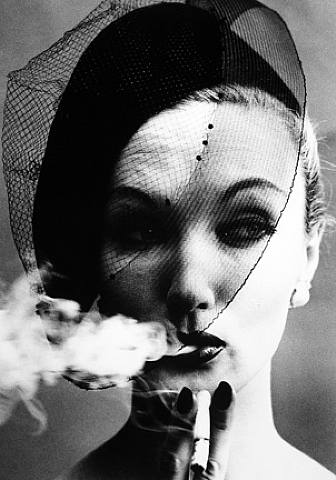
Smoke (Paris) 1958
280800641_621989aeb5_o.jpg

flickr
:heart:
 
You're very welcome Missy Mag! :flower: and thank you so much for the scans and photos. The Smoke one is amazing :wub: :heart: ... I'll be back with more later, but keep them coming :p ...
 
william klein biography
---

new york
william klein was born in new york in 1928 into
a family of poor jewish immigrants. his father's
clothing business had folded in the 1928 crash,
although his extended family - mainly lawyers -
was wealthy.
growing up in the '30s klein also experienced
anti-semitism first-hand, both from students at school
and on the street, he was a jewish boy in an irish
neighborhood. he always felt alienated from mass culture.
his friends remember him as a bright, sarcastic
kid who liked art and the humanities.
he adored the moma, museum of modern art,
which was like a second home to him from age 12 on.
and at the age of 14, three years ahead of his
classmates, he enrolled at city college of new york
to study sociology. at 18, he spent two years
in the US army, stationed in germany and france
as a radio operator, before completing his course.
---
paris
in 1948 he enrolled at the 'sorbonne' in paris.
in 1949, klein studied briefly with lhote and
fernand leger.
leger encouraged his students to revolt and to reject
conformity and bourgeois values, telling them that
ateliers and galleries were obsolete and that they
should go out and work on the streets.
after marrying jeanne florin, he decided to remain in
france and still lives and works in paris.
during the early 50s klein style was spare,
abstract and architectural.
the paintings from this period were deeply influenced
by graphics, bauhaus, mondrian and max bill, which led
klein to try painting murals.
---
milan
in 1952 klein had two shows in milan at the 'piccolo
teatro' and at the 'galleria il milione' and began to
collaborate with the architect angelo mangiarotti,
who commissioned murals on moveable panels
that could be used as room dividers. in the same year,
he started to collaboratewith the italian architecture
magazine 'domus'.
---
photography
as an artist using photography, he set out to re-invent
the photographic document.
his photos, often blurred or out of focus, his high-contrast
prints (his negatives were often severely over-exposed),
his use of high-grain film and wide angles shocked
the established order of the photography world and he
earned a reputation as an anti-photographer's photographer.

inspired by moholy-nagy and kepes, he began to
experiment with juxtaposing abstract painting and photography.
alexander liberman, painter and director of 'vogue' america
met klein at one of klein's parisian sculpture shows and
was fascinated, both by his sculpture (kinetic light panels on
photosensitive glass)and by the photographs klein had recently
begun to take. he invited klein to come to new york to
discuss a job.
---
return to new york
by 1954 he felt ready to return to new york for a visit and
when klein arrived, liberman asked him what he would
really like to do. his answer was to photograph new york
in a new way, a kind of photographic diary.
as an american who had lived in europe for six years,
he had become a hybrid - and new york to him was oddly
foreign.
liberman agreed, vogue would finance this as a possible
feature, and klein - who had never photographed fashion
before - was also, to his surprise, given a contract as
a fashion photographer for the magazine.
klein said: 'I was a make believe ethnographer:
treating new yorkers like an explorer would treat zulus -
searching for the rawest snapshot, the zero degree
of photography.'
this book 'new york' - ('life is good and good for you in
new york...) was a scandal..
'vogue' was shocked by his view of the city - crude,
aggressive and vulgar - and others saw it as
photographically incompetent and he could not find
a publisher in america.
---
photobooks
he took the work back to paris and although the
photographic establishment took a similar view,
he managed to find a french publisher, editions seuil,
who believed in it and brought it out in 1956
(re-issued 1995). it was also published in Italy
the same year.
klein's book won the nadar prize.

from 1960 to 1964, he produced three other books of
photography:
'rome' (1960), 'moscow' (1964) and 'tokyo' (1964);
all are filled with raw, grainy, swirling yet stark images.
---
fashion photography
from 1955 to 1965 klein worked for vogue. he preferred
to photograph his models out in the street or on location.
he was not particularly interested in clothes or fashion, and
used this opportunity to reasearch the picture making process
by introducing new techniques to fashion
photography, including the use of wide-angle and long-focus
lenses, long exposures combined with flash and multiple
exposures -making fashion an area of innovation in
photography.
---
film
from 1965 to the early 80s, he abandoned photography and
primarily concentrated on film, making various documentaries:
'broadway by light' (1958), 'who are you polly maggoo?' (1966),
'mr. freedom', 'muhammad ali the greatest', 'the little
richard story' (1979), 'the messiah'(1999).
---
return to photography
klein returned to still photography in the 1980s due to
a renewed interest in his early work.his photographs
of this period are characterized by his use of close-ups
and wide angle lenses.

during the 90s he continued to create mixed media works
using painting and photography. he received the hasselblad
prize and various retrospectives of his films were
organized in new york and japan. he was awarded the
agfa-bayer/hugo erfurt prize and created in & out of fashion,
a mixed media project including drawings, photographs and
film, which was published simultaneously with shows in london,
paris and new york. in 1997 he rephotographed new
york and had shows in barcellona and paris. in 1999
he was awarded the 'medal of the century' by the royal
photographic society' in london.
currently he lives and works in paris.
---
recent solo exhibitions

galleria carla sozzani, milan, italy 2000
scottish national gallery, edinburgh, scotland, 1999
fnac, paris, france 1999
grand manège, moscow, 1998
jane jackson gallery, atlanta, usa, 1998
pushkin museum, moscow, 1997
saint-gervais center, geneva, switzerland, 1997
caixa national foundation, madrid, spain, 1997
deichtor hallen, hamburg, germany, 1997
pouchkine museum, moscow, russia 1997
hamiltons gallery and british film institute, london, uk 1997
fondazione nazionale della fotografia, turin, italy 1997

designboom
 
Naughty Boy, Nw York, 1955 this one is scary me.
 
ICP gives William Klein the Lifetime Achievement Award! The ceremony for ICP's 23rd Annual Infinity Awards for Excellence in Photography is on Monday, May 14. It will take place at Pier Sixty, Chelsea Piers, New York. :heart: ...

W I L L I A M K L E I N L I F E T I M E A C H I E V E M E N T

William Klein is a native New Yorker who has lived in Paris since 1948. As a photographer and filmmaker, Klein has influenced visual media in the U.S. and Europe for the better part of a century. During the 1950s and 1960s, he pioneered a new kind of street photography: to represent the fragmented urban chaos that was his subject, he produced work that was grainy, blurry, and distorted via wide-angle lenses, fast film, and unique framing and printing. His first book, Life is Good and Good for You in New York: Trance Witness Revels (1956) is widely considered to be one of the most important photography books ever published. Klein's many films, including Broadway by Light (1958), the first Pop film; Who are you Polly Maggoo? (1965-66), Muhammad Ali the Greatest (1969-74), and The Messiah (2000), comprise another important body of work for the artist, as does his fashion photography for Vogue and currently Harper's Bazaar.
Source: icp.org
 
Last edited by a moderator:
Three of his films have been recently released as a DVD set from the good people at Criterion

http://www.criterion.com/asp/boxed_set.asp?id=2000900
Eclipse Series 9:
The Delirious Fictions of William Klein

William Klein

2000900feature350x180co1.jpg


Film Info | Reviews

William Klein's explosive New York street photography made him one of the most heralded artists of the sixties. An American expatriate in Paris, Klein has also been making challenging cinema for more than forty years, yet with the exception of his acclaimed documentary Muhammad Ali, the Greatest, his film work is barely known in the United States. In his three fiction features—Who Are You, Polly Maggoo?, Mr. Freedom, and The Model Couple—he skewers the fashion industry, American imperialism, and governmental mind control with hilarious, cutting aplomb. Today Klein's politically galvanizing social critiques seem even more acute than the works of the more famous New Wavers. These are colorful, surreal antidotes to all forms of social oppression.
 
UK Vogue April 15th, 1966
"The Great White Way by Givenchy"
Model: Unknown
Photographer: William Klein


ciaovogue.blogspot.com
 
beautiful thread,
could someone tell me if some of them are familiy of William Klein:
Calvin Klein (Designer), Steven Klein (photographer), Kelly Klein (photographer)
or is it just a coincidence?
 
US Vogue November 1st, 1968
"Ski Lively"
Models: Jill Kennington & Unknown
Photographer: William Klein


Scanned by Freya @ ciaovogue.blogspot.com
 
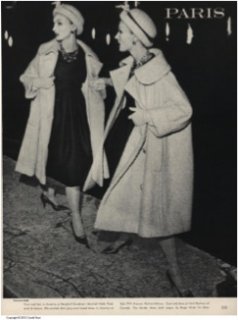
US Vogue, 'Paris Fashion Report', 1 September 1958. 22 pages of the most amazing work - in this shot he's using a double exposure. Can anyone name the model?

Source: Digital Edition, US Vogue, 1 Sept. 1958
 

Attachments

  • Klein-PFR02.jpg
    Klein-PFR02.jpg
    25.5 KB · Views: 6
Last edited by a moderator:
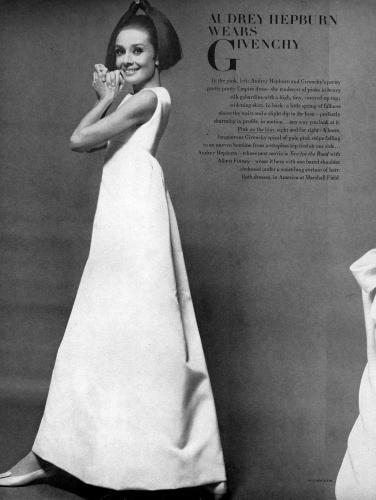
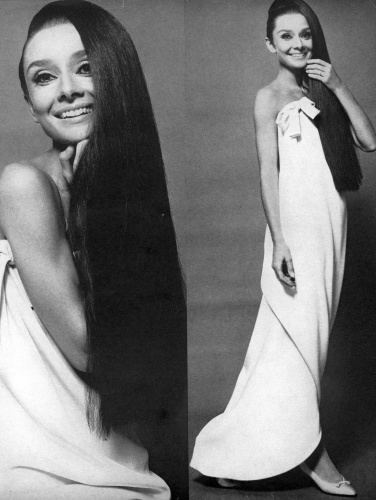
US Vogue October 15, 1966
Audrey Hepburn and the New Givenchy Evenings

Photo William Klein
Model Audrey Hepburn
Hair Alexandre


vogue
 
Last edited:
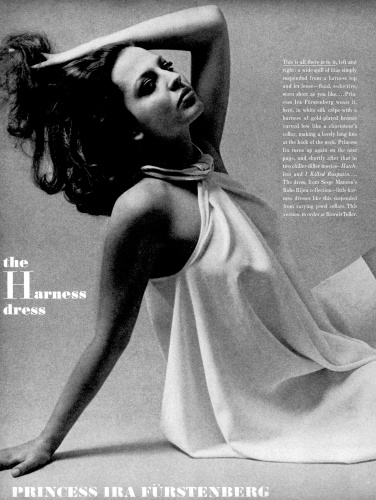
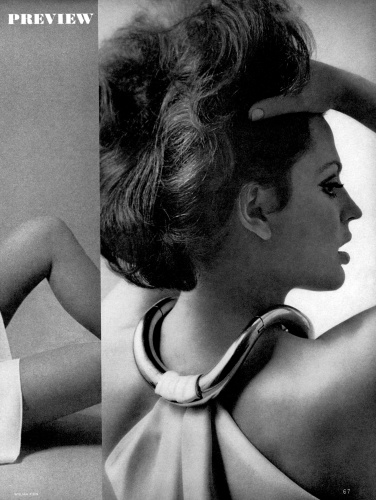
US Vogue July 1967
Preview | Princess Ira Fürstenberg—The Robe Bijou

Photo William Klein
Model Ira Fürstenberg


vogue
 
Last edited:
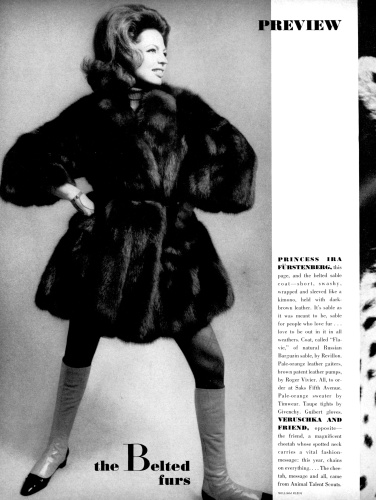
US Vogue July 1967
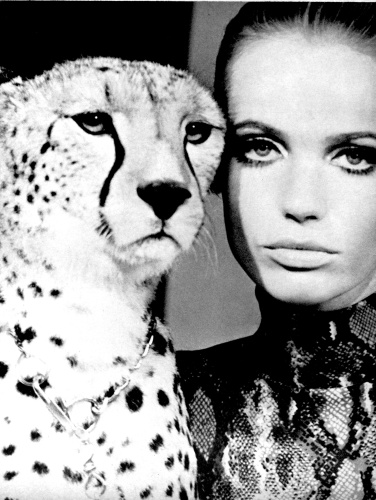
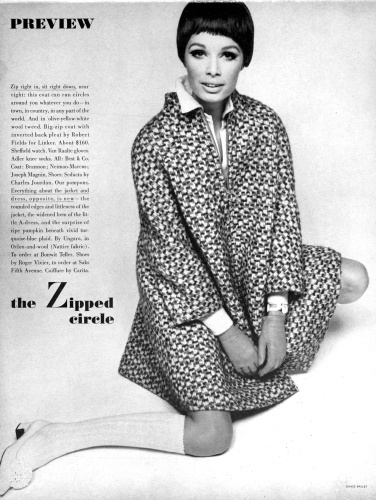
Preview | The Belted Furs

Photo William Klein, David Bailey
Models Ira Fürstenberg, Veruschka, Unknown
Hair Carita


vogue
 
Last edited:
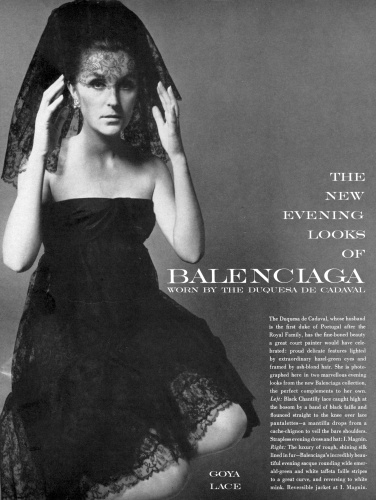
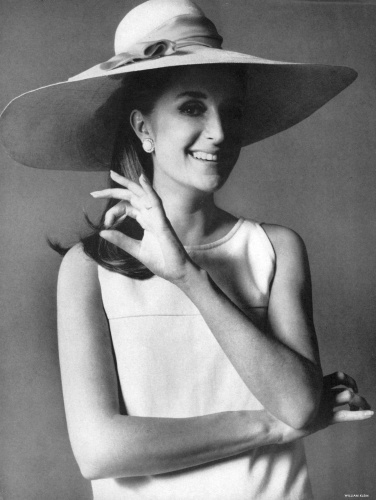
US Vogue April 15, 1967
The New Evening Looks of Balenciaga

Photo William Klein
Model Duquesa de Cadaval
Hair Carita


vogue
 
Last edited:
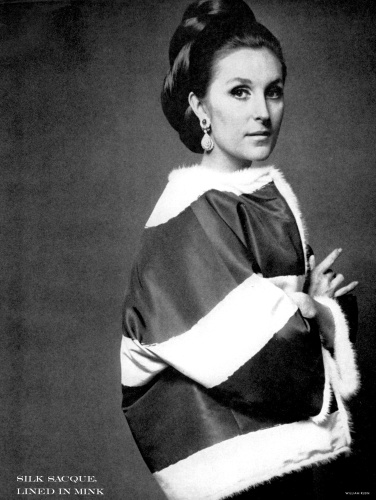
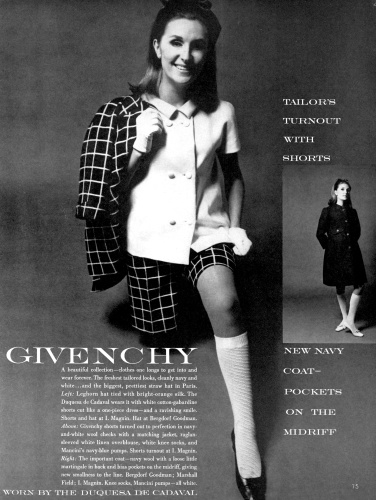
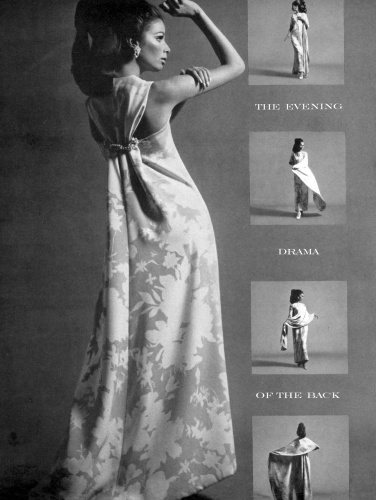
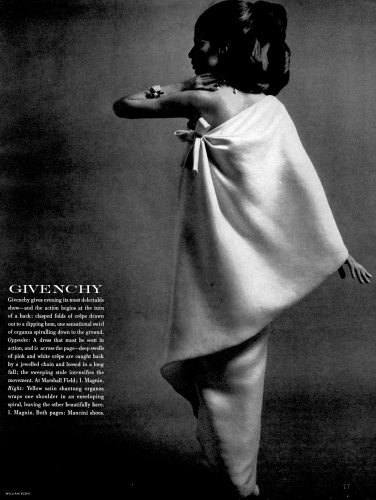
US Vogue April 15, 1967
Givenchy

Photo William Klein
Model Duquesa de Cadaval
Hair Carita


vogue
 
Last edited:

Users who are viewing this thread

New Posts

Forum Statistics

Threads
216,425
Messages
15,339,542
Members
90,124
Latest member
SamanthaMatos
Back
Top