
You are using an out of date browser. It may not display this or other websites correctly.
You should upgrade or use an alternative browser.
You should upgrade or use an alternative browser.
Rock Hudson
- Thread starter Ice_lady
- Start date
Source: Wikipedia.
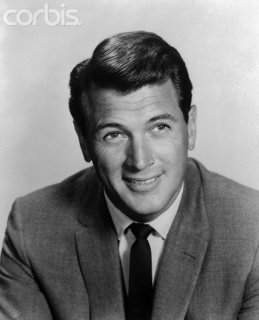
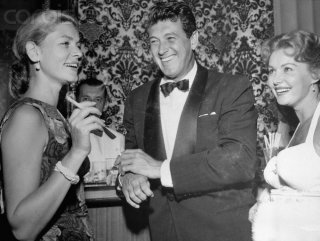
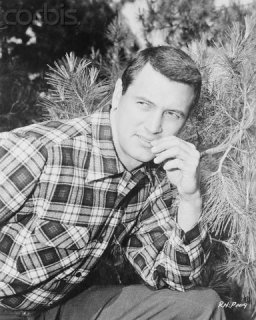
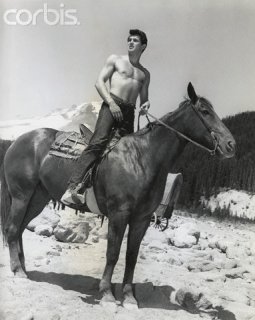
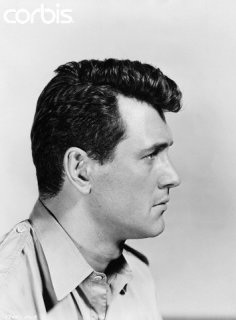
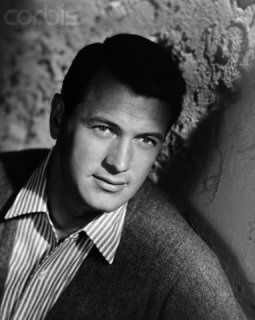
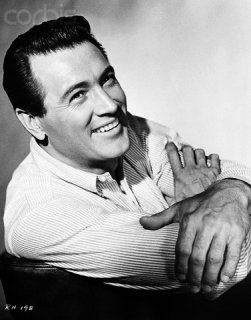
Rock Hudson (17 November 1925 – 2 October 1985) was an American film and television actor, recognised as a romantic leading man during the 1960s and 1970s, most notably in several sex comedies with his most famous co-star, Doris Day. Hudson was voted 'Star of the Year', 'Favorite Leading Man', and similar titles by numerous movie magazines and was unquestionably one of the most popular and well-known movie stars of the time. He completed nearly 70 motion pictures and starred in several television productions during a career that spanned over four decades. Hudson was also one of the first major Hollywood celebrities to die from an AIDS related illness.
Rock Hudson (17 November 1925 – 2 October 1985) was an American film and television actor, recognised as a romantic leading man during the 1960s and 1970s, most notably in several sex comedies with his most famous co-star, Doris Day. Hudson was voted 'Star of the Year', 'Favorite Leading Man', and similar titles by numerous movie magazines and was unquestionably one of the most popular and well-known movie stars of the time. He completed nearly 70 motion pictures and starred in several television productions during a career that spanned over four decades. Hudson was also one of the first major Hollywood celebrities to die from an AIDS related illness.
Early life.
Hudson was born Roy Harold Scherer, Jr., in Winnetka, Illinois, the only child of Katherine Wood, a telephone operator, and Roy Harold Scherer, Sr., an auto mechanic who abandoned the family during the depths of the Great Depression. His mother remarried and his stepfather Wallace "Wally" Fitzgerald adopted him, changing his last name to Fitzgerald. Hudson's years at New Trier High School were unremarkable. He sang in the school's glee club and was remembered as a shy boy who delivered newspapers, ran errands and worked as a golf caddy.
After graduating from high school, he served in the Philippines as an aircraft mechanic for the United States Navy during World War II. In 1946, Hudson moved to the Los Angeles area to pursue an acting career and applied to the University of Southern California's dramatics program, but he was rejected owing to poor grades. Hudson worked for a time as a truck driver, longing to be an actor but with no success in breaking into the movies. A fortunate meeting with Hollywood talent scout Henry Willson in 1948 got Hudson his start in the business.
Hudson was born Roy Harold Scherer, Jr., in Winnetka, Illinois, the only child of Katherine Wood, a telephone operator, and Roy Harold Scherer, Sr., an auto mechanic who abandoned the family during the depths of the Great Depression. His mother remarried and his stepfather Wallace "Wally" Fitzgerald adopted him, changing his last name to Fitzgerald. Hudson's years at New Trier High School were unremarkable. He sang in the school's glee club and was remembered as a shy boy who delivered newspapers, ran errands and worked as a golf caddy.
After graduating from high school, he served in the Philippines as an aircraft mechanic for the United States Navy during World War II. In 1946, Hudson moved to the Los Angeles area to pursue an acting career and applied to the University of Southern California's dramatics program, but he was rejected owing to poor grades. Hudson worked for a time as a truck driver, longing to be an actor but with no success in breaking into the movies. A fortunate meeting with Hollywood talent scout Henry Willson in 1948 got Hudson his start in the business.
Early career.
Hudson made his debut with a small part in the 1948 Warner Bros.' Fighter Squadron. Hudson needed no less than 38 takes before successfully delivering his only line in the film.
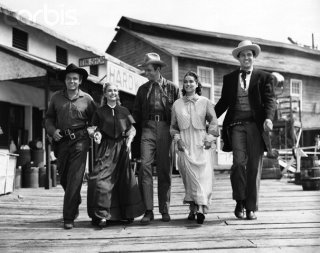
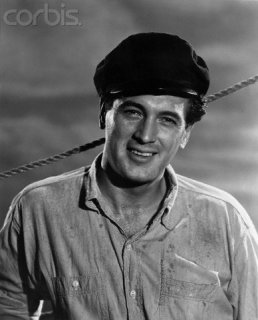
He was further coached in acting, singing, dancing, fencing and horseback riding, and he began to feature in film magazines where he was promoted, possibly on the basis of his good looks. Success and recognition came in 1954 with Magnificent Obsession in which Hudson plays a bad boy who is redeemed opposite the popular star Jane Wyman. The film received rave reviews, with Modern Screen Magazine citing Hudson as the most popular actor of the year. Hudson's popularity soared in George Stevens's Giant, based on Edna Ferber's novel and co-starring Elizabeth Taylor and James Dean. As a result of their powerful performances, both Hudson and Dean were nominated for Oscars in the Best Actor category.
Following Richard Brooks's notable Something of Value (1957) and a moving performance in Charles Vidor's A Farewell to Arms, based on Ernest Hemingway's novel, Hudson sailed through the 1960s on a wave of romantic comedies. He portrayed humorous characters in Pillow Talk, the first of several profitable co-starring performances with Doris Day. This was followed by Come September, Send Me No Flowers, Man's Favorite Sport?, The Spiral Road (written by Jan de Hartog) and Strange Bedfellows. He worked outside his usual range on the science-fiction thriller Seconds (1966). The film flopped badly at the time but it later gained cult status, and his performance is often regarded as one of his best.
Hudson made his debut with a small part in the 1948 Warner Bros.' Fighter Squadron. Hudson needed no less than 38 takes before successfully delivering his only line in the film.
He was further coached in acting, singing, dancing, fencing and horseback riding, and he began to feature in film magazines where he was promoted, possibly on the basis of his good looks. Success and recognition came in 1954 with Magnificent Obsession in which Hudson plays a bad boy who is redeemed opposite the popular star Jane Wyman. The film received rave reviews, with Modern Screen Magazine citing Hudson as the most popular actor of the year. Hudson's popularity soared in George Stevens's Giant, based on Edna Ferber's novel and co-starring Elizabeth Taylor and James Dean. As a result of their powerful performances, both Hudson and Dean were nominated for Oscars in the Best Actor category.
Following Richard Brooks's notable Something of Value (1957) and a moving performance in Charles Vidor's A Farewell to Arms, based on Ernest Hemingway's novel, Hudson sailed through the 1960s on a wave of romantic comedies. He portrayed humorous characters in Pillow Talk, the first of several profitable co-starring performances with Doris Day. This was followed by Come September, Send Me No Flowers, Man's Favorite Sport?, The Spiral Road (written by Jan de Hartog) and Strange Bedfellows. He worked outside his usual range on the science-fiction thriller Seconds (1966). The film flopped badly at the time but it later gained cult status, and his performance is often regarded as one of his best.
Later career.
Hudson's popularity on the big screen diminished after the 1960s. He was quite successful on television starring in a number of made-for-TV movies. His most successful series was McMillan and Wife with Susan Saint James from 1971 to 1977. In this series, Hudson played police commissioner Stewart "Mac" McMillan with Saint James playing his wife Sally. Their on-screen chemistry helped make the show a success.
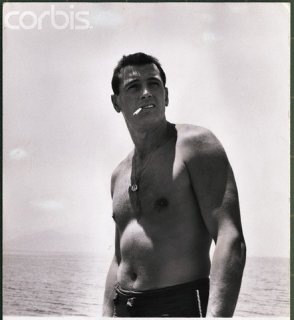
In the early 1980s, following years of heavy drinking and smoking, Hudson began having health problems. Emergency quintuple heart bypass surgery in November 1981 sidelined Hudson and his then-new TV show, The Devlin Connection for a year; the show suffered for the delay and was canceled not long after it returned to the air in December 1982. Hudson recovered from the surgery but continued to smoke. He was visibly ill filming The Ambassador in 1983 with Robert Mitchum - the two stars did not like each other, and Mitchum himself had a serious drinking problem. A couple of years later, Hudson's health had visibly deteriorated again, prompting different rumors.
From 1984 to 1985, Hudson landed a recurring role on the ABC prime time soap opera Dynasty as Daniel Reece, a love-interest for Krystle Carrington played by Linda Evans, and biological father of Sammy Jo Carrington played by Heather Locklear. While he had long been known to have difficulty memorizing lines which resulted in his use of cue cards, on Dynasty Hudson's speech itself began to deteriorate.
Hudson's popularity on the big screen diminished after the 1960s. He was quite successful on television starring in a number of made-for-TV movies. His most successful series was McMillan and Wife with Susan Saint James from 1971 to 1977. In this series, Hudson played police commissioner Stewart "Mac" McMillan with Saint James playing his wife Sally. Their on-screen chemistry helped make the show a success.
In the early 1980s, following years of heavy drinking and smoking, Hudson began having health problems. Emergency quintuple heart bypass surgery in November 1981 sidelined Hudson and his then-new TV show, The Devlin Connection for a year; the show suffered for the delay and was canceled not long after it returned to the air in December 1982. Hudson recovered from the surgery but continued to smoke. He was visibly ill filming The Ambassador in 1983 with Robert Mitchum - the two stars did not like each other, and Mitchum himself had a serious drinking problem. A couple of years later, Hudson's health had visibly deteriorated again, prompting different rumors.
From 1984 to 1985, Hudson landed a recurring role on the ABC prime time soap opera Dynasty as Daniel Reece, a love-interest for Krystle Carrington played by Linda Evans, and biological father of Sammy Jo Carrington played by Heather Locklear. While he had long been known to have difficulty memorizing lines which resulted in his use of cue cards, on Dynasty Hudson's speech itself began to deteriorate.
Personal life.
Hudson never publicly acknowledged his sexuality. While Hudson's career was blooming as he epitomized wholesome manliness, he and Willson were struggling to keep his personal life out of the headlines. In 1955, Confidential magazine threatened to publish an expose about Hudson's secret homosexual life. Willson covered this by disclosing information about two of his other clients, in the form of Rory Calhoun's years in prison and Tab Hunter's arrest at a gay party in 1950.
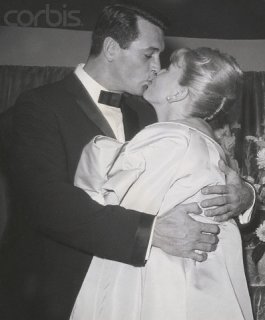
At Willson's urging, Hudson married Willson's secretary Phyllis Gates in order to put the rumours to rest and maintain a macho image. The news was made known by all the major gossip magazines with one story, headlined "When Day Is Done, Heaven Is Waiting," quoted Hudson as saying, "When I count my blessings, my marriage tops the list." The union lasted three years. Gates filed for divorce in April 1958, charging mental cruelty. Hudson did not contest the divorce, and Gates received an alimony of US$250 a week for 10 years.
In Gates' 1987 autobiography My Husband, Rock Hudson, the book she wrote with veteran Hollywood chronicler Bob Thomas, Gates insists she dated Hudson for several months and lived with him for two months before his surprise marriage proposal. She claims to have married Hudson out of love and not, as it was later purported, to stave off a major exposure of Hudson's sexual orientation. However, after her death from lung cancer in January 2006, some informants reportedly stated that she was actually a lesbian who married Hudson for his money, knowing from the beginning of their relationship that he was gay. She never remarried.
According to the 1986 biography, Rock Hudson: His Story, by Hudson and Sara Davidson, Rock was good friends with American novelist Armistead Maupin and a few of Hudson's lovers were: Jack Coates (born 1944); Hollywood publicist Tom Clark (1933 - 1995), who also later published a memoir about Hudson, Rock Hudson: Friend of Mine; and Marc Christian, who later won a suit against the Hudson estate. In Maupin's Further Tales of the City, Michael Tolliver links up with a closeted macho icon referred to as Blank Blank, which has been interpreted as a thinly disguised caricature of Hudson. Maupin claimed after Hudson's death that he changed details to avoid the character being recognised as Hudson. The book, The Thin Thirty, by Shannon Ragland, chronicles Hudson's involvement in a 1962 sex scandal at the University of Kentucky involving the football team. Ragland writes that Jim Barnett, a wrestling promoter, engaged in prostitution with members of the team, and that Hudson was one of Barnett's customers.
A popular urban legend states that Hudson married Jim Nabors in the 1970s. While Hudson was closeted at the time, the two never had anything beyond a friendship. The legend originated with a group of "middle-aged homosexuals who live in Huntington Beach", as Hudson put it, sending out joke invitations to "the marriage of Rock Hudson and Jim Nabors". Despite the obvious impossibility of such an event, the "Rock-Pyle Wedding" was taken seriously by some. As a result of the false rumor, Nabors and Hudson never spoke to each other again.
Hudson never publicly acknowledged his sexuality. While Hudson's career was blooming as he epitomized wholesome manliness, he and Willson were struggling to keep his personal life out of the headlines. In 1955, Confidential magazine threatened to publish an expose about Hudson's secret homosexual life. Willson covered this by disclosing information about two of his other clients, in the form of Rory Calhoun's years in prison and Tab Hunter's arrest at a gay party in 1950.
At Willson's urging, Hudson married Willson's secretary Phyllis Gates in order to put the rumours to rest and maintain a macho image. The news was made known by all the major gossip magazines with one story, headlined "When Day Is Done, Heaven Is Waiting," quoted Hudson as saying, "When I count my blessings, my marriage tops the list." The union lasted three years. Gates filed for divorce in April 1958, charging mental cruelty. Hudson did not contest the divorce, and Gates received an alimony of US$250 a week for 10 years.
In Gates' 1987 autobiography My Husband, Rock Hudson, the book she wrote with veteran Hollywood chronicler Bob Thomas, Gates insists she dated Hudson for several months and lived with him for two months before his surprise marriage proposal. She claims to have married Hudson out of love and not, as it was later purported, to stave off a major exposure of Hudson's sexual orientation. However, after her death from lung cancer in January 2006, some informants reportedly stated that she was actually a lesbian who married Hudson for his money, knowing from the beginning of their relationship that he was gay. She never remarried.
According to the 1986 biography, Rock Hudson: His Story, by Hudson and Sara Davidson, Rock was good friends with American novelist Armistead Maupin and a few of Hudson's lovers were: Jack Coates (born 1944); Hollywood publicist Tom Clark (1933 - 1995), who also later published a memoir about Hudson, Rock Hudson: Friend of Mine; and Marc Christian, who later won a suit against the Hudson estate. In Maupin's Further Tales of the City, Michael Tolliver links up with a closeted macho icon referred to as Blank Blank, which has been interpreted as a thinly disguised caricature of Hudson. Maupin claimed after Hudson's death that he changed details to avoid the character being recognised as Hudson. The book, The Thin Thirty, by Shannon Ragland, chronicles Hudson's involvement in a 1962 sex scandal at the University of Kentucky involving the football team. Ragland writes that Jim Barnett, a wrestling promoter, engaged in prostitution with members of the team, and that Hudson was one of Barnett's customers.
A popular urban legend states that Hudson married Jim Nabors in the 1970s. While Hudson was closeted at the time, the two never had anything beyond a friendship. The legend originated with a group of "middle-aged homosexuals who live in Huntington Beach", as Hudson put it, sending out joke invitations to "the marriage of Rock Hudson and Jim Nabors". Despite the obvious impossibility of such an event, the "Rock-Pyle Wedding" was taken seriously by some. As a result of the false rumor, Nabors and Hudson never spoke to each other again.
Later years.
In July 1985, Hudson joined his old friend Doris Day for the launch of her new TV cable show, Doris Day's Best Friends. His gaunt appearance, and his nearly incoherent speech, were so shocking it was broadcast again all over the national news shows that night and for weeks to come. Day herself stared at him throughout their appearance.
Hudson had been diagnosed with HIV on June 5, 1984, but when the signs of illness became apparent, his publicity staff and doctors told the public he had inoperable liver cancer. It was not until July 25, 1985, while in Paris for treatment, that Hudson issued a press release announcing that he was dying of AIDS. In a later press release, Hudson speculated he might have contracted HIV through transfused blood from an infected donor during the multiple blood transfusions he received as part of his heart bypass procedure. Hudson flew back to Los Angeles on July 31, where he was so physically weak he was taken off by stretcher from an Air France Boeing 747, which he chartered and was the sole passenger along with his medical attendants.
He was flown by helicopter to Cedars Sinai Hospital, where he spent nearly a month undergoing further treatment. When the doctors told him there was no hope of saving his life, since the disease had progressed into the advanced stages, Hudson returned to his house, 'The Castle', in Beverly Hills, where he remained in seclusion until his death on October 2 at 08:37 PST.
After Hudson's death, Doris Day, widely thought to be a close off-screen friend, said she never knew he was gay. Carol Burnett, who often worked on television and in live theatre with Hudson, was a staunch defender of her friend, telling an interviewer that she knew about his sexuality and didn't care. As Morgan Fairchild said, "Rock Hudson's death gave AIDS a face."
Hudson was cremated and his ashes buried at sea. Following his funeral, his partner Marc Christian sued Hudson's estate on grounds of "intentional infliction of emotional distress." Christian tested negative for HIV but claimed Hudson continued having sex with him until February 1985, more than eight months after Hudson knew he had AIDS. Hudson biographer Sara Davidson later stated that, by the time she had met Hudson, Christian was living in the guest house, and Tom Clark, who had been Hudson's life partner for many years before, was living in the house.
Hudson was the subject of a play, Rock, by Tim Fountain starring Michael Xavier as Rock and Bette Bourne as his agent Henry Willson. It was staged at London's Oval House Theatre in 2008.
In July 1985, Hudson joined his old friend Doris Day for the launch of her new TV cable show, Doris Day's Best Friends. His gaunt appearance, and his nearly incoherent speech, were so shocking it was broadcast again all over the national news shows that night and for weeks to come. Day herself stared at him throughout their appearance.
Hudson had been diagnosed with HIV on June 5, 1984, but when the signs of illness became apparent, his publicity staff and doctors told the public he had inoperable liver cancer. It was not until July 25, 1985, while in Paris for treatment, that Hudson issued a press release announcing that he was dying of AIDS. In a later press release, Hudson speculated he might have contracted HIV through transfused blood from an infected donor during the multiple blood transfusions he received as part of his heart bypass procedure. Hudson flew back to Los Angeles on July 31, where he was so physically weak he was taken off by stretcher from an Air France Boeing 747, which he chartered and was the sole passenger along with his medical attendants.
He was flown by helicopter to Cedars Sinai Hospital, where he spent nearly a month undergoing further treatment. When the doctors told him there was no hope of saving his life, since the disease had progressed into the advanced stages, Hudson returned to his house, 'The Castle', in Beverly Hills, where he remained in seclusion until his death on October 2 at 08:37 PST.
After Hudson's death, Doris Day, widely thought to be a close off-screen friend, said she never knew he was gay. Carol Burnett, who often worked on television and in live theatre with Hudson, was a staunch defender of her friend, telling an interviewer that she knew about his sexuality and didn't care. As Morgan Fairchild said, "Rock Hudson's death gave AIDS a face."
Hudson was cremated and his ashes buried at sea. Following his funeral, his partner Marc Christian sued Hudson's estate on grounds of "intentional infliction of emotional distress." Christian tested negative for HIV but claimed Hudson continued having sex with him until February 1985, more than eight months after Hudson knew he had AIDS. Hudson biographer Sara Davidson later stated that, by the time she had met Hudson, Christian was living in the guest house, and Tom Clark, who had been Hudson's life partner for many years before, was living in the house.
Hudson was the subject of a play, Rock, by Tim Fountain starring Michael Xavier as Rock and Bette Bourne as his agent Henry Willson. It was staged at London's Oval House Theatre in 2008.
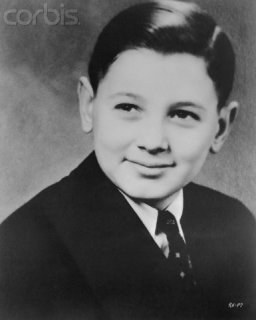
Young Rock Hudson
Corbis.
Rock Hudson, Universal International star, was 13 when this photo was taken. All of the kids in his graduating class at Winnetka, Illinois, Junior High School had similar photos taken and classmates exchanged them with each other at graduation.
Corbis.
Rock Hudson, Universal International star, was 13 when this photo was taken. All of the kids in his graduating class at Winnetka, Illinois, Junior High School had similar photos taken and classmates exchanged them with each other at graduation.
Attachments
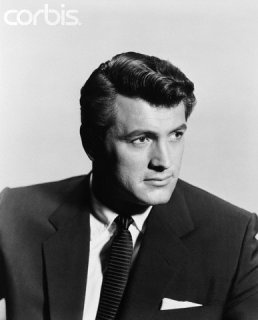
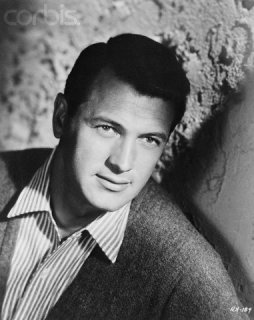
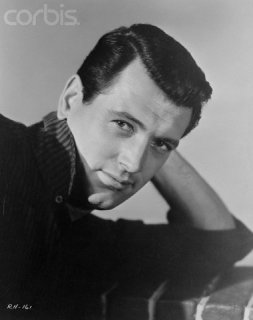
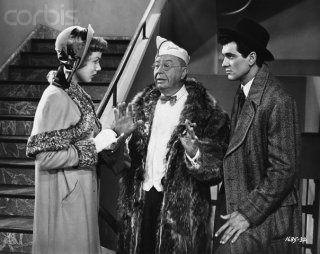
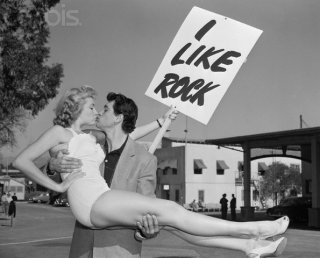
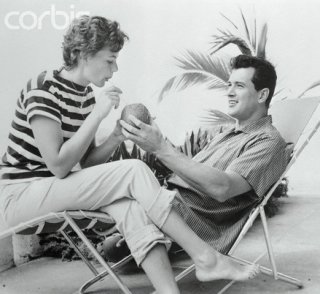
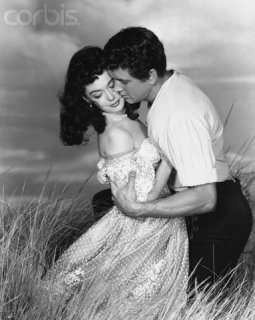
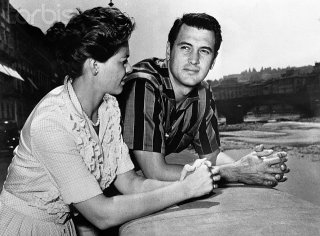
 Rock Hudson was indeed a very handsome man. As well as a fine actor.
Similar Threads
Users who are viewing this thread
Total: 1 (members: 0, guests: 1)


