
You are using an out of date browser. It may not display this or other websites correctly.
You should upgrade or use an alternative browser.
You should upgrade or use an alternative browser.
Jennifer Garner
- Thread starter moussemaker
- Start date


petit fours
Active Member
- Joined
- Mar 29, 2010
- Messages
- 3,342
- Reaction score
- 7
What a beautiful cover!

kissmesweet
Well-Known Member
- Joined
- Dec 26, 2005
- Messages
- 19,675
- Reaction score
- 346
The article was also very touching...

CommanderTMugler
Well-Known Member
- Joined
- Apr 3, 2011
- Messages
- 3,749
- Reaction score
- 338
She looks amazing, love her big smile!

Nymphaea
Well-Known Member
- Joined
- Oct 30, 2012
- Messages
- 6,196
- Reaction score
- 695
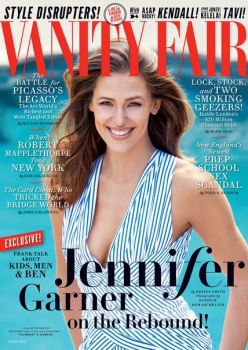
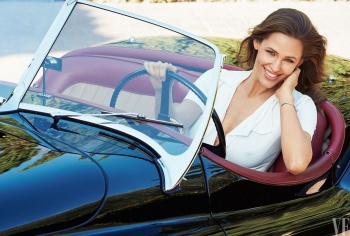
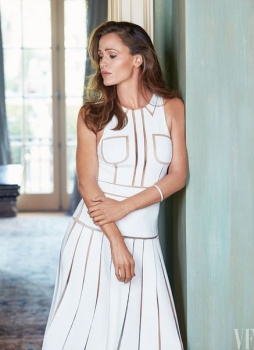

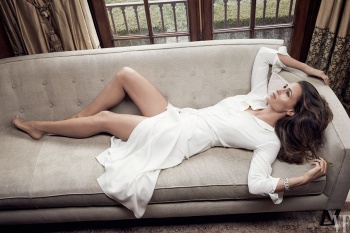
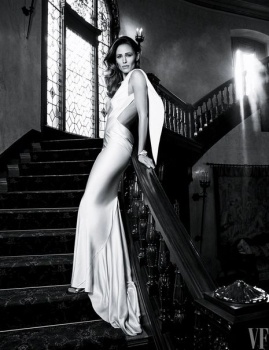
vanity fairExclusive: Jennifer Garner’s Frank Talk About Kids, Men, and Ben Affleck
The silent center of a tabloid hurricane, Jennifer Garner is finally speaking out. With the lead in this month’s Miracles from Heaven, she talks about breaking up with Ben Affleck, dealing with the pain, and keeping her kids and career in focus.
In an unassuming Italian restaurant in Santa Monica, I wait for Jennifer Garner. You’ve seen thousands of photographs of her: jeans, sweater, thick chestnut locks swept up in a ponytail—the definition of what it is to be California casual. This native West Virginian’s relaxed, unpretentious style has made her arguably one of the most respected public mothers in America and still a draw at the box office.
Her walk is brisk and to the point as she joins me at a table in the back. She lives up to expectations—flawless skin, no makeup, big smile. This is one of her favorite places; the busboy even asks how the children are. The reason she was a few minutes late: “I didn’t think I was nervous, but then I realized I was at the wrong restaurant.”
It’s been a “year of wine,” as the 43-year-old actress describes it, laughing. Late last June, after their children (Violet, 10, Seraphina, 7, and Sam, 4) were finished with the school year, Garner and her husband, Ben Affleck, announced their plan to divorce one day after their 10th anniversary—an eternity for most Hollywood marriages. A month later, plastered over the tabloids and gossip sites, came reports that Affleck was having an affair with the family nanny, 28-year-old Christine Ouzounian, something his camp adamantly denies. It’s a mother and wife’s nightmare. (After a few inappropriate Instagram moments, the nanny has since dissolved into the background.)
“When I can’t sleep—and I am not someone who typically has that problem, but I really have in the last year—and I need something to switch my brain off, it has been Tina Fey and Amy Poehler,” Garner says. “God bless those girls. I used to think I would never watch television on my phone, but there I am, because I am sleeping next to my daughter.” Garner tells me she and Violet have become temporary roommates. “I’m happy to have her; she’s happy to have me.”
We live in a visual world, where a picture paints a thousand words. Millions of people had grown accustomed to seeing photos of this family to the point where we felt we knew them and their daily routines: getting coffee, going to the farmers’ market, working out, dropping the kids off at school. The combination of the two movie stars and their perfect family was both tabloid gold and aspirational ideal. After all, Garner and Affleck were a glamorous version of normal that almost defied believability. “It was a real marriage,” Garner tells me. “It wasn’t for the cameras. And it was a huge priority for me to stay in it. And that did not work.”
Now to end on what the gossip pages call “nannygate”—it’s all so unsavory and such a cliché. “Let me just tell you something,” Garner says. “We had been separated for months before I ever heard about the nanny. She had nothing to do with our decision to divorce. She was not a part of the equation. Bad judgment? Yes. It’s not great for your kids for [a nanny] to disappear from their lives.” Months later, she’s still assessing the damage. “I have had to have conversations about the meaning of ‘scandal,’ ” she says, with her children.
It was during this trying time last summer that Garner was working on Miracles from Heaven, directed by relative newcomer Patricia Riggen (The 33). Perhaps it’s no coincidence that she gives one of her most emotionally wrenching performances to date in what is her first lead in years. Garner plays a real-life Texas mother, Christy Beam, whose young daughter Annabel (played by Kylie Rogers) is ill with a life-threatening disease that miraculously heals after a near-fatal fall from a tree. (The film is based on Beam’s best-selling memoir of the same name.) Think Terms of Endearment with a fair share of spiritual overtones. “The book kept me up all night,” Garner says. “It was so compelling and tangible. Her pain, the daughter’s pain, what it did to the family. Christy was so steadfast; she didn’t try to whitewash what was wrong with her daughter. She was next to her helping her know she was strong enough to get through it, and I wanted to be in her skin.” She adds: “I certainly was never on set thinking of my own life, except for my own gratitude. One of the great gifts of the movie was the perspective that came with it.”
Miracles from Heaven—set for release right before Easter—will also put Garner before the public eye for the first time since the divorce announcement, and force her to deal with all the media chatter about her private life. “I turned on CNN one day,” she says, “and there we were. I just won’t do it anymore. I took a silent oath with myself last summer to really stay offline. I am totally clueless about all of it.” In this constant, 24-hour media age, unplugging takes real discipline—which can be interpreted, by some, as indifference. “Ben says, ‘Oh, you just don’t care,’ and I say, ‘No, it’s the opposite.’ It hurts me so much, and I care so much,” she says, choosing to not “give a ****” how the divorce looks to the outside world. “I cannot be driven by the optics of this. I cannot let anger or hurt be my engine. I need to move with the big picture always on my mind, and the kids first and foremost.”
Garner won America’s hearts 14 years ago as the star of J. J. Abrams’s popular ABC series Alias. She was Sydney Bristow, coed by day, spy by night. Alias was the first time since Wonder Woman in the 1970s that audiences saw a sexy, badass female action hero. “I don’t remember having more fun working with anyone than I’ve had working with her,” Abrams reflects. “She’s smart-funny—she makes you want to be funnier and smarter, and you know that when you throw the best you’ve got her way she’ll make it better. No one’s perfect. But no one’s Jen Garner.”
Abrams, whose Star Wars: The Force Awakens broke box-office records last year, makes no bones about wanting to work with Garner again. “It would be a dream and we talk about it. She really is on the cusp of the most interesting, the most complex and satisfying roles as an actor.”
It was also on Alias—which ran for five seasons before going off the air, in 2006—that she met the veteran actor Victor Garber, who played her father, Jack Bristow. They have remained close friends. (He is also Violet’s godfather.) “From the first moment we met,” he says, “there was this inexplicable chemistry and connection, this understanding that we were on the same page. She’s one of the most important people in my life.” The feeling’s mutual, as Garber was the one chosen to officiate at Garner and Affleck’s wedding, when they eloped to Turks and Caicos, in 2005, and, other than his partner, Rainer, was the only person present at the nuptials. “That experience was one of the greatest we’ve ever had,” Garber says. “As difficult as this time is, as sad as this time is, I think there is a great love between them, and that will always be there.”
Garner echoes that sentiment. “I didn’t marry the big fat movie star; I married him,” she says. “And I would go back and remake that decision. I ran down the beach to him, and I would again. You can’t have these three babies and so much of what we had. He’s the love of my life. What am I going to do about that? He’s the most brilliant person in any room, the most charismatic, the most generous. He’s just a complicated guy. I always say, ‘When his sun shines on you, you feel it.’ But when the sun is shining elsewhere, it’s cold. He can cast quite a shadow.”
But if time is any measure, Garber feels that his friend is out from underneath that shadow and finally finding the light—not only as a woman but also as an artist. “She is becoming the person that I could see in her that she almost couldn’t see in herself,” he says. “Her strength, her fortitude. I think she went from someone that wanted to take care of everybody to be someone who said, ‘In order to do that I have to really take care of myself.’ ”
Garner has just completed filming Wakefield, written and directed by Robin Swicord, based on E. L. Doctorow’s retelling of a Nathaniel Hawthorne tale. She plays the wife in this drama, due out later this year, about a husband (Bryan Cranston) who fakes his own death in order to watch his spouse from their attic. It’s too early to tell, but it could turn out to be some of her most interesting work as an actress since director Jason Reitman cast her in 2007’s Juno, which was made for $7.5 million and grossed $143 million, receiving four Oscar nominations and winning one for best screenplay (Diablo Cody). Reitman says that movie could not have been made without Garner lending her star power, from green-lighting to completion. “She was extraordinarily generous with her talent,” he says, “and also her professionalism. I felt like she protected me, frankly.”
Her role in Wakefield required her to do a love scene. “When you haven’t been kissed for over eight months,” she says, “it’s strange. But it’s my job. It’s nine in the morning and you think, I could really use a shot of alcohol. Then, after a take or two, after everyone has seen your boobs and love handles, you just want to take every crew member and be like, ‘Please have mercy on me!’ ”
Meanwhile, Garner is managing to maintain a lucrative career with endorsements, currently for Capital One and Neutrogena. According to the Nielsen ratings, she is, in fact, the No. 1 female spokesperson—another testament, perhaps, to her authentic and genuine quality, an essential approachability that has not been diminished by recent personal upheavals. And, yes, there is an edge to her. Steve Carell, who worked with Garner on 2014’s Alexander and the Terrible, Horrible, No Good, Very Bad Day, compares her to Julie Andrews. “She’s even better in person than you would have imagined,” he says. “Everyone knows that she is incredibly talented, and she’s a very kind and warm person, but beyond that she’s bitingly funny, like Julie. She can definitely have a caustic sense of humor and a sophisticated sense of humor. She’s not all puppy dogs and ice cream. There’s some real depth and weight to her.”
It’s clear that family has always been the most important thing to Garner. This comes from her upbringing, in West Virginia, as the middle daughter of a middle-class family. Mom was an English teacher and Dad was a chemical engineer. “I wasn’t raised in a household where vanity was celebrated,” she says. “That just wasn’t on the top of our list.” Garner says her older sister, Melissa, was the bright star of the family. “She is perfect. She won the state math competition every single year against Governor [Jay] Rockefeller’s son. She graduated with a 4.0, was head majorette, and the prettiest person in the world. It took me a while to grow into my face.”
Garner first found her passion for performance with dance as a child: “I danced six hours a day. My cross to bear is that my children have no interest in ballet. I think they could smell how much I wanted to put their hair in a bun.” She studied drama at Denison University and, after graduation, did stints at various summer stocks. She eventually got her first real break as nerdy Hannah Bibb in three episodes of Abrams’s first television show, Felicity, in 1998.
Matthew McConaughey, who starred alongside Garner in 2013’s Dallas Buyers Club (for which he won a best-actor Oscar), says that “Jennifer always brings a simple humanity” to whatever she does. This extends beyond the screen. What many people may not realize is how much work Garner has done as a board member of Save the Children and her efforts to get a California paparazzi law passed that would prevent the harassment of children. Katie McGrath, who sits on the board of the Children’s Defense Fund and is married to J. J. Abrams, has known Garner for nearly 20 years, since the days of Felicity. “I would say that she’s very unusual in Hollywood because service is in her DNA,” she says. “She’s not in it for the photo opportunity. She lives her values. She’s just sort of the anti-diva, and that’s unusual in this community.”
Mark K. Shriver, president of the Save the Children Action Network, confirms that Garner’s commitment is total. “She is really relentless about wanting to go out in the field, to see the kids and families to learn more about what’s going on in the world,” he says. “She is as comfortable with the senator of West Virginia as she is with a woman living in poverty in a trailer. People interact and relate to her very easily. It’s a real gift.”
Nymphaea
Well-Known Member
- Joined
- Oct 30, 2012
- Messages
- 6,196
- Reaction score
- 695
continued...
vanity fairI ask Garner if she knew what she was getting into when she married Ben Affleck. He had a bit of a bad-boy image when they came together and was in actor jail after a string of disappointing films (Reindeer Games, Jersey Girl, Surviving Christmas), whereas Garner’s star was on the rise. Affleck had also had a few high-profile romances, the last of which was an engagement to Jennifer Lopez, which was immortalized in 2003’s Gigli. (Garner had a starter marriage at 28 to actor Scott Foley, whom she met on the set of Felicity; it ended after two years.) “Of course this is not what I imagined when I ran down the beach, but it is where I am,” she says. “We still have to help each other get through this. He’s still the only person who really knows the truth about things. And I’m still the only person that knows some of his truths.”
She puts up a strong front, but that doesn’t mean things are always easy. Last October, when Affleck started his new film, Live by Night, which he is directing and starring in, she says, “I wasn’t part of it. It was starting and it was a hard day for me. I got the kids to school, and I went home and went to bed. I haven’t had a lot of those days.” And she gets that people—friends, supporters, total strangers—would love to see a simple resolution. “When Jen Aniston and Brad Pitt broke up,” she admits, “I was dying to see something that said they were getting back together.”
It’s getting back to essentials that has given Garner the solace and support she’s needed this past year. “When the earth shakes,” she says, “you go to what you know from childhood. All of a sudden I’m sitting down at the piano. I went back to church. I sat down and wrote bad poetry all day because I was so sad. I needed a dance class; it reminded me of my fight scenes [in Alias] and how I missed that. I feel the need to be physical and I feel the need to punch someone. You know what I look forward to? I look forward to getting past the pity stage. I look forward to just having a sense of humor.”
And does that mean dating? A fellow airline passenger apparently thought it was worth a try. “We were waiting for the bathroom at JetBlue,” Garner says, “and I was so floored. I had to remind myself that that was something that could happen. He said, ‘Could I take you for a cup of coffee?’ And I was like, ‘No! You may not take me for a cup of coffee, sir.’ And then I said, ‘But thanks for asking.’ ” All joking aside, I ask her if she can see herself dating. “I guess. I don’t know. It’s just that [from] everyone that I know that is dating it just seems, well…. Men don’t call anymore…. I want flowers; I don’t want to text. What does that make me? What kind of dinosaur am I?”
So, what’s next for her moving forward? “It’s not Ben’s job to make me happy,” she insists. “The main thing is these kids—and we’re completely in line with what we hope for them. Sure, I lost the dream of dancing with my husband at my daughter’s wedding. But you should see their faces when he walks through the door. And if you see your kids love someone so purely and wholly, then you’re going to be friends with that person.” But with that evolved outlook, did it still smart when, at the Golden Globes in January, host Ricky Gervais introduced Matt Damon as “the only person who Ben Affleck hasn’t been unfaithful to”?
She admits to watching it and adds, “I laughed. People have pain—they do regrettable things, they feel shame, and shame equals pain. No one needs to hate him for me. I don’t hate him. Certainly we don’t have to beat the guy up. Don’t worry—my eyes were wide open during the marriage. I’m taking good care of myself.” Last fall, it was reported that Garner and Affleck were putting their Cliff May-designed Pacific Palisades estate—whose previous owners have included Gregory Peck and producer Brian Grazer—on the market for $45 million. However, it is not true. Garner is staying put. For the time being, Affleck has been staying in the three-acre estate’s guesthouse.
Garner’s parents have been married for 51 years. When I ask her if there was a turning point in her own marriage, where she couldn’t work any harder, she tells me, with emotion in her voice, “That’s a really hard question. I’m a pretty hard worker. It’s one of the pains in my life that something I believe in so strongly I’ve completely failed at twice. You have to have two people to dance a marriage. My heart’s a little on the tender side right now, and it’s always easier to focus on the ways that you feel hurt, but I know that, with time and some perspective, I’ll have a clearer sense of where I let the system down, because there’s no way I get off in this.”
If there’s a silver lining, it could be that we may be seeing more of Garner, who is now determined to look forward. “I definitely put a lot of time towards my marriage that I will now have for myself,” she says. “I don’t know how I will use that.”
One thing is for sure: she refuses to claim responsibility for the midlife-crisis tattoo—the rising phoenix—that takes up her estranged husband’s entire back, as seen in photographs. “You know what we would say in my hometown about that? ‘Bless his heart.’ A phoenix rising from the ashes. Am I the ashes in this scenario?” Garner says with a wink.
“I take umbrage. I refuse to be the ashes.”
petit fours
Active Member
- Joined
- Mar 29, 2010
- Messages
- 3,342
- Reaction score
- 7
Thank you for the interview. I enjoyed it.


SallyAlbright
Well-Known Member
- Joined
- Dec 6, 2013
- Messages
- 2,524
- Reaction score
- 129
Thanks for the Vanity Fair interview. I have always liked her, but I admire her so much more for keeping her dignity and sense of humor even while obviously heartbroken. She looks lovely at the Oscars, though I wish she'd take more risks. She used to wear some pretty interesting stuff during her Alias days.
CommanderTMugler
Well-Known Member
- Joined
- Apr 3, 2011
- Messages
- 3,749
- Reaction score
- 338
She looked great, I love all this attention on her! Get that revenge!
FashionMemory
Member
- Joined
- Oct 30, 2008
- Messages
- 694
- Reaction score
- 2
Style is not her thing, she always looks predictably safe/boring, almost with no life in her looks. This time is no difference unfortunately
some people really irritate me when assuming all celebreties should be into fashion..

she's an actress and always looks good at events. that's really all we can ask for!
I much prefer her safe style over Emilia Clarke's disasters, or Jennifer Lawrences latest looks - where their stylists try something "new" and innovative when its clearly not working for them.
I love seeing Jennifer on the red carpet and this years Oscars was no exception

petit fours
Active Member
- Joined
- Mar 29, 2010
- Messages
- 3,342
- Reaction score
- 7
Lovely!
CommanderTMugler
Well-Known Member
- Joined
- Apr 3, 2011
- Messages
- 3,749
- Reaction score
- 338
some people really irritate me when assuming all celebreties should be into fashion..
she's an actress and always looks good at events. that's really all we can ask for!
I much prefer her safe style over Emilia Clarke's disasters, or Jennifer Lawrences latest looks - where their stylists try something "new" and innovative when its clearly not working for them.
I love seeing Jennifer on the red carpet and this years Oscars was no exception
Agreed. She's not one to really be on the cutting edge with new trends and what not and I appreciate that. I love seeing her on the red carpet since it's a nice change from what we normally see her in and she always delivers with her "safe" formula. That's something I also appreciate about Kate Winslet.

Not Plain Jane
Well-Known Member
- Joined
- Mar 3, 2010
- Messages
- 15,483
- Reaction score
- 858
i am not a huge versace fan, to say that least,  but i thought jen looked quite lovely last night.
still have to read the VF piece, though.
but i thought jen looked quite lovely last night. still have to read the VF piece, though.

Not Plain Jane
Well-Known Member
- Joined
- Mar 3, 2010
- Messages
- 15,483
- Reaction score
- 858
her hair looks great there, as does the jumpsuit.
just don't like the shoes.
just don't like the shoes.
petit fours
Active Member
- Joined
- Mar 29, 2010
- Messages
- 3,342
- Reaction score
- 7
Nice jumper….good color on her.


Similar Threads


Users who are viewing this thread
Total: 2 (members: 0, guests: 2)


