Talk about a daunting to-do list.
In 2025, designer
Jonathan Anderson wrapped an acclaimed, transformative 11-year tenure at Loewe; staged his first men’s and women’s ready-to-wear shows for
Dior; unveiled a new look, approach and retail concept for his beloved JW Anderson brand that’s already clicking; curated a couple of art exhibitions; unveiled his latest collaborations with Moncler and Uniqlo, and wrapped his third costume design assignment from filmmaker Luca Guadagnino, whose next picture is titled “Artificial.”
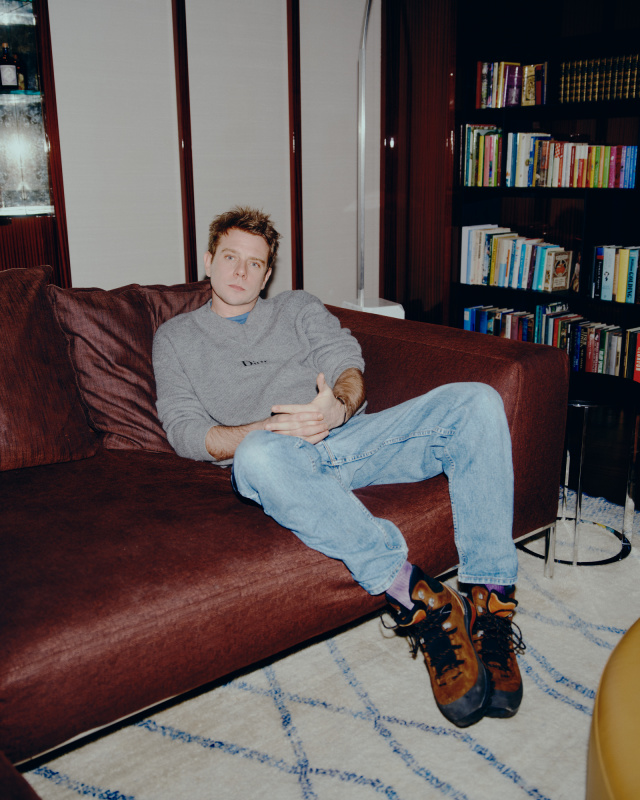
“It was a very busy, busy, busy year — it continues to be busy,” Anderson said matter-of-factly in an interview in his new corner office at
Dior — part conference room, part living room, part art gallery, part library and part design studio. “It’s been, you know, a big change.”
Indeed, Anderson generated countless headlines, his appointment at Dior standing out from roughly 20 creative director changes in 2025 due to the intrigue, scale — and repercussions.
Last June, after a steady drip of media speculation, and piecemeal announcements from Loewe and Dior earlier in the year, Anderson was ultimately crowned Dior’s creative director of women’s, men’s and haute couture collections with the promise of more coherence and consistency in products, image and communications.
The landmark appointment — he became Dior’s eighth couturier and the first designer to oversee the couture, women’s and men’s divisions — ignited a chain reaction at parent LVMH Moët Hennessy Louis Vuitton, dislodging his successful Dior womenswear predecessor Maria Grazia Chiuri, who was ultimately named Fendi’s chief creative officer. That appointment in turn led to Silvia Venturini Fendi relinquishing her creative duties to become honorary president of the Roman house. Kim Jones, who logged seven eventful years as Dior’s artistic director of men’s collections, had resigned from the role in January and exited the French group.
(Bernard Arnault, chairman and chief executive officer of LVMH, mentioned that Anderson would take over from Jones at an LVMH shareholders’ meeting — and that debut men’s show casually racked up more than a billion views on social media.)
Despite a steep learning curve and a bruising workload at Dior, Anderson did not give his signature house short shrift, unveiling a new strategy hinged on heritage, craft and his other personal passions. Instead of seasonal fashion and accessories, the new JW Anderson offers luxe wardrobe staples, jewelry, sunglasses, art, antiques and items for the home, displayed in stores
refurbished as “cabinets of curiosities” — and on a website that depicts John Malkovich hoisting handbags and models wielding pitchforks, or honeypots.
To Anderson’s delight, “we’re selling things upward of 10,000pounds, which is kind of interesting,” he said. “We sell a lot of high-end jewelry, antique jewelry with diamond and rubies and things like that.”
In his spare time, Anderson curated an exhibition at the Holburne Museum in Bath, England, pairing works by painters Winifred Nicholson and Andrew Cranston; and he teamed with Kenny Schachter to put on a show of American artist Paul Thek at Thomas Dane Gallery in London.
“I like doing it. It’s not hugely time consuming,” he said of his artistic sideline. “These are just people I love and support.”
What’s more, he started reimagining the red carpet with Dior rugby shirts, chinos, cable-knit sweaters and slogan T-shirts, and pioneering new modes of communication, from his trompe-l’oeil ceramic-plate show invitations to the Instagram Story Close Friends activations.
It’s been a brisk and steady ascent for the brainy designer, now at the pinnacle of one of France’s most storied fashion houses.
Born in Northern Ireland in 1984, Anderson studied menswear at the London College of Fashion, graduating in 2005 and going on to work in visual merchandising at Prada under Manuela Pavesi. He consulted for several brands before launching JW Anderson in London in 2008, quickly attracting attention with provocative and androgynous designs, such as frilly Bermuda shorts and bandeau tops for men.
In 2013, LVMH Moët Hennessy Louis Vuitton acquired a 46 percent stake in JW Anderson, also appointing him creative director of Loewe, then a modestly sized Spanish house known for leather bags. While it took a few seasons for him to find his feet, the business grew seven times during Anderson’s tenure and entered fashion’s big leagues, fueled by daring fashions, hit bags like the Puzzle and Flamenco, and an intense focus on craftsmanship and cultural relevance.
The latter is something that comes naturally to the 41-year-old, whether it’s incorporating blue-chip artworks into his runway shows; assembling a buzzy front row of cutting-edge talents from music, television and film; selecting ceramics, rugs, artworks and furniture for stores; dressing Rihanna and A$AP Rocky’s two toddlers in miniaturized looks fresh from the Dior men’s runway, or becoming a meme himself. (Blue jeans and a navy sweater became internet shorthand for a lickety-split
Jonathan Anderson Halloween costume this year.)
He was upfront about how surreal it feels to have exited Loewe, but his handiwork remains in unmissable ways. For example, the monumental yellow cotton wall sculpture by Franz Erhard Walther that dominates the ground floor of the new Casa Loewe on Avenue Montaigne in Paris was purchased by him only a few years into the job, employing it first as a backdrop for a fall 2019 Loewe show.
Indeed, he personifies “fashion as culture,” one of the biggest stories of recent years, and the ambition of a growing number of designers and houses.
Like the late Karl Lagerfeld, Anderson juggles a heavy workload at Dior and JW Anderson with a host of side projects, and indulging his personal passion for ceramics and art in his spare time.
In a wide-ranging conversation, Anderson described his tenure at Dior as very much a work-in-progress, given that he has yet to show an haute couture or a destination cruise collection for the house. He also spoke about coffee-flavored tea, why luxury is at a crossroads, and how he balances the radical and the familiar:
WWD:
So, how was 2025 different from past years?
Jonathan Anderson: When you come into a brand, it takes a bit of time to acclimatize and to go through the cycle. And obviously, the cycle of Dior is very big, so it’ll be March of next year to go through the full cycle. But I feel relaxed, as much as you can be relaxed at Dior.
WWD:
It would seem you worked harder than ever, and perhaps more than anyone else in fashion. Did you drink even more coffee to accomplish all you needed to do?
J.A.: More water and coffee — it’s a bit of a balancing act. Seriously, I love work. But at the beginning it’s always hard, because you’re trying to work out where Dior should go. At the moment it’s a big process of trying to instill what I want from the brand, and how we do a transition in the brand. Ultimately, I think we’re in a good place, though it’s quite weird to work on something which has not actually been in stores. It doesn’t go into stores until January…so it’s a bit like working in the imaginary world somehow.
WWD:
So you’re eager to understand the consumer reaction to your designs?
J.A.: Yeah, this is the end result. For me, it’s the big part of it: You want to see it in the store and see how it interacts with existing products and how we can enrich it.
WWD:
You dared to enter the house of Dior. How has your adjustment been? What has been the nicest surprise — and the steepest learning curve?
J.A.: Dior is a big machine. It’s not like Loewe, where I grew with the brand. This has already grown, and I have to kind of go on top. So you’re trying to balance history, you’re trying to balance legacy, you’re trying to balance the mechanics of it, the industrialization of product. So this is a big challenge.
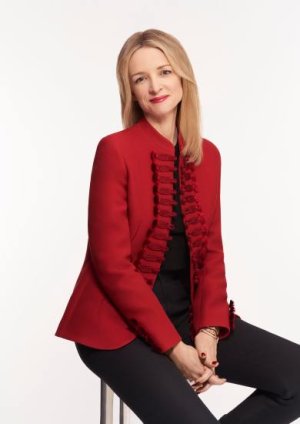
I think the surprise has been how fast Dior reacts, it’s quite agile really, and this was something I didn’t expect. But I’m very lucky to have Delphine [Arnault as CEO], someone I have known for 11 years. We both have a way of wanting the same thing from the brand. So I think this is important. We’re kind of singing from the same hymn sheet.
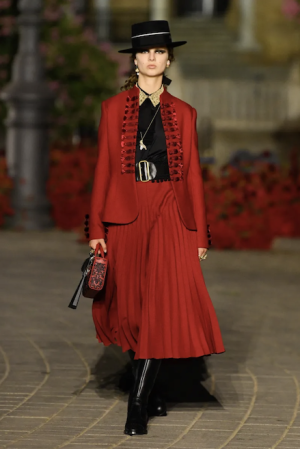
We turned a menswear show around in a month. The womenswear show was done in less than a month. It was amazing to watch how everyone got behind it.
WWD: What’s the best advice you received as you took on this challenge?
J.A.: The more that you love the brand, the more it will love you back. John [Galliano] said that, and that was very reassuring to me, because John is a romantic and I think you sometimes have to have romance in this brand for it to talk to you.
WWD:
You invited a lot of designers to attend your Dior debut, and you credited previous Dior designers in your show film. Why? Is fashion friendlier now, or still as competitive as ever?
J.A.: I think when you’re going into house like Dior, it would be strange not to give credit to the people who have been before you. Dior is made up of an alchemy of different people. Because if you really think about it, Christian Dior only worked for 10 years. So in a weird way, it is this thing that is built upon.…Every single designer has contributed to the language of Christian Dior the brand. So I think it’s important to not be scared of that and, at the same time, embrace it, because you can’t have a fear of the past.
WWD:
Did you feel any separation anxiety from Loewe? When did you wrap your final work for that brand?
J.A.: I think leaving any brand is probably like leaving any relationship. You have moments where you are no longer in the same office, which is strange. You’re not with the same people.
It’s quite strange, because of the lead time of fashion, everything up until Christmas I had done [is still coming out]. It’s this very strange process of seeing things that you’ve done where you’re not involved anymore.
But I love the brand. Loewe marked a very important moment in my life. It was a milestone to be able to take a brand from one place to another, and it went through quite seismic growth in that period. And I think it’s something I’m very proud of creatively, and in terms of business.
WWD:
When you arrived at Loewe in 2014, you described a new conception for luxury: unvarnished, immediate and personal. How do you see luxury now?
J.A.: I think luxury is at a crossroads now and this next chapter in luxury is going to be about working out why we make things.
When I started at Loewe, craft was really not being spoken about, and now craft is used on everything. When I joined Dior, I had to try to find an anchor word.…The biggest thing that I wanted to instill was empathy as an emotion to get to different things. So empathy toward making, empathy toward people, empathy toward how we sell. This process will take longer.
I think fashion at the moment is in a change mode, because the world is changing, geopolitics, financials — everything’s moving. For me, it’s about going back to ground zero, thinking about how you find purpose in making. It will take time for me to work it into Dior.
In today’s world, we have no patience. So we expect designers to go into brands and for it to work on Day One. I don’t think it happens, especially not in brands that are that big.
You have to articulate a world that feels unique to the brand for today. For me, couture is the craft part ultimately, because it is the protection of a dying craft.…How do you engage with it? How do we bring couture into today’s world? Is it a lab? Is it community?
Each time I go into a brand, I’m trying to work out the purpose of each thing, the mechanics of it, and go through the process that they need. And then in the second year, then you can start to tighten things up and remove things. You have to remove stuff to be able to kind of create space for newness, ultimately.
WWD:
Putting modesty aside for a moment, what were your proudest achievements of year 2025? And maybe one thing you wish you’d done better?
J.A.: Hmmm. I’m super proud of the two shows, because the teams had a very short period of time to do them, and it was hard to pull off. These were big milestones in a situation with immense amounts of pressure.
Everything can always be better. I think every time I do something, by the time I put it out, I’m already onto the next and it always has to be better.
I think the problem in these brands is that they’re so famous that people project onto them so much.…You have to block out all the noise…and trick yourself into not caring what anyone thinks. People will always dislike change, because it’s a natural instinct.
I know where I’m going, and I think it’s just always reminding myself that you cannot veer off. You have to stick to the road.
WWD:
You’ve had a big impact on the way celebrities dress for film festivals, red carpet events and your own fashion show with things sometimes skewing more casual. What’s the thinking behind that?
J.A.: It’s about, how do you create tension within the couture house, because ultimately, the couture is the pinnacle. So how do you create tension within it? And I feel like sometimes it is about normality.
It’s trying to work out what is radical in Dior that ultimately can be familiar on the outside. So it’s a balancing act of the two. How do you bring classicism fashion-forward and build a business? You know it’s not as simple as it used to be, where you could just be a designer, just design, and that would be it. It requires way more strategy today.
WWD:
You brought lots of new thinking to retail with your JW Anderson stores. How’s that working? What are some of the most surprising thing you’ve sold so far?
J.A.: I’m actually really surprised by JW Anderson, because it was a big risk. We’d already been working on this idea of changing it before I joined Dior and I was a bit worried about how to articulate the brand without having shows. But the brand is now working better financially than it was when we were doing shows. So in a weird way, opening stores is going to be the show.
What I found interesting is that all the homewares are continually selling out…plates and mugs, blankets and cushions — and chairs. We made these amazing Welsh stick chairs, and they just keep selling. We also launched a tea that tastes like coffee, and it has sold out twice now.
It’s ultimately taking all things that I love and putting them into a room.
You put the same energy you would into a show, but you put it into a store. Ultimately, we found a better business model.
WWD:
Is risk-taking important?
J.A.: I think you have to, because the problem is everyone is scared…because [business has] contracted for the last two years, so there’s a fear. But ultimately, the minute that you have a fear of it, then you end up actually compounding it.…You’ve got to break quite a lot of eggs to get something to move a bit.
The industry is moving a little slower than it was, but I don’t see that as a challenge. For me, it’s all about market share. You have to be more interesting on the market to be able to take market share. That means there has to be more agile thinking in business. Because I think if it is only business-led, then you lose the emotion. If it is too design-led, it becomes too emotional. So you have to have a balancing act between the two, allowing for risk. Because if you don’t, then you end up just repeating what you were doing.
The next five years are going to be challenging because I think fashion is going through change, and I think change is good, but it takes time to get used to. You cannot go 1,000 miles an hour and — bam!
Designers are moving, PRs are moving, management is moving, industrial is moving. All this has to settle a bit, and then the speed will go up. You have to build the platform, and that means changing things, because the world is changing. The consumer is changing. And that is the most exciting thing about fashion — it is a continually changing feast, or it wouldn’t be fashion.
I think we have to have a bit of patience and take a lot more risk. Because if not, I think the industry itself could trap itself in just making the same product, which then doesn’t excite the audience. It would be like when a TV series runs for too long.
WWD:
Why continue to take on so many projects outside of JW Anderson and Dior? Do you feel like your creativity flourishes the more you do, rather than doing less?
J.A.: It kind of humbles you slightly, because it takes you out of being the boss. That’s why I love working with Luca [Guadagnino]. We just finished doing “Artificial,” which is about [tech entrepreneur] Sam Altman. I didn’t know anything about AI, but it was really interesting to research this entire film about AI.
I enjoy it, and it takes my mind off fashion.
WWD:
Does it end up impacting how you approach fashion and making collections?
J.A.: It depends on the film. “Artificial” is about San Francisco, and how tech people dress.
In a weird way, it opens your eyes to something else. You become curious because it is part of the job. When I did “Queer,” I think it influenced me in terms of menswear and “Challengers” was the very first [movie I costumed]. Maybe I’ve not done enough to work out how I react to it.
WWD:
Do you have time for hobbies, collecting, personal passions? What did you do in your spare time in 2025?
J.A.: I’m always on the lookout for things, and that will never stop trimming. It’s escapism. When you work all the time, you need something to escape into — you’re building your own kind of universe that is not in the office place.