Wikipedia
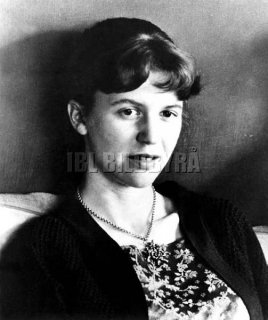
Known primarily for her poetry, Plath also wrote a semi-autobiographical novel, The Bell Jar, under the pseudonym Victoria Lucas. The book's protagonist, Esther Greenwood, is a bright, ambitious student at Smith College who begins to experience a mental breakdown while interning for a fashion magazine in New York. The plot parallels Plath's experience interning at Mademoiselle magazine and subsequent mental breakdown and suicide attempt
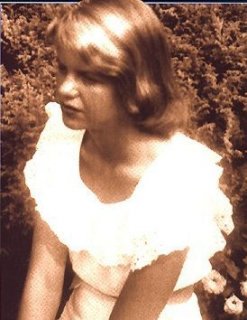
Plath was born on October 27, 1932 in Jamaica Plain, Massachusetts, to Aurelia Schober Plath, a first-generation American of Austrian descent, and Otto Emile Plath, an immigrant from Grabow, Germany. Plath's father was a professor of zoology and German at Boston University.In April 1935, Plath's brother Warren was born.The family moved to Winthrop, Massachusetts in 1936, where Plath spent much of her childhood on Johnson Avenue. Plath was raised a Unitarian Christian, and had mixed feelings toward religion throughout her life. Plath's mother, Aurelia, had grown up in Winthrop, and her maternal grandparents, the Schobers, had lived in a section of the town called Point Shirley.Plath published her first poem in Winthrop, in the Boston Herald's children's section, when she was eight years old.
Otto Plath died on November 5, 1940 Aurelia Plath then moved her children and her parents to 26 Elmwood Road, Wellesley, Massachusetts, in 1942.
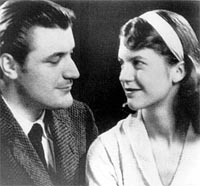
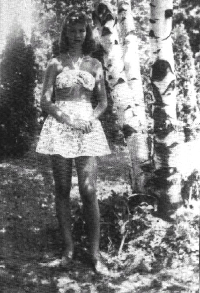
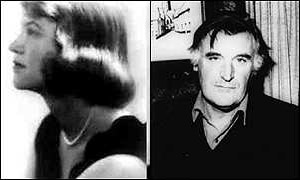
Plath attended Smith College, where she dated Yale senior Dick Norton during her junior year. Norton, upon whom the character of Buddy in The Bell Jar is based, contracted tuberculosis and was treated at the Ray Brook Sanatorium near Saranac Lake; while visiting Norton, Plath broke her leg in a suicidal ski run, an incident described in the novel. In her junior year at Smith, Plath made her first medically documented suicide attempt by crawling under her house and taking an overdose of sleeping pills Details of her attempts at suicide are chronicled in her book. After her suicide attempt, Plath was briefly committed to a mental institution where she received electroconvulsive therapy Her stay at McLean Hospital was paid for by Olive Higgins Prouty, who had also funded the scholarship awarded to Plath to attend Smith. During the summer after her third year of college, Plath was awarded a coveted position as guest editor at Mademoiselle magazine, during which she spent a month in New York City. The experience was not at all what she had hoped it would be, beginning within her a seemingly downward spiral in her outlook on herself and life in general. Many of the events that took place during that summer were later used as inspiration for her novel The Bell Jar. Plath seemed to make an acceptable recovery and graduated from Smith with honors in 1955. She obtained a Fulbright scholarship to Cambridge University where she continued actively writing poetry, occasionally publishing her work in the student newspaper Varsity. It was at a party given in Cambridge that she met the English poet Ted Hughes. They were married on June 16, 1956 (Bloomsday) at St George the Martyr Holborn after a short courtship.
Plath and Hughes spent from July 1957 to October 1959 living and working in the United States, where Plath taught at Smith College in Northampton, Massachusetts. The couple then moved to Boston where Plath audited seminars by Robert Lowell that were also attended by Anne Sexton. At this time, Plath and Hughes also met, for the first time, W. S. Merwin, who admired their work and was to remain a lifelong friend.
Upon learning that Plath was pregnant, the couple moved back to the United Kingdom. Plath and Hughes lived in London for a while on Chalcot Square near the Primrose Hill area of Regent's Park, and then settled in the small market town of North Tawton in Devon. While there, Plath published her first collection of poetry, The Colossus. In February 1961, she suffered a miscarriage, and a number of her poems address this event.
Plath's marriage to Hughes was fraught with difficulties, particularly surrounding his affair with Assia Wevill, and the couple separated in late 1962. She returned to London with their children, Frieda and Nicholas, and rented a flat at 23 Fitzroy Road (only a few streets from the Chalcot Square flat) in a house where W. B. Yeats once lived. Plath was pleased by this fact and considered it a good omen.
Plath took her own life on the morning of February 11, 1963. Leaving out bread and milk, she completely sealed the rooms between herself and her sleeping children with "wet towels and cloths." Plath then placed her head in the oven while the gas was turned on.
It has been suggested that Plath's suicide attempt was too precise and coincidental, and that she had not intended to succeed in killing herself. Apparently, she had previously asked Mr. Thomas, her downstairs neighbor, what time he would be leaving; and a note had been placed that read "Call Dr. Horder" and listed his phone number. Therefore it is argued that Plath must have turned the gas on at a time when Mr. Thomas should have been waking and beginning his day.
However, in the book Giving Up: The Last Days of Sylvia Plath, Jillian Becker says that, "according to Mr. Goodchild—a police officer attached to the coroner's office . . . she had thrust her head far into the gas oven. 'She had really meant to die.'"
Plath's gravestone in Heptonstall churchyard bears the inscription "Even amidst fierce flames the golden lotus can be planted." .
Plath began keeping a diary at age 11, and kept journals until her suicide. Her adult diaries, starting from her freshman year at Smith College in 1950, were first published in 1980 as The Journals of Sylvia Plath, edited by Frances McCullough. In 1982, when Smith College acquired Plath's remaining journals, Hughes sealed two of them until February 11, 2013, the fiftieth anniversary of Plath's death.
During the last years of his life, Hughes began working on a fuller publication of Plath's journals. In 1998, shortly before his death, he unsealed the two journals, and passed the project onto his children by Plath, Frieda and Nicholas, who passed it on to Karen V. Kukil. Kukil finished her editing in December 1999, and in 2000 Anchor Books published The Unabridged Journals of Sylvia Plath.
Hughes faced criticism for his role in handling the journals: he claims to have destroyed Plath's last journal, which contained entries from the winter of 1962 up to her death. In the foreword of the 1982 version, he writes, "I destroyed [the last of her journals] because I did not want her children to have to read it (in those days I regarded forgetfulness as an essential part of survival)."
Plath has been criticized for her controversial allusions to the Holocaust, and is known for her uncanny use of metaphor. Her work has been compared to and associated with Anne Sexton, W.D. Snodgrass, and other confessional poets.
While the few critics who responded to Plath's first book, The Colossus, did so favorably, it has also been described as somewhat staid and conventional in comparison to the much more free-flowing imagery and intensity of her later work.
The poems in Ariel mark a departure from her earlier work into a more personal arena of poetry. It is a possibility that Lowell's poetry—which is often labeled "confessional"—played a part in this shift. Indeed, in an interview before her death she listed Lowell's Life Studies as an influence. The impact of Ariel was dramatic, with its potentially autobiographical descriptions of mental illness in poems such as, "Tulips", "Daddy" and "Lady Lazarus".
In 1982, Plath became the first poet to win a Pulitzer Prize posthumously for The Collected Poems.
As Plath's widower, Hughes became the executor of Plath's personal and literary estates. This proved to be controversial, as it is uncertain whether Plath had begun divorce proceedings before her death: if she had, Hughes' inheritance of the Plath estate would have been in dispute. In letters to Aurelia Plath and Richard Murphy, Plath writes that she was applying for a divorce. However, Hughes said in a letter to The Guardian that Plath did not seriously consider divorce, and claims they were discussing reconciliation mere days before her death. He consequently oversaw the publication of her manuscripts, including Ariel (1965). He claimed to have destroyed the final volume of Plath’s journal, detailing their last few months together.
Many critics accused Hughes of attempting to control the publications for his own ends, although the money earned from Plath's poetry was placed into a trust account for their two children Frieda and Nicolas. Examples cited include his censoring of parts of her journals that portrayed him unfavorably, and his editing of Ariel, changing the order of the poems in the book from the sequence she had intended and left at her death, as well as removing several poems. However, the poems were removed and the order changed for several reasons, including the request of the American publishers. Critics argue this prevented what was intended to be a more uplifting beginning and ending of Ariel, and that the poems removed were the ones most readily identified as being about Hughes.
Hughes hired an accountant to keep track of the estate, but the accountant did a poor job. A large and looming tax bill caused Hughes to convince Plath's mother, Aurelia, to publish The Bell Jar in the United States. Because of this, she later asked Hughes' permission to publish a volume of Plath's letters, to which he agreed with strong reservations.
Known primarily for her poetry, Plath also wrote a semi-autobiographical novel, The Bell Jar, under the pseudonym Victoria Lucas. The book's protagonist, Esther Greenwood, is a bright, ambitious student at Smith College who begins to experience a mental breakdown while interning for a fashion magazine in New York. The plot parallels Plath's experience interning at Mademoiselle magazine and subsequent mental breakdown and suicide attempt
Plath was born on October 27, 1932 in Jamaica Plain, Massachusetts, to Aurelia Schober Plath, a first-generation American of Austrian descent, and Otto Emile Plath, an immigrant from Grabow, Germany. Plath's father was a professor of zoology and German at Boston University.In April 1935, Plath's brother Warren was born.The family moved to Winthrop, Massachusetts in 1936, where Plath spent much of her childhood on Johnson Avenue. Plath was raised a Unitarian Christian, and had mixed feelings toward religion throughout her life. Plath's mother, Aurelia, had grown up in Winthrop, and her maternal grandparents, the Schobers, had lived in a section of the town called Point Shirley.Plath published her first poem in Winthrop, in the Boston Herald's children's section, when she was eight years old.
Otto Plath died on November 5, 1940 Aurelia Plath then moved her children and her parents to 26 Elmwood Road, Wellesley, Massachusetts, in 1942.
Plath attended Smith College, where she dated Yale senior Dick Norton during her junior year. Norton, upon whom the character of Buddy in The Bell Jar is based, contracted tuberculosis and was treated at the Ray Brook Sanatorium near Saranac Lake; while visiting Norton, Plath broke her leg in a suicidal ski run, an incident described in the novel. In her junior year at Smith, Plath made her first medically documented suicide attempt by crawling under her house and taking an overdose of sleeping pills Details of her attempts at suicide are chronicled in her book. After her suicide attempt, Plath was briefly committed to a mental institution where she received electroconvulsive therapy Her stay at McLean Hospital was paid for by Olive Higgins Prouty, who had also funded the scholarship awarded to Plath to attend Smith. During the summer after her third year of college, Plath was awarded a coveted position as guest editor at Mademoiselle magazine, during which she spent a month in New York City. The experience was not at all what she had hoped it would be, beginning within her a seemingly downward spiral in her outlook on herself and life in general. Many of the events that took place during that summer were later used as inspiration for her novel The Bell Jar. Plath seemed to make an acceptable recovery and graduated from Smith with honors in 1955. She obtained a Fulbright scholarship to Cambridge University where she continued actively writing poetry, occasionally publishing her work in the student newspaper Varsity. It was at a party given in Cambridge that she met the English poet Ted Hughes. They were married on June 16, 1956 (Bloomsday) at St George the Martyr Holborn after a short courtship.
Plath and Hughes spent from July 1957 to October 1959 living and working in the United States, where Plath taught at Smith College in Northampton, Massachusetts. The couple then moved to Boston where Plath audited seminars by Robert Lowell that were also attended by Anne Sexton. At this time, Plath and Hughes also met, for the first time, W. S. Merwin, who admired their work and was to remain a lifelong friend.
Upon learning that Plath was pregnant, the couple moved back to the United Kingdom. Plath and Hughes lived in London for a while on Chalcot Square near the Primrose Hill area of Regent's Park, and then settled in the small market town of North Tawton in Devon. While there, Plath published her first collection of poetry, The Colossus. In February 1961, she suffered a miscarriage, and a number of her poems address this event.
Plath's marriage to Hughes was fraught with difficulties, particularly surrounding his affair with Assia Wevill, and the couple separated in late 1962. She returned to London with their children, Frieda and Nicholas, and rented a flat at 23 Fitzroy Road (only a few streets from the Chalcot Square flat) in a house where W. B. Yeats once lived. Plath was pleased by this fact and considered it a good omen.
Plath took her own life on the morning of February 11, 1963. Leaving out bread and milk, she completely sealed the rooms between herself and her sleeping children with "wet towels and cloths." Plath then placed her head in the oven while the gas was turned on.
It has been suggested that Plath's suicide attempt was too precise and coincidental, and that she had not intended to succeed in killing herself. Apparently, she had previously asked Mr. Thomas, her downstairs neighbor, what time he would be leaving; and a note had been placed that read "Call Dr. Horder" and listed his phone number. Therefore it is argued that Plath must have turned the gas on at a time when Mr. Thomas should have been waking and beginning his day.
However, in the book Giving Up: The Last Days of Sylvia Plath, Jillian Becker says that, "according to Mr. Goodchild—a police officer attached to the coroner's office . . . she had thrust her head far into the gas oven. 'She had really meant to die.'"
Plath's gravestone in Heptonstall churchyard bears the inscription "Even amidst fierce flames the golden lotus can be planted." .
Plath began keeping a diary at age 11, and kept journals until her suicide. Her adult diaries, starting from her freshman year at Smith College in 1950, were first published in 1980 as The Journals of Sylvia Plath, edited by Frances McCullough. In 1982, when Smith College acquired Plath's remaining journals, Hughes sealed two of them until February 11, 2013, the fiftieth anniversary of Plath's death.
During the last years of his life, Hughes began working on a fuller publication of Plath's journals. In 1998, shortly before his death, he unsealed the two journals, and passed the project onto his children by Plath, Frieda and Nicholas, who passed it on to Karen V. Kukil. Kukil finished her editing in December 1999, and in 2000 Anchor Books published The Unabridged Journals of Sylvia Plath.
Hughes faced criticism for his role in handling the journals: he claims to have destroyed Plath's last journal, which contained entries from the winter of 1962 up to her death. In the foreword of the 1982 version, he writes, "I destroyed [the last of her journals] because I did not want her children to have to read it (in those days I regarded forgetfulness as an essential part of survival)."
Plath has been criticized for her controversial allusions to the Holocaust, and is known for her uncanny use of metaphor. Her work has been compared to and associated with Anne Sexton, W.D. Snodgrass, and other confessional poets.
While the few critics who responded to Plath's first book, The Colossus, did so favorably, it has also been described as somewhat staid and conventional in comparison to the much more free-flowing imagery and intensity of her later work.
The poems in Ariel mark a departure from her earlier work into a more personal arena of poetry. It is a possibility that Lowell's poetry—which is often labeled "confessional"—played a part in this shift. Indeed, in an interview before her death she listed Lowell's Life Studies as an influence. The impact of Ariel was dramatic, with its potentially autobiographical descriptions of mental illness in poems such as, "Tulips", "Daddy" and "Lady Lazarus".
In 1982, Plath became the first poet to win a Pulitzer Prize posthumously for The Collected Poems.
As Plath's widower, Hughes became the executor of Plath's personal and literary estates. This proved to be controversial, as it is uncertain whether Plath had begun divorce proceedings before her death: if she had, Hughes' inheritance of the Plath estate would have been in dispute. In letters to Aurelia Plath and Richard Murphy, Plath writes that she was applying for a divorce. However, Hughes said in a letter to The Guardian that Plath did not seriously consider divorce, and claims they were discussing reconciliation mere days before her death. He consequently oversaw the publication of her manuscripts, including Ariel (1965). He claimed to have destroyed the final volume of Plath’s journal, detailing their last few months together.
Many critics accused Hughes of attempting to control the publications for his own ends, although the money earned from Plath's poetry was placed into a trust account for their two children Frieda and Nicolas. Examples cited include his censoring of parts of her journals that portrayed him unfavorably, and his editing of Ariel, changing the order of the poems in the book from the sequence she had intended and left at her death, as well as removing several poems. However, the poems were removed and the order changed for several reasons, including the request of the American publishers. Critics argue this prevented what was intended to be a more uplifting beginning and ending of Ariel, and that the poems removed were the ones most readily identified as being about Hughes.
Hughes hired an accountant to keep track of the estate, but the accountant did a poor job. A large and looming tax bill caused Hughes to convince Plath's mother, Aurelia, to publish The Bell Jar in the United States. Because of this, she later asked Hughes' permission to publish a volume of Plath's letters, to which he agreed with strong reservations.