
-
Share with us... Your Best & Worst Collections of F/W 2026.27
-
Xenforo Cloud is upgrading us to version 2.3.10 on Wednesday Apr 01, 2026 at 12:00 AM PST. Expect a temporary downtime during this process. More info here
You are using an out of date browser. It may not display this or other websites correctly.
You should upgrade or use an alternative browser.
You should upgrade or use an alternative browser.
Tattoos
- Thread starter Versus_1
- Start date
Mk's Beauty Shop
Active Member
- Joined
- May 11, 2005
- Messages
- 1,402
- Reaction score
- 1
If you want to see scars you should see scarification.. its kinda creepy and totally gross!
yeah I know a lot of people that have scars like tattoos.
the dimonds on her knees:


pictures taken from myspace.com/luftpumpen_verein
the dimonds on her knees:
pictures taken from myspace.com/luftpumpen_verein
GasolineRainbow
Active Member
- Joined
- Jul 30, 2005
- Messages
- 1,394
- Reaction score
- 0
Is scarification still allowed in some countries? I was under the impression that it had been banned.
I've got a snowflake too. I also wanted it to be white and pale, chalky blue as someone mentioned, but through miscommunication with my tattoo artist, it came out vividly colored. Is it possible to make tattoos lighter, does anyone know? I don't mean fading creams, because I love the tattoo, I mean working over it to make it lighter.
I've got a snowflake too. I also wanted it to be white and pale, chalky blue as someone mentioned, but through miscommunication with my tattoo artist, it came out vividly colored. Is it possible to make tattoos lighter, does anyone know? I don't mean fading creams, because I love the tattoo, I mean working over it to make it lighter.
chel4mdavali
Member
- Joined
- Apr 12, 2006
- Messages
- 349
- Reaction score
- 0
i heard white tattoo ink isn't healthy for you. what's the deal with that?
haute femme
turn and face the strange
- Joined
- Oct 11, 2005
- Messages
- 2,598
- Reaction score
- 2
^ I read that too.. something about what it's made from (though there's different kinds right?), it doesn't always agree with blood of everyone and scabs easily..?
Here's something interesting I found about the different color inks:
from http://wiki.bmezine.com/index.php/Tattoo_ink
Here's something interesting I found about the different color inks:
Anne Marie Helmenstine, a chemist that writes for About.com, gives the following rundown as to the common ingredients of the different colors:
BLACK: made of iron oxides, carbon, or logwood. "Natural black pigment is made from magnetite crystals, powdered jet, wustite, bone black,and amorphous carbon from combustion (soot). Black pigment is commonly made into India ink. Logwood is a heartwood extract from Haematoxylon campechisnum, found in Central America and the West Indies."
BROWNS, FLESHTONES: made of ochre. "Ochre is composed of iron (ferric) oxides mixed with clay. Raw ochre is yellowish. When dehydrated through heating, ochre changes to a reddish color."
RED: made of cinnabar, cadmium red, iron oxide, or napthol. "Iron oxide is also known as common rust. Cinnabar and cadmium pigments are highly toxic. Napthol reds are synthesized from Naptha. Fewer reactions have been reported with naphthol red than the other pigments, but all reds carry risks of allergic or other reactions."
ORANGE: made of disazodiarylide, disazopyrazolone, or cadmium seleno-sulfide. "The organics are formed from the condensation of 2 monoazo pigment molecules. They are large molecules with good thermal stability and colorfastness."
YELLOW: made of cadmium yellow, ochres, curcuma yellow, chrome yellow, or disazodiarylide. "Curcuma is derived from plants of the ginger family; aka tumeric or curcurmin. Reactions are commonly associated with yellow pigments, in part because more pigment is needed to achieve a bright color."
GREEN: made of chromium oxide ("Casalis Green" or "Anadomis Green"), Malachite, Ferrocyanides, Ferricyanides, Lead chromate, Monoazo pigment, Cu/Al phthalocyanine, or Cu phthalocyanine. "The greens often include admixtures, such as potassium ferrocyanide (yellow or red) and ferric ferrocyanide (Prussian Blue)."
BLUE: made of azure blue, cobalt blue, or Cu-phtalocyanine. "Blue pigments from minerals include copper (II) carbonate (azurite), sodium aluminum silicate (lapis lazuli), calcium copper silicate (Egyptian Blue), other cobalt aluminum oxides and chromium oxides. The safest blues and greens are copper salts, such as copper pthalocyanine. Copper pthalocyanine pigments have FDA approval for use in infant furniture and toys and contact lenses. The copper-based pigments are considerably safer or more stable than cobalt or ultramarine pigments."
VIOLET: made of manganese violet (manganese ammonium pyrophosphate), quinacridone, dioxazine/carbazole, and various aluminum salts. "Some of the purples, especially the bright magentas, are photoreactive and lose their color after prolonged exposure to light. Dioxazine and carbazole result in the most stable purple pigments."
WHITE: made of lead white (lead carbonate), titanium dioxide, barium sulfate, or zinc oxide. "Some white pigments are derived from anatase or rutile. White pigment may be used alone or to dilute the intensity of other pigments. Titanium oxides are one of the least reactive white pigments."
...
Most tattoo pigments are made from metal salts, that is oxidizing certain metals and elements to produce a color change. Ever see the copper roof on a church turn green? Well, if you have any green or blue in your body, it comes from copper. The only safe greens and blues on the market are made this way, cobalt being too toxic, and ultramarine unstable. These are called Copper Pthalocyanine pigments, painters and other craftsmen may be familiar with these pigments. Pthalocyanine pigments are approved by the FDA for use in contact lenses, surgical implants, and paint for infant furniture.
The other pigments considered very safe are Black, most commonly Carbon Black, or Bone Black, which is India Ink, made from burning animal bones or kerosene, and collecting the soot. Purple/Violet, which is dioxazine/carbazole violet, yellows of the Arylide type, Napthol red , based on the solvent Naptha. Reds based on other materials may or may not cause scarring and reaction. Magenta is safe, but generally considered less lightfast and more unstable than other pigments. Oranges are considered safe, as are Zinc and Titanium white, Titanium being the superior white. Browns, even though they are often based on Oxides of Iron are also considered safe.
Keep in mind that many reds are questionable, often causing burning, scarring, or rashes. While this is rare, many reds can cause serious damage, especially those made from Oxides of Iron, and Mercury. Cinnabar reds cause reactions and scarring in a high proportion of the tattooed population. These are considered very unsafe and I've heard doctors advise patients to have the pigment removed after biopsy was performed.
Yellow is generally a safe pigment, but when used in high concentration, may burn and scar due to a change in PH under the skin. Yellow has always been a problem pigment, due to the fact that cutting the pigment load causes a lighter, more washed out hue.
from http://wiki.bmezine.com/index.php/Tattoo_ink
Fashionturnip
Active Member
- Joined
- Jul 24, 2005
- Messages
- 1,325
- Reaction score
- 1
I just got my 2nd a few weeks ago & I love it!
I had italian words based on my 'signature' (below) done on the side of my arm last year & a few weeks ago I had a cross & wings on the inside. I want to get a half sleeve done eventually but they are so expensive!! & mine is taking ages to heal!

I had italian words based on my 'signature' (below) done on the side of my arm last year & a few weeks ago I had a cross & wings on the inside. I want to get a half sleeve done eventually but they are so expensive!! & mine is taking ages to heal!
Mk's Beauty Shop
Active Member
- Joined
- May 11, 2005
- Messages
- 1,402
- Reaction score
- 1
Scarring is only just taking off in town in a big big way. I saw a video of it and there was just blood everywhere.. It was gross but i couldnt take my eyes off it..
I have also wanted a white tattoo but im pretty pale lol so i'd have to put it somewhere where im more tanned
I have also wanted a white tattoo but im pretty pale lol so i'd have to put it somewhere where im more tanned

Esperanza
Active Member
- Joined
- Sep 20, 2007
- Messages
- 5,431
- Reaction score
- 2
Is scarification still allowed in some countries? I was under the impression that it had been banned.
I've got a snowflake too. I also wanted it to be white and pale, chalky blue as someone mentioned, but through miscommunication with my tattoo artist, it came out vividly colored. Is it possible to make tattoos lighter, does anyone know? I don't mean fading creams, because I love the tattoo, I mean working over it to make it lighter.
cool could u post ur pic of the snow flake?? the girl where i was working at, her snow flake was reallly light with no black at all just white n light blue

Elegance.Is.Refusal.
tea time
- Joined
- Dec 1, 2004
- Messages
- 4,432
- Reaction score
- 0
just to note as people were talking about scarification and branding
scarification will most likely leave you with darker raised scars but with branding it will leave you with smoother whiter scars generally, depending upon how your skin heals.
scarification will most likely leave you with darker raised scars but with branding it will leave you with smoother whiter scars generally, depending upon how your skin heals.
GasolineRainbow
Active Member
- Joined
- Jul 30, 2005
- Messages
- 1,394
- Reaction score
- 0
cool could u post ur pic of the snow flake?? the girl where i was working at, her snow flake was reallly light with no black at all just white n light blue
I'm quite camera-shy (and challenged
 ), is it ok if I just describe it? It's about the size of a smallish palm, no black. It's a sort of diamond-shaped blue background (graduations of blue) with a hazy (not defined) outline and a white snowflake within. My tat artist came up with a nice touch, there are subtle speckles of white in the blue as if it's snowing.
 Like I said, my only issue with it is that the blue is very vivid, almost bright turquoise. Can that be lightened, anyone know?
haute femme
turn and face the strange
- Joined
- Oct 11, 2005
- Messages
- 2,598
- Reaction score
- 2
^sounds pretty 
So I'm guessing all colors can come in pastel versions? Is it due to being mixed with the white ink?
So I'm guessing all colors can come in pastel versions? Is it due to being mixed with the white ink?
GasolineRainbow
Active Member
- Joined
- Jul 30, 2005
- Messages
- 1,394
- Reaction score
- 0
Yes, at least that's what my tattoo artist did. It came out brighter than he intended because I'm very pale.
when it comes to snowflakes, i found these:


flickr.com
i love this site: http://1228tattoo.blogspot.com/
flickr.com
i love this site: http://1228tattoo.blogspot.com/
GasolineRainbow
Active Member
- Joined
- Jul 30, 2005
- Messages
- 1,394
- Reaction score
- 0
I like the second one, but not the first. I think snowflakes should be somewhat ethereal and hazy. It's funny, most people who comment on my tattoo say it's an unusual idea for a design, but now I see that lots of people have them. It's ok though, they all look different.

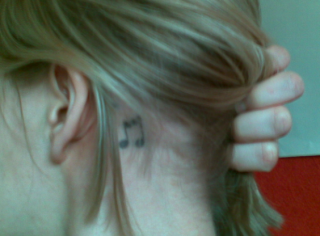
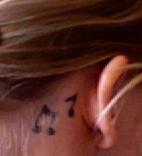
I had mine done on Jan 7th this year
No particular reason I chose to have it done behind my left ear. I don't have long hair but it still covers the tattoo which I like coz it is mine And yours now
No particular reason I chose to have it done behind my left ear. I don't have long hair but it still covers the tattoo which I like coz it is mine
And yours now Attachments
Last edited by a moderator:
Similar Threads

- Replies
- 11
- Views
- 13K
Users who are viewing this thread
Total: 1 (members: 0, guests: 1)
New Posts
-
-
 Chanel '25' Handbag 2026 : Margot Robbie by Craig McDean & Michel Gondry (16 Viewers)
- Latest: vogue28
-

-

-